Could You Have Picked the Other Ice Cream? A Medieval Puzzle
An Ancient Puzzle: The Sea Battle That Might Not Happen
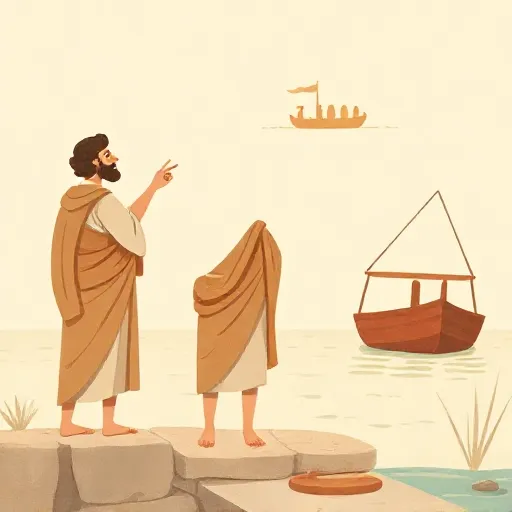
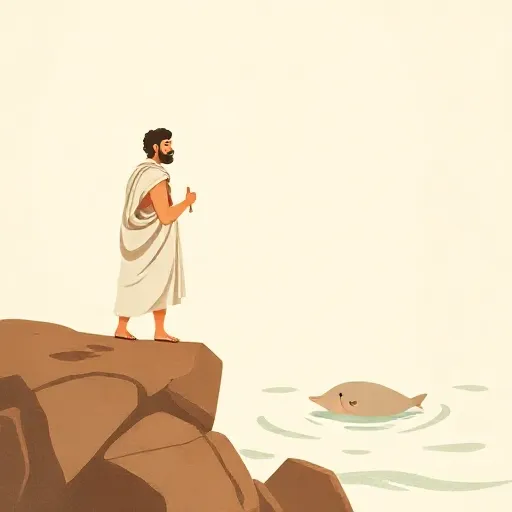
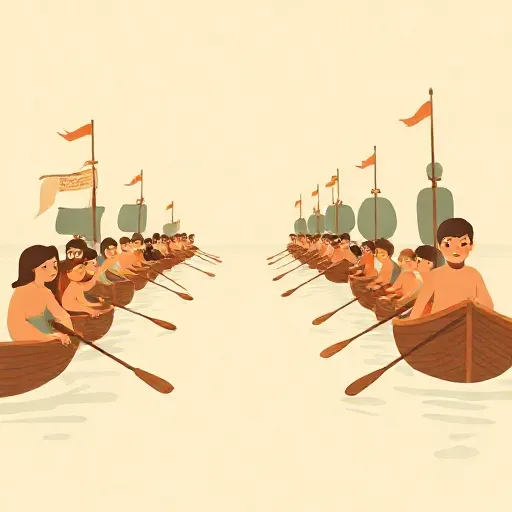
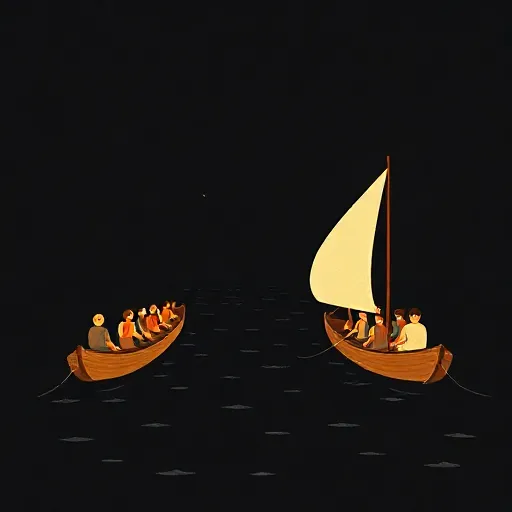
Imagine you and a friend are standing at the harbor, watching ships prepare for battle. Tomorrow there will either be a sea battle or there won’t. Your friend says, “I predict there will be a battle.” Is that statement already true right now? If it is true today, then it seems the battle must happen — otherwise, the statement wouldn’t have been true. But that would mean the future is already fixed down to the last oar stroke.
This was no idle chatter. The Greek philosopher Aristotle (384–322 BCE) used the sea-battle puzzle to ask whether statements about the future are already true or false before the event occurs. Behind it lay a much bigger question: could things have turned out differently, or does everything that happens have to happen?
Many ancient thinkers leaned toward a firm answer: if something is genuinely possible, it will eventually become actual. The historian of ideas Arthur O. Lovejoy later called this the principle of plenitude — the habit of believing that every real possibility gets used up in the history of the world. In that picture, whatever never happens was never truly possible.
From this grew what scholars call the statistical or temporal frequency model of modality. The rule was simple:
- Necessary = always actual.
- Impossible = never actual.
- Possible = at least sometimes actual.
A possibility was like a ticket that had to be punched at some point in time, or it wasn’t a real ticket at all.
The most hard-headed defender of this outlook was Diodorus Cronus (around 300 BCE). He argued that only what actually happens can ever be possible — a view that makes the future a single, unrolling carpet. If Diodorus was right, the feeling that you could have chosen a different dessert is just an illusion; there was never any branch in the road.
What Did “Possible” Mean? Possibilities as Potencies
Not everyone was happy with Diodorus’s iron logic. Aristotle himself tried to carve out room for unrealized possibilities by using a different idea: potency. A lump of bronze has the potency to become a statue, and a seed has the potency to become an oak, even if most seeds never sprout. The world is stuffed with powers that are not always at work. So why not say that some singular events — this battle, that conversation — are possible even though they never actually happen?
The trouble was that Aristotle also thought that when the right conditions come together and nothing external gets in the way, a potency must express itself. If an active power meets a passive one and there is no obstacle, the change happens necessarily. So a possibility looked genuine only when it was actually being realized, which pushes us right back toward the statistical rule.
This tangle shows up in a famous puzzle that medieval logicians loved: A standing man can sit. In one way of reading the sentence, it means “It is possible that a man sits and stands at the same time.” That is clearly false — and that reading was called the composite sense (later thinkers used the Latin phrase de dicto). In another reading — the divided sense, or de re — it means “A man who is now standing has the power to sit at a different moment.” On that interpretation, the sentence is true.
The catch was enormous. Ancient and early medieval philosophers almost all accepted the necessity of the present: whatever is actually happening right now is necessary right now. So the standing man cannot sit at this very instant. His possibility is always pushed into the future. By the time that future arrives, the alternative possibilities have vanished — they were never simultaneous with what actually occurred. The world still ends up looking like a single, unbranching line.
God, Knowledge, and the Lock of the Present
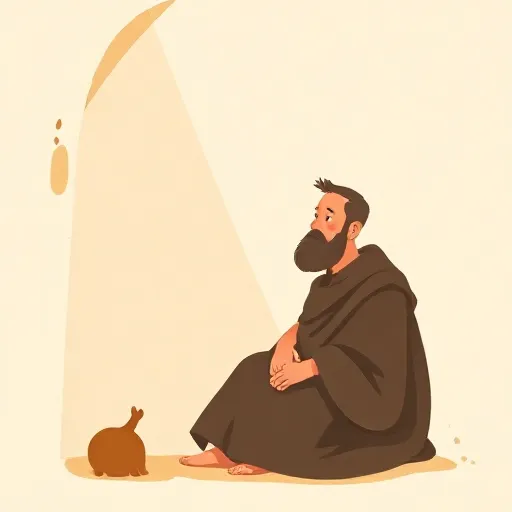
The puzzle about future choices grew sharper when Christian, Jewish, and Islamic thinkers brought God into the picture. If God knows everything that will happen, does that make the future necessary? The Roman philosopher Boethius (c. 480–524) gave an answer that shaped centuries of discussion: God sees all moments of time as equally present, the way you can see a whole parade from a mountaintop. So God’s knowledge does not force you to choose the chocolate ice cream; it simply sees your choice from an atemporal viewpoint.
But Boethius still held the necessity of the present. Once you reach for that ice cream at time t, it is necessary at t that you do so — the alternative possibility has already slipped away. He accepted the ancient axiom that if p happens at t, then at t it is necessary that p happens. Genuine alternatives, he thought, are only open before the moment; afterwards they are gone, not still hovering as unactualized possibilities.
Some daring thinkers of the twelfth century began to push further. Peter Abelard (1079–1142) toyed with the idea that even after a moment passes, what could have happened remains true in some sense — a counterfactual possibility. But the vocabulary and mental models of the time still leaned heavily on the idea that the one and only world history exhausts what is really possible. The true revolution came from a Franciscan monk who was willing to break that chain.
The Monk Who Imagined a Different World at the Same Moment
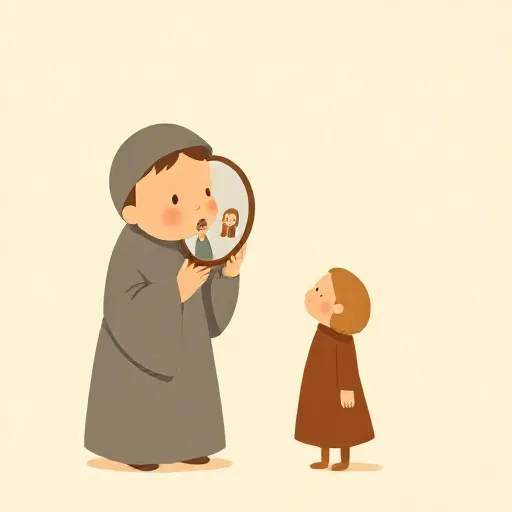
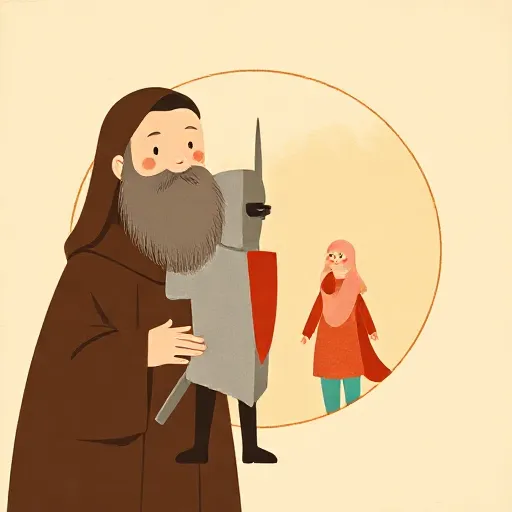
John Duns Scotus (c. 1266–1308) did something that earlier philosophers considered nearly unthinkable: he denied the necessity of the present outright. Scotus redefined a contingent event — an event that does not have to happen — in a startling way: “I do not call something contingent because it is not always or necessarily the case, but because its opposite could be actual at the very moment when it occurs.”
This is a world of simultaneous alternatives. Right now, you are reading this sentence, but Scotus would say that at this very same instant you could have been looking out the window. That alternative does not need to wait for a future time; it is a real possibility that sits alongside what is actual, even though only one version gets realized.
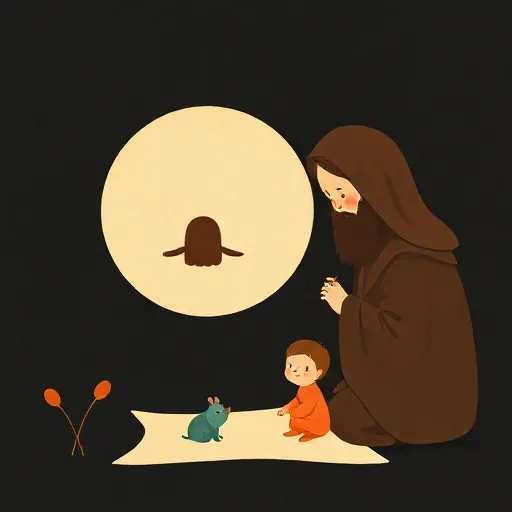
Where did these alternatives live? Scotus placed them in the domain of logical possibilities — states of affairs that are not self-contradictory. They don’t exist like chairs and stones; they are more like the rules of a game before anyone starts playing. God, Scotus thought, surveys an unlimited realm of compossible scenarios (sets of possibilities that can hang together) and freely chooses which one to make actual. The world could have been different not just later, but at that same tick of cosmic time.
This snapped the old statistical model. Possibility no longer meant “sometime actual”; it meant “not repugnant to being”. The door to the idea of many possible worlds, and to a far more flexible kind of modal logic, had swung open.
Why This Old Debate Still Matters
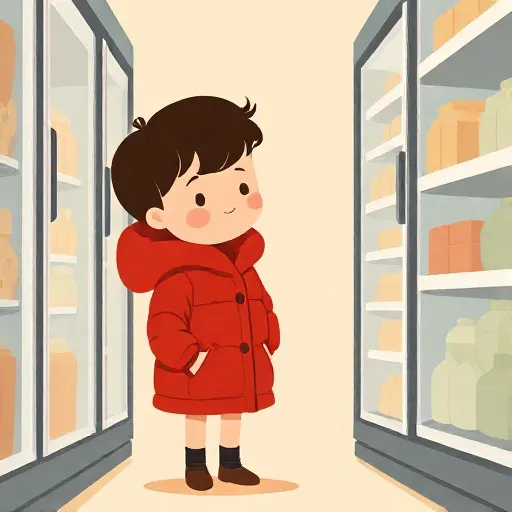
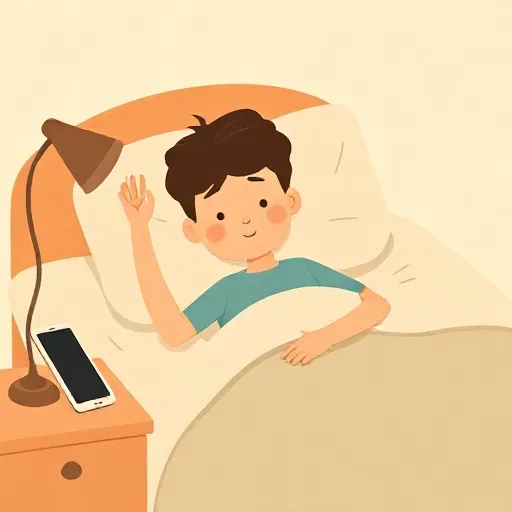
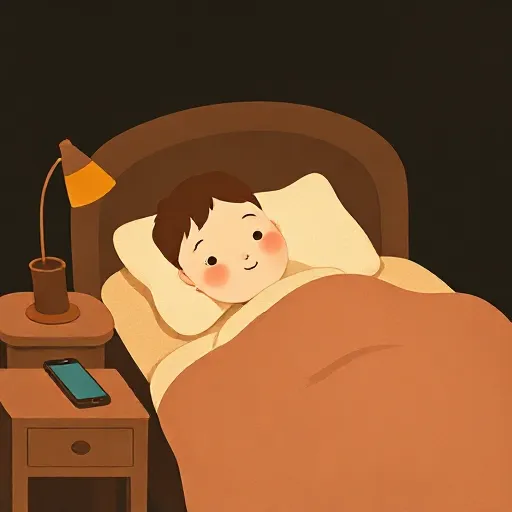
When you stand in front of the freezer and say, “I could have picked vanilla,” you are already speaking like a Scotist. You assume that at the very moment you grabbed the chocolate, an alternative future — identical right up to that instant — was genuinely open.
If the old statistical model were right, the only possibilities are the ones that eventually get realized somewhere in the history of the world. The choice you didn’t make would not count as a real possibility at all; it would be like a ticket that was never printed. But Scotus and the thinkers he inspired gave us a picture where possibility is wider than actuality. That picture underpins most modern debates about free will, moral responsibility, and even the logic we use to reason about what might have been.
Today, philosophers still argue about whether these alternative possibilities are real things or only useful fictions we tell ourselves. But the next time you catch yourself thinking “this could have gone differently,” you are taking part in a conversation that runs from Aristotle’s harbor to a medieval monk’s quiet cell and right into your own everyday wondering.
Think about it
- If a supercomputer could know every detail about your brain and your past, would it be able to predict your next choice perfectly? If so, does that mean the choice was never really free?
- Could you be proud of winning a race if, at the very moment your foot crossed the line, it was impossible for you to lose? Why or why not?
- When you imagine a story where the hero takes a different path, is that “unreal” possibility just something you invent in your head, or does it show that the world really keeps multiple doors open at once?