Was Tomorrow’s Sea-Battle Already Decided?
The Puzzle of Tomorrow’s Sea-Battle
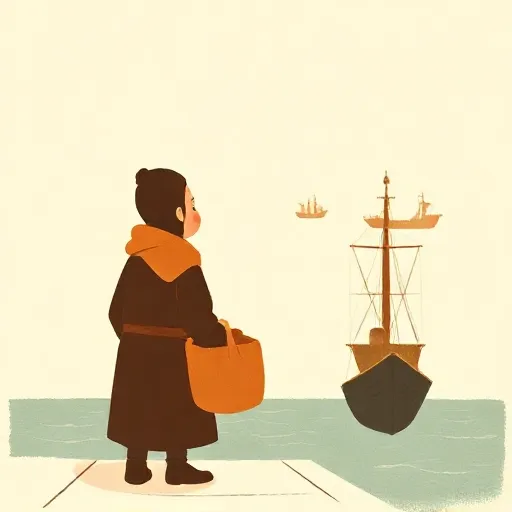
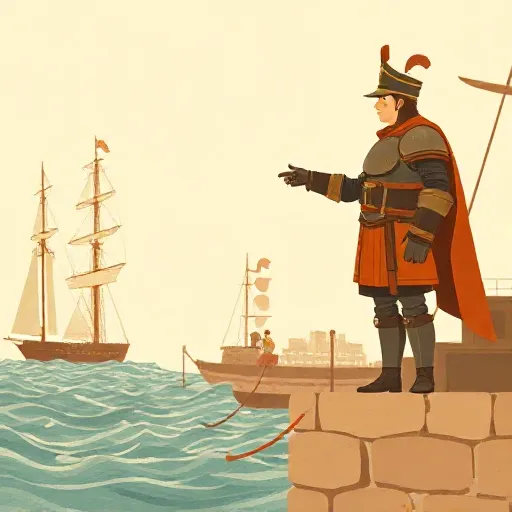
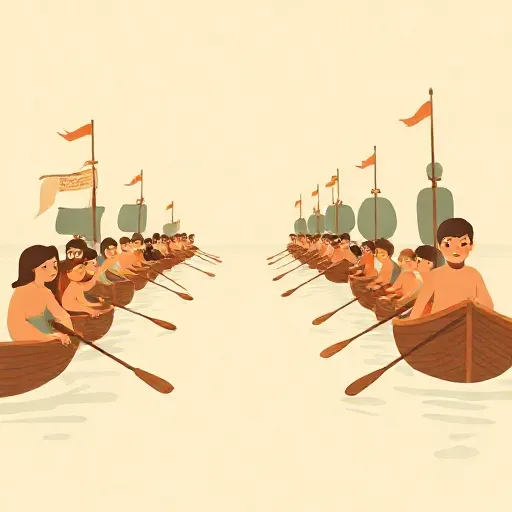
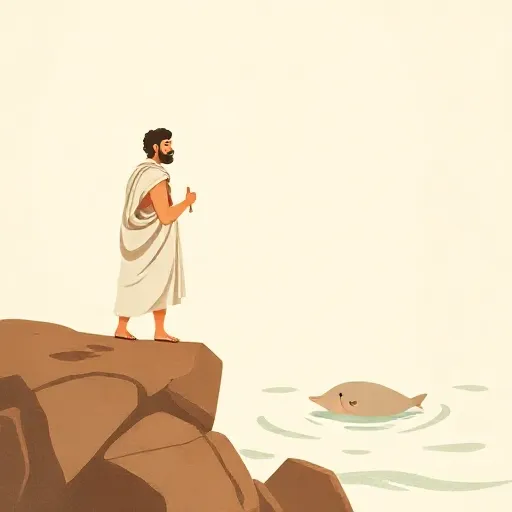
Imagine you stand on a hill in ancient Greece, watching the empty sea. You turn to a friend and say, “Tomorrow there will be a sea-battle.” Is your statement true right now? If the ships clash at dawn, then it seems your statement was true all along. If no battle comes, it was false. But can a claim about something that hasn’t happened yet already be true or false? This is the puzzle of future contingents — statements about future events that are not necessary, that could go either way.
If such statements are already true, the future looks fixed. If they are neither true nor false, we break a basic rule of logic: every claim is either true or false — a principle called bivalence. The philosopher Aristotle (384–322 BCE) wrestled with this problem. He knew it wasn’t just a word game; it touched freedom, fate, and knowledge.
The Logic That Seems to Box In the Future
There is a powerful argument that seems to destroy future contingents entirely. It goes like this. Suppose a sea-battle really will happen tomorrow. Then it must have been true yesterday that a battle would happen in two days. But truths about the past are necessary: you can’t change what was already true yesterday. So yesterday’s truth about the future battle is now locked — it is now necessary that the battle will happen. By the same reasoning, if no battle will happen, that outcome is also necessary. Either way, the future is forced. We end up with determinism: everything that happens happens necessarily, and there are no genuine maybes.
This argument combines two powerful principles: (1) the past is fixed and any true statement about it is necessary, and (2) either a future event will happen or it won’t (excluded middle for the future). The ancient thinker Diodorus Cronus (c.340–280 BCE) used a similar argument, and medieval logicians later sharpened it.
Aristotle’s Third Option: Neither True Nor False
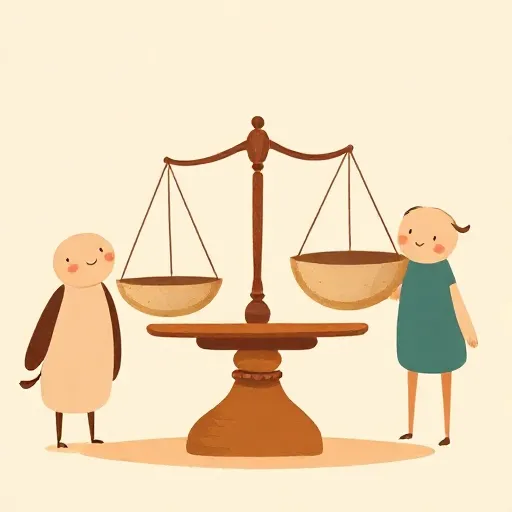
One way to escape determinism is to reject bivalence for future contingents. Aristotle — on many scholars’ reading — did just that. He suggested that statements about a contingent future are not yet true or false. They are indeterminate. You can’t say “It is true that there will be a sea-battle tomorrow” because the future is not settled. This keeps the future open.
But this move has a strange cost. The statement “Either there will be a sea-battle tomorrow or there won’t” still seems true — after all, one of those two must happen. If neither half is true now, how can the whole “or” statement be true? In the 20th century, the logician Jan Łukasiewicz (1878–1956) developed a three-valued logic to handle this. He introduced a third truth-value, “undetermined,” for future contingents. But in his system, even “Either there will be a sea-battle or there won’t” would be undetermined! That clashed with common sense, and many philosophers found it unacceptable. So denying bivalence dodges determinism but gives up logical neatness.
Ockham’s Bold Move: The Past Isn’t Fixed (When It Points Forward)
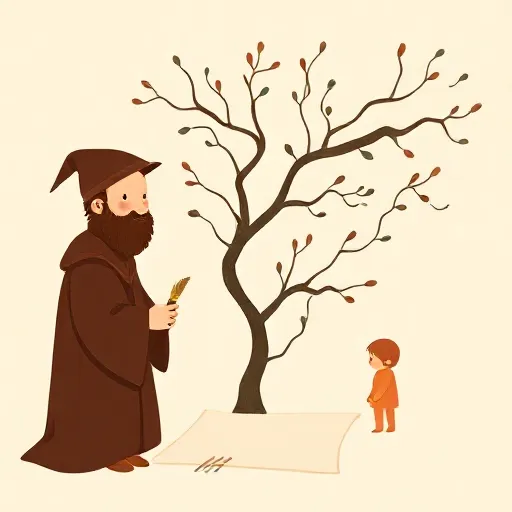
William of Ockham (c.1287–1347) and other medieval thinkers took a different path. They accepted that future contingents are already true or false — even God knows them — but they denied that the past is entirely necessary. Ockham distinguished between hard facts about the past, which are settled, and soft facts that actually refer to the future. For example, “yesterday it was true that a sea-battle would happen tomorrow” is a soft fact: its truth depends on what happens tomorrow. So it isn’t forced the way a hard fact like “yesterday it rained” is.
This move saves bivalence while keeping the future open. You don’t have to say future claims are undetermined; you just notice that some past-looking truths are not genuinely locked. The price? Some philosophers find it odd to think a fact about yesterday could be made true or false by tomorrow’s choices. Ockham insisted it doesn’t violate the fixedness of the real past — it just reveals that the past isn’t as sealed as it first appears.
The Tree of Possibilities and the Thin Red Line
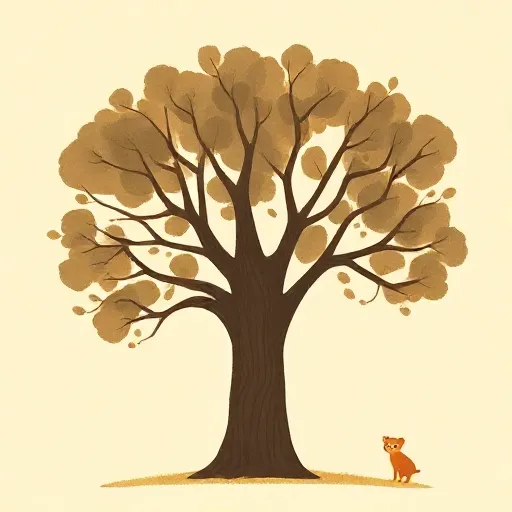
Modern logicians have often pictured time as a branching tree. The trunk is the single, linear past. At the present moment, the tree splits into branches — each branch a different possible future. This is branching time, an idea suggested to the logician A.N. Prior (1914–1969) by a teenage Saul Kripke in 1958.
But which branch is “the” future? Some philosophers, following a medieval notion of a “true future,” say there is a privileged branch — the thin red line — that represents what will actually happen, even if we don’t know which one it is. On this view, “Tomorrow there will be a sea-battle” is true now exactly when the thin red line includes that battle. Other branches remain possible, so it’s not deterministic. Critics argue that picking one branch as special still smuggles in the idea that the future is already fixed. Supporters reply: whichever timeline will be real is simply a fact about the world; that doesn’t make it necessary.
Why It Still Matters: Your Choices, Predictions, and the Meaning of “Will”

The problem of future contingents isn’t only for dusty books. It sneaks into daily life. When you say, “It will rain tomorrow,” you seem to be claiming something true or false now. But if the weather isn’t settled, how can that be? If all future statements are already true, then everything you’ll ever do is fixed before you do it — which can make free will feel like an illusion. On the other hand, if future statements are neither true nor false, it becomes hard to make sense of predictions or promises.
Philosophers still debate which solution is least troubling. Some lean on Ockham’s insight that the past isn’t as rigid as it looks. Others keep the branching picture with a thin red line. The puzzle forces us to think carefully about time, truth, and our own agency. Next time you say, “I’ll decide tomorrow,” ask yourself: was that decision already true today? The ancient question is still wide open.
Think about it
- If you knew that a machine could perfectly predict every choice you’ll make next week, would that make your choices any less free? Why or why not?
- Suppose a friend says, “Tomorrow I’ll bring cookies.” If they forget, was their statement false when they said it, or did its truth depend on what happened later? What would you say?
- Imagine you can see only one real future, like a thin red line. Would that mean other possibilities were never really possible? How would you argue for or against that idea?