Is Tomorrow Already Written? A 2,000‑Year Argument Over True and False
A Wager on Tomorrow’s Waves
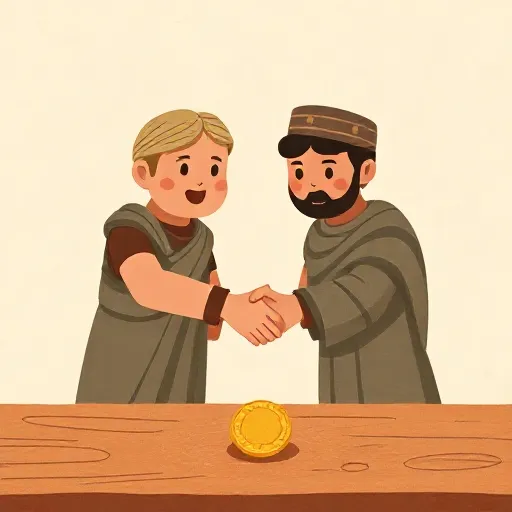
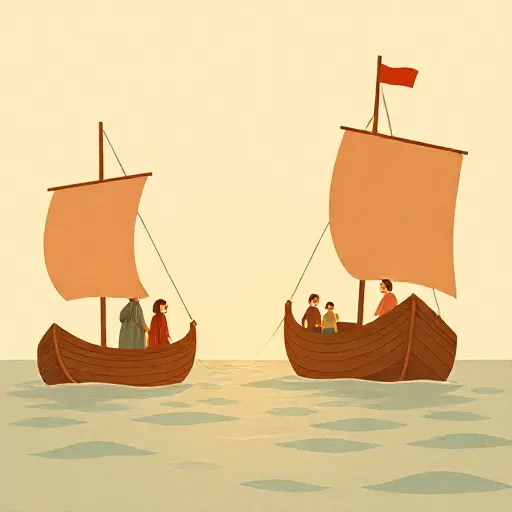
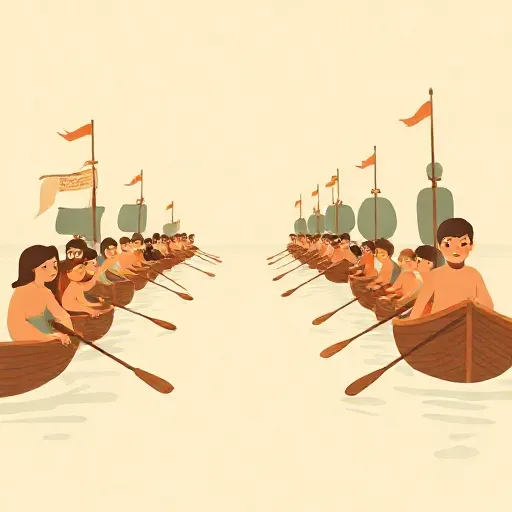
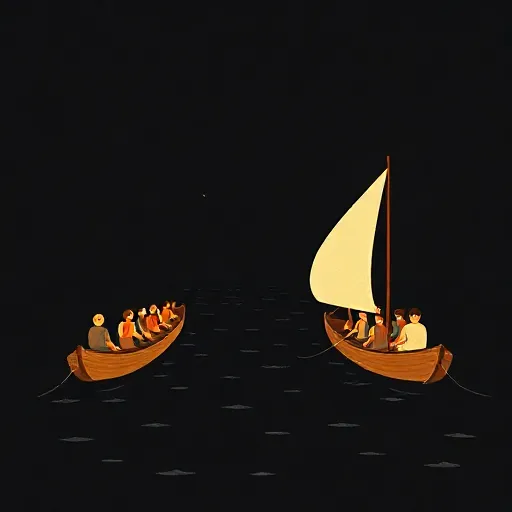
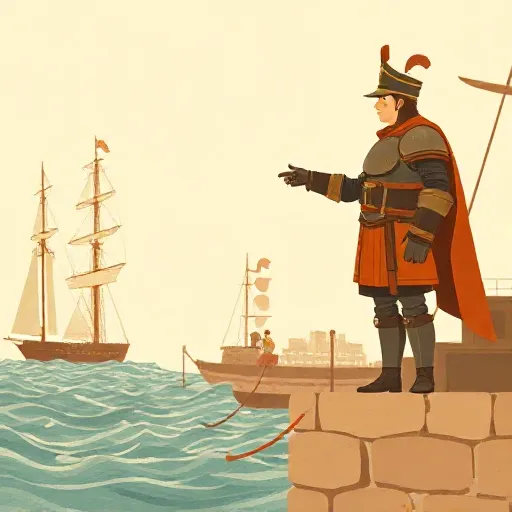
Two Athenian admirals peer out at the same iron‑grey water. One bets that a sea battle will break out tomorrow; the other bets it will not. The night before, they shake hands and go to bed. Now here is the strange thing: the sentence “A sea battle will take place tomorrow” is already about a definite event. If the battle does happen, it seems the sentence was true all along. And if the sentence was true all along, then how could the battle ever not happen? This is the puzzle of future contingents — statements about events that could go either way. The puzzle twists around two ideas. First, the principle of bivalence: the idea that every declarative sentence is either true or false, no third option. Second, the worry that if a future‑tensed sentence is already true right now, the future is already fixed. Philosophers call that logical determinism — the view that the truth of what you will do already forces you to do it, like a door slamming shut before you reach it. Twelve‑year‑olds do not usually worry about bivalence, but they do care whether tomorrow is already decided. That is where Aristotle steps in.
Aristotle’s Knot: No, Wait — Maybe It Isn’t True Yet

Aristotle (384–322 BCE) thought through the sea‑battle example in a short, intense work called On Interpretation. He saw that if every claim about the future already had a truth value — if “There will be a sea battle tomorrow” was already true or already false — then everything that happens would be necessary. That would mean nobody ever has a real choice, because whatever you end up doing was already settled long before you did it. To stop that alarming conclusion, Aristotle seems to have put a crack in the principle of bivalence. Many scholars think he argued that future contingent statements are neither true nor false before the event occurs. On this reading, a sentence like “There will be a sea battle tomorrow” is not yet true or false the night before; it only gets a truth value once the ships clash or stay in port.
But not everyone reads Aristotle that way. A second group of interpreters insists he never meant to deny truth and falsity altogether. Instead, they say, future contingents are true or false, but not in the same settled, in‑the‑bag way as a claim about the past. Their truth is not yet “determined” or “necessary.” It is as if the truth is already there, but still soft. This disagreement matters because the first picture — no truth value yet — sounds like the future is totally open. The second picture — truth already exists, just loosely — sounds like the future is written but with pencil, not ink. Both sides, however, share Aristotle’s goal: saving the idea that tomorrow’s events are not forced by today’s words.
Boethius’s Soft Answer: “Definitely” vs. “Indefinitely” True

Over five hundred years after Aristotle, a Roman philosopher named Boethius (c. 480–524) added a crucial distinction. He noticed that we can talk about truth in two ways. Something is definitely true when it is already settled beyond any chance of turning out otherwise — like the fact that you are reading these words right now. Something is indefinitely true (or true‑or‑false in an uncertain way) when it picks out a real future event but neither side of the alternative has been fixed yet. Boethius argued that future contingent statements are not definitely true or definitely false before the event. They are still genuinely true‑or‑false — the sentence “A sea battle will happen” is not meaningless — but the truth slips between “yes” and “no” like a spinning coin that is definitely going to land on one side, but hasn’t settled yet.
Boethius also left behind a second idea that later thinkers grabbed hold of. Suppose we say: “If God knows that the battle will happen, then the battle will happen.” That whole “if‑then” connection is necessary — you cannot have the first part true and the second part false. But the battle itself might still be a free, contingent event. Philosophers came to call this a conditional necessity (the link is tight) rather than a simple necessity (the event itself is forced). Boethius did not think the future was a story already printed. He thought it was a story whose words exist but whose ending is not yet inked.
The Medieval Tangle: What If God Already Knows?
During the Middle Ages, the debate got tangled with a new challenge. Christian, Jewish, and Islamic thinkers believed that God knows everything, including everything that will ever happen. If God already knows that you will eat pizza next Thursday, then the statement “You will eat pizza next Thursday” must be true right now. And if it is true right now, doesn’t that remove any chance you had to skip the pizza? This looked like the old sea‑battle puzzle wrapped in a divine robe.
Peter Abelard (1079–1142) tried to untie the knot by paying close attention to where the word “necessary” sits in a sentence. Take: “It is necessary that if God knows you will sit, then you will sit.” Abelard said that whole big sentence is true — the connection is forced. But that does not mean “Necessarily, you will sit.” The necessity sticks to the whole package, not to the last piece. A modern way to feel this: it is necessarily true that if you are reading, then you are awake. That does not mean you are necessarily awake — you could have been asleep. The same move, Abelard thought, protects free choice even when God’s knowledge is part of the picture.
A later thinker, William of Ockham (c. 1287–1347), approached the problem from a different angle. He noticed that truths about the past are usually necessary — you cannot change what has already happened. The worry was that if God’s foreknowledge is in the past, then the fact that God knew you would sit is a past, unreachable fact, and suddenly your sitting looks inevitable. Ockham replied that a past truth about the future is special. The sentence “It was true yesterday that you will sit tomorrow” has a past‑tense wrapper, but its content is stubbornly about the future. It reaches forward into the not‑yet. And because it does, Ockham argued, it does not carry the same stiff necessity as a plain past fact like “It rained yesterday.” The future part remains loose. So even if every future event is already known and already capable of being described truly, the events themselves are not forced.
Not everyone agreed. Some thinkers, such as Peter Auriol (c. 1280–1322), took the more dramatic step of denying that future contingent statements have any truth value at all — saying that tomorrow’s choices are neither true nor false until you actually make them. The debate splintered into many schools, but the central question did not disappear.
Why This Argument Still Chases You

The quarrel that started with a sea battle never really ended. When someone says “I know you’ll choose the chocolate ice cream,” and then you do, was your choice free? When scientists build models that predict your next move, does that mean you are just a walking equation? The medieval conversation pushes back against a quick “yes.” Abelard’s insight — that the necessity can belong to the connection, not to the thing itself — shows up today whenever a friend says, “Well, if you were always going to do that, it wasn’t really your fault.” Ockham’s idea — that a true‑before‑now statement about tomorrow is not the same kind of fact as a true‑before‑now statement about yesterday — lives on in debates about punishment, responsibility, and the feeling of being the author of your own life.
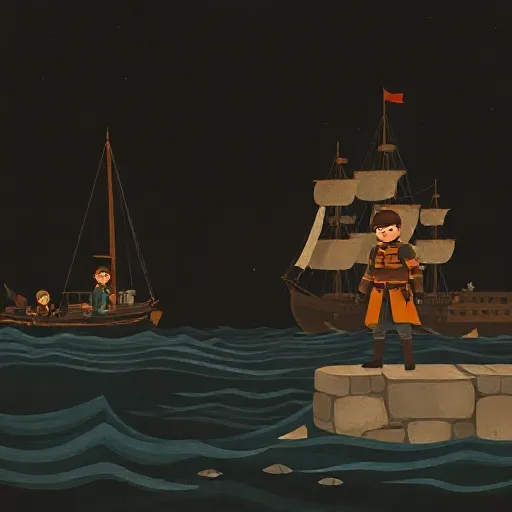
None of this proves that tomorrow is wide open. But it does mean that a sentence being true today does not, all by itself, make tomorrow a prison. The sea‑battle admirals went to sleep not knowing who would win the bet. Their words had not yet hardened into settled history. And maybe, just maybe, neither have yours.
Think about it
- If a friend claims they know you will choose pizza tonight, and you really do choose it, did their claim force your choice? Why or why not?
- Suppose a supercomputer could predict every decision you will ever make. Would you still feel free while making those decisions? Would it be fair to punish you for a bad choice the computer knew you would make?
- If nothing about tomorrow is true yet — if every future claim is neither true nor false — can any plan or promise about the future be useful? What would we lose?