
Can You Change the Future, or Was It Always Going to Happen?
A Sickbed and a Lazy Question

Suppose you wake up with a terrible fever and a sore throat. As you reach for the phone to call the doctor, a strange thought stops you: “If it’s true that I will recover, I’ll recover whether I call or not. So why bother?” This is the Lazy Argument, and ancient philosophers took it seriously. It suggests that if the future is already fixed — if a statement like “you will recover” has been true forever — then your actions might be pointless.
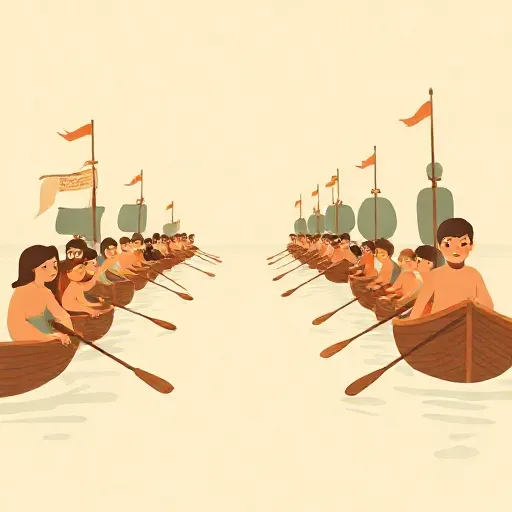
The idea that the future is inevitable and we are powerless to shape it is called fatalism. The Lazy Argument builds on a simple-sounding logical rule: the Principle of Bivalence. This principle says every statement has exactly one truth value: true or false. If that rule applies to every statement about the future, then for any pair of opposite claims — “there will be a sea battle tomorrow” versus “there will not be” — one of them has always been true. And if it’s always been true, some philosophers argued, that event is necessary, meaning you can’t do anything to prevent it. So why deliberate?
Aristotle’s Sea Battle: Maybe the Future Isn’t Settled Yet
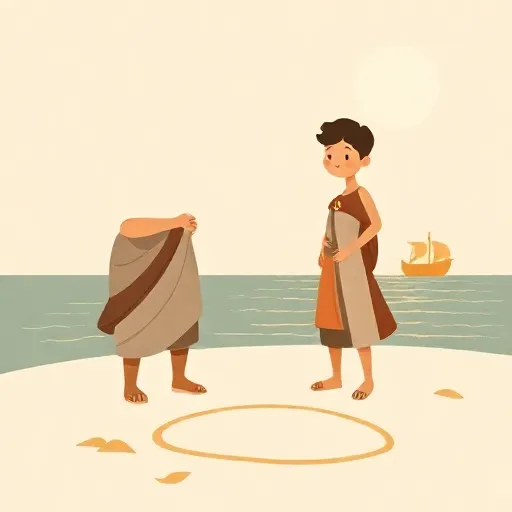
Aristotle (384–322 BCE) thought the fatalist conclusion was obviously wrong. We deliberate about what to do all the time, and our choices often change what happens. A cloak might wear out, but before that it could have been cut up instead. So not everything that hasn’t happened yet is inevitable.
To block the fatalist argument, Aristotle challenged its starting point. He suggested that the Principle of Bivalence does not apply to statements about things that could still go either way. Take “there will be a sea battle tomorrow.” Before the battle, it isn’t inevitable; it depends on what people decide. So, Aristotle thought, such a sentence is neither true nor false — it’s indeterminate. Only after the event does the statement become true or false (and at that point it’s also necessary, because we can’t undo the past).
This move preserves the idea that we can genuinely shape the future. But it comes at a cost: it means logic’s neat division into true and false doesn’t cover everything.
Epicurus and the Atomic Swerve: Chaos to the Rescue
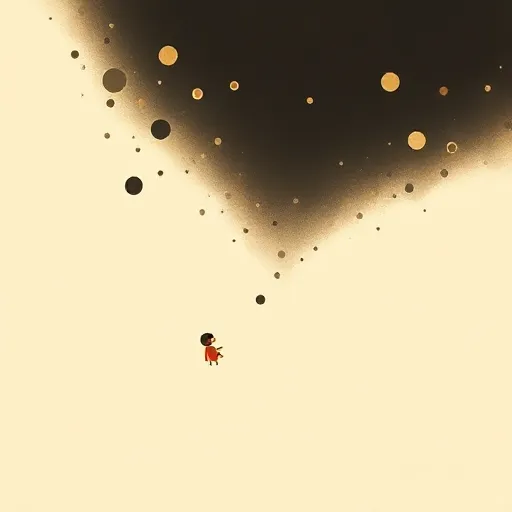
Epicurus (341–270 BCE) agreed with Aristotle that fatalism is unacceptable, but he went further. He was a materialist: everything, including our minds, is made of atoms — tiny, uncuttable bits of matter moving through empty space. If atoms only moved in predictable ways, like billiard balls, every future event would be determined by past collisions. Epicurus thought that kind of rigid causal determinism would make us slaves of fate.
To avoid that, he introduced an unpredictable twist: occasionally, atoms swerve slightly at random times and places. This tiny, chance motion breaks the endless chain of cause and effect. Because nothing forces the swerve, the future is genuinely open. Statements like “you will recover” are neither true nor false until the outcome takes shape. Epicurus also rejected the logical rule that “either p or not-p” must be true for future undecided matters, another way to keep the future from being locked in.
Carneades’ Twist: Truth Without Chains

The skeptic Carneades (214–129 BCE) thought Epicurus’ solution was too drastic. He accepted the Principle of Bivalence. For any pair of contradictory future statements, one is already true and has always been true. But he denied that this makes the event necessary.
Carneades drew a sharp distinction between a truthmaker and a cause. If someone says, “Tim O’Keefe will not die of cancer,” and years later Tim dies peacefully of old age, the statement was true all along. But the truth isn’t a mysterious force that causes the peaceful death. It’s simply the case that things will turn out that way — like saying a past event is true not because of its present traces, but because it actually happened. So a true future statement does not rob you of your power to act. Your own voluntary motion of the mind is still a cause of events, and you could have acted differently. Truth about the future doesn’t pull the strings.
The Stoic Dog and Cart: Fated but Not Pointless
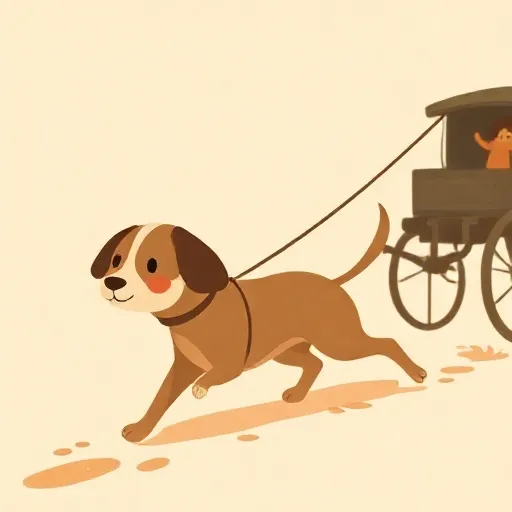
The Stoics, including Chrysippus (c. 279–206 BCE), took the most surprising stance: both the Principle of Bivalence and causal determinism are true, and yet our actions still matter. They believed the entire cosmos is organized by a wise, material divine mind, and everything happens according to an unbroken causal chain — fate.
But they argued that some outcomes are conjoined, or “co-fated,” with our actions. It is fated that you recover and fated that you call the doctor. Recovery won’t happen without the call, even though both are determined. So deliberation is not pointless; it’s part of how the fated outcome comes about. Their analogy was a dog tied to a moving cart: if the dog walks willingly, it follows smoothly; if it resists, it gets dragged. We still move ourselves, and our assent to impressions — our rational judgment — is what makes our actions “up to us,” even though we don’t have the ability to do otherwise. The truly virtuous person, they said, cannot choose evil, yet we still praise that person. That’s because virtue is a kind of reliable skill, not a lucky guess.
Why It Still Matters: Are You Steering or Just Along for the Ride?

These ancient arguments aren’t just museum pieces. Every time you wonder, “Should I study for that test, or was it always going to go a certain way?” you’re stepping into the same puzzle. If the future is already true, does effort make sense? Does it make sense to blame someone for a bad choice if, deep down, they couldn’t have done otherwise?
Aristotle, Epicurus, Carneades, and the Stoics each tried to protect the everyday experience that our decisions count. Some tweaked logic, some tweaked physics, some rethought what “true” really means. None of their answers is obviously correct, and the debate still rumbles in philosophy, science, and law. The next time you lie in bed with a sore throat and reach for the phone, you’re living the question they fought over: is the future something we write, or something we just read?
Think about it
- If a supercomputer could predict every choice you’ll make with perfect accuracy, would it still make sense to say you “decide” things? Why or why not?
- Imagine you promise a friend you’ll help them and later find it’s really inconvenient. If everything is fated, does it make sense to keep your promise? What if it’s not fated?
- When you feel proud of a hard-won achievement, does that pride assume your past choices could have gone differently? How would you feel if they couldn’t have?