The 2,500-Year-Old Case Against a Permanent Self
The Search for a Self That Isn’t There
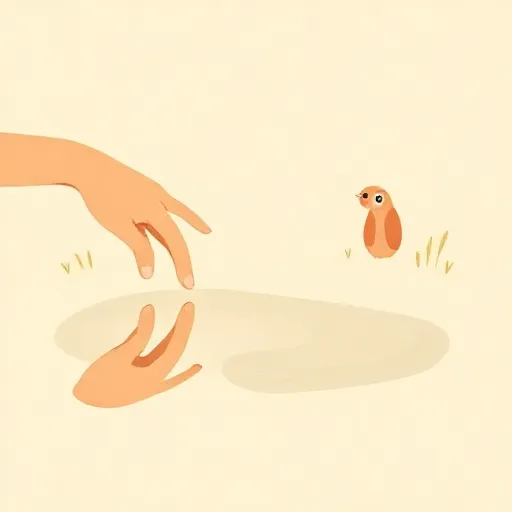
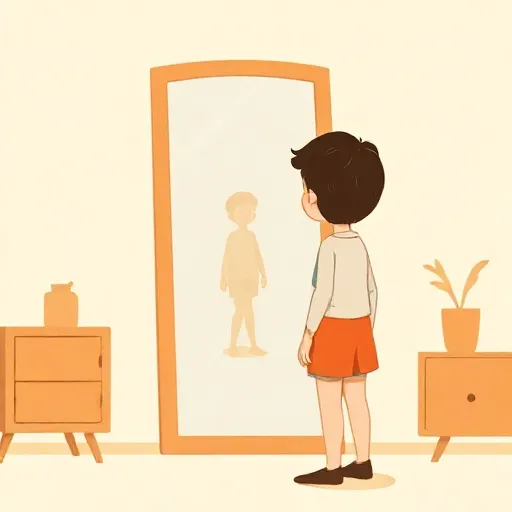
Close your eyes for ten seconds and try to catch your “self.” Not your body, not your name, but the little thinker inside — the one who seems to watch your thoughts, feel your feelings, and call the shots. What do you actually find? Maybe a stream of words, a memory of lunch, an itch on your knee. But a solid, separate thing that is you? That’s a lot harder to pin down.
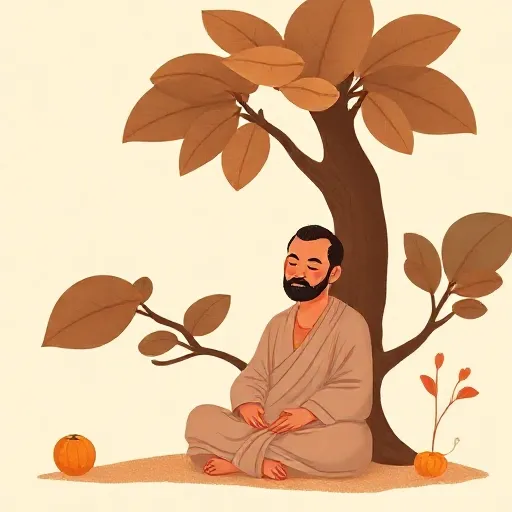
Around 2,500 years ago, a teacher in ancient India made a startling claim: that inner self you are looking for does not exist. The man we now call the Buddha (5th century BCE) argued that what we call “me” is simply a bundle of constantly shifting mental and physical events — nothing permanent, nothing separate. He called this doctrine not‑self (anātman). It flew directly against the popular idea of the time — found in the Upaniṣads — that each person has an eternal, unchanging soul (ātman) that moves from life to life. To the Buddha, believing in such a self was the very root of human suffering. Letting go of that belief, he taught, was the key to real freedom.
The not‑self idea raises an enormous puzzle right away, though. If there’s no solid me, then what carries my memories? What makes me the same person I was yesterday? And if, as many Buddhists also believe, actions have consequences that reach into a future life, what ties those lives together? These questions drove centuries of debate and led to some of philosophy’s most careful models of the mind.
Five Piles That Make a Person
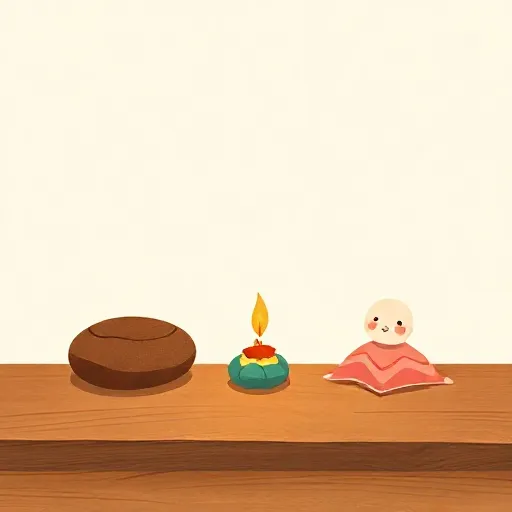
Instead of a soul, the Buddha offered a blueprint of ordinary human experience: the five aggregates (skandhas). An aggregate is just a heap, a collection that gets bundled together by habit. The five heaps are:
- Form — your physical body and the sensory world it contacts.
- Feeling — the raw tone of every experience as pleasant, unpleasant, or neutral.
- Perception — the ability to recognize and label things (tree, music, friend).
- Mental formations — habits, intentions, wishes, attitudes that push you toward action.
- Consciousness — the bare awareness that lights up each moment of seeing, hearing, touching, or thinking.
Picture a video game character: at any moment you have a visual display (form), a burst of sound that feels good or bad (feeling), a recognition that an item is a power‑up (perception), an urge to grab it (mental formation), and the simple “screen‑on” quality that makes the whole scene present (consciousness). The Buddha’s insight was that these five processes happen so fast and so tightly woven together that we mistake them for a single, solid player sitting inside. But the player is just the game running — there’s no little person in the cartridge.
If There’s No Self, What Carries On?
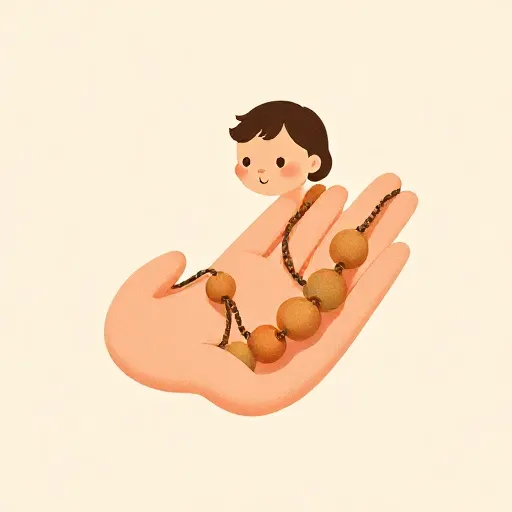
Here’s the rub. If every mental event vanishes the moment it appears, how does anything last? How do you remember your first day of school? How can a bad habit, formed years ago, still trip you up today? And if karma — the idea that actions shape future experience — is real, what stores those karmic seeds?
The Buddha’s earliest followers answered with a word we still use: mind‑stream (citta‑santāna). There’s no solid riverbed, they said, only the flowing water. One moment of consciousness causes the next, like a chain of dominoes. Memory and habit survive not because a self holds them, but because each moment imprints its pattern on the one that follows. Still, this picture left gaps. What happens in deep, dreamless sleep, when conscious moments seem to stop? To plug that hole, the Theravāda school (the “Doctrine of the Elders”) introduced a life‑continuum mind (bhavaṅga‑citta) — a subtle, background hum of awareness that keeps the stream going whenever the surface is still.
Yet critics pointed out that a mere succession of moments can’t explain why yesterday’s anger can smolder for a week. If each moment dies and only plants a seed in the next, how does a seed planted a thousand moments ago suddenly sprout? Something richer seemed needed.
A Warehouse for Habits: The Storehouse Consciousness

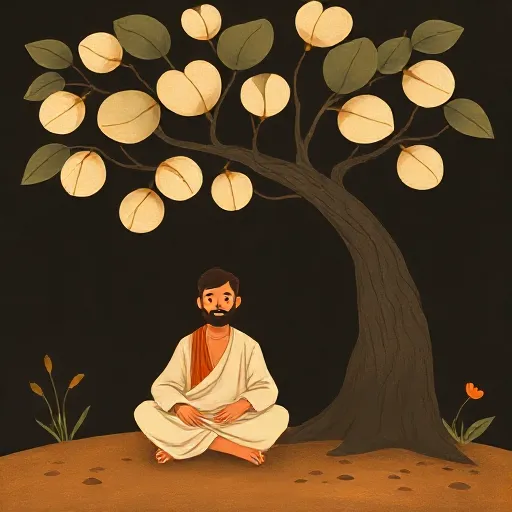
Around the 4th century CE, two brothers, Asaṅga (ca. 315–390) and Vasubandhu (ca. 320–380), founders of the Yogācāra school, proposed a bold new idea: a repository consciousness (ālaya‑vijñāna). Think of it as a deep, invisible trunk that travels with your mind‑stream. Every action, every perception, every flash of desire leaves a seed in that trunk. Those seeds don’t vanish — they stay dormant until conditions are right, then they sprout as new feelings, thoughts, or habits.
The repository consciousness explains why the same person can wake up grumpy on a sunny day or why a smell from childhood can instantly bring back a forgotten memory. It also acts as a bridge between lives, carrying the karmic seeds without needing an eternal soul. Vasubandhu compared it to a river that flows underground even when you can’t see it, ensuring that nothing is truly lost. For the Yogācārins, the whole world you experience is shaped by the contents of that storehouse — you never meet a raw, mind‑independent reality, only a version cooked up from your own seeds.
That position sounds radical, and it sparked another huge debate: does anything outside our mind even exist? Vasubandhu argued in his Twenty Verses that objects in dreams have color, shape, and location without any real external thing, so why should waking objects be different? Most Buddhist schools stopped short of full‑blown idealism, but they all agreed on this much: the sense of a solid, separate self is a deeply ingrained illusion, and the mental habits that produce it can be undone.
Centuries Later: Hume’s Bundle and Your Lunch

You don’t have to be a Buddhist to notice the puzzle. In the 18th century, the Scottish philosopher David Hume (1711–1776) also tried to find his self and came up empty. He wrote that whenever he looked within, he only stumbled on particular perceptions — heat, cold, light, shadow, love, anger — never a self standing apart from them. Hume called the mind a bundle or collection of different perceptions. His description sounds strikingly like the Buddha’s five heaps, and modern scholars have often pointed to the parallel.
Think about a moment when you were truly absorbed — playing a sport, reading a book, listening to a friend. For that stretch of time, you probably weren’t thinking “I am here, being me.” The “I” only seemed to show up later, when you stepped back and reflected. Both Buddhist thinkers and Hume suggest that the “I” is exactly that: a reconstruction, not a thing that exists in real time.
Why It Still Matters: Letting Go of the “I”
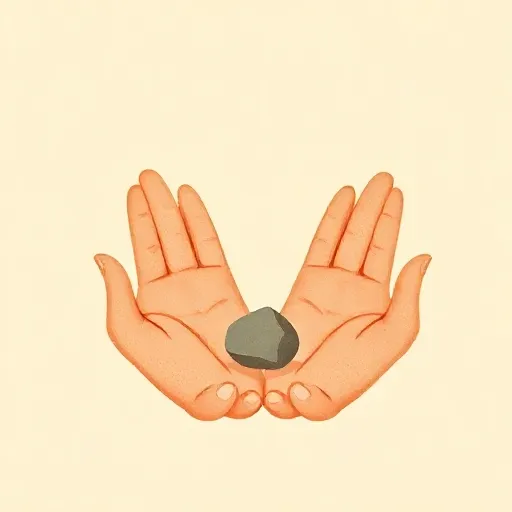
So what if the not‑self view is correct? The Buddha’s answer wasn’t just intellectual — it was practical. He noticed that a huge amount of everyday suffering comes from protecting, defending, and polishing the image of “me.” You feel hurt when someone insults you, anxious when your reputation wobbles, furious when your plans go wrong. Each of those reactions assumes a solid self that owns the insult, the reputation, the plan.
If you instead treat thoughts and feelings the way you treat weather — something that passes through — the sting often fades faster. Buddhist traditions developed entire training programs, from mindfulness to compassion practices, to weaken the habit of constructing a rigid self. The goal isn’t to erase personality or stop making choices; it’s to stop clutching at a fictional “me” so tightly that every bump becomes a crisis.
You can test a tiny version of this at lunch. Next time you feel a surge of embarrassment because you said the wrong thing in front of friends, ask yourself: Who is being embarrassed right now? Is it a solid thing, or is it just a flash of discomfort, a thought about an audience, a memory of a mistake, all tumbling together? You might find that the feeling passes more quickly when you stop feeding it with the story that “I am being humiliated.” That small shift is what Buddhist philosophy of mind was built for — not just to answer a big question, but to change how it feels to be alive.
Think about it
- Imagine a day when every thought, feeling, and memory you have is perfectly copied into a new body while your old body falls asleep forever. Would the copy be you? Why or why not?
- If there is no permanent self, should you still be held responsible today for a promise you made six months ago? What makes the “you” of six months ago connected to you now?
- Can you go a full minute without thinking the word “I,” “me,” or “mine”? Try it — and then ask whether the “I” you were trying to ignore really exists, or if it was just another thought popping up.