You Don't Have a Self: The Buddha's Radical Argument
The Prince Who Walked Away from Everything
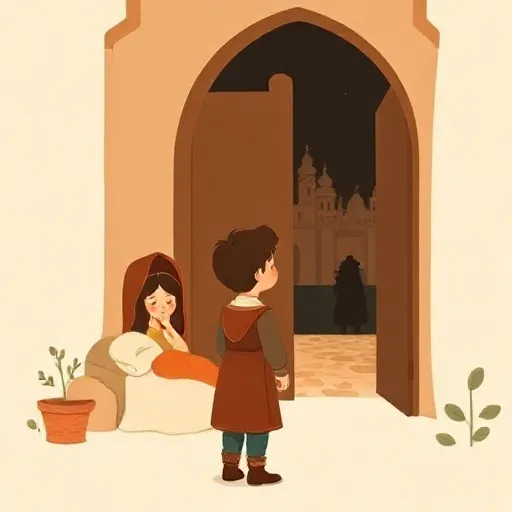
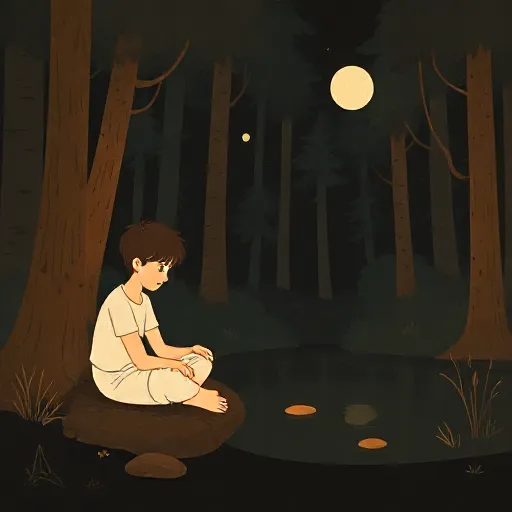
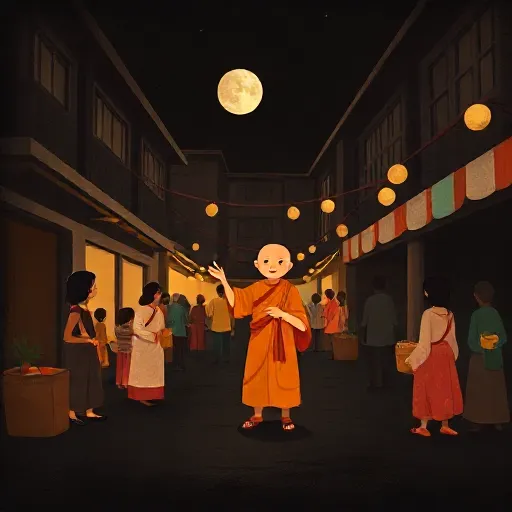
Around 400 BCE, a man named Siddhārtha Gautama made a shocking choice. He was born into a wealthy family, a prince with a comfortable life. He had a wife and a young son. But one night, he looked at his sleeping family and walked away. He left the palace, traded his fine clothes for simple robes, and went into the forest. His mission: to find a cure for suffering.
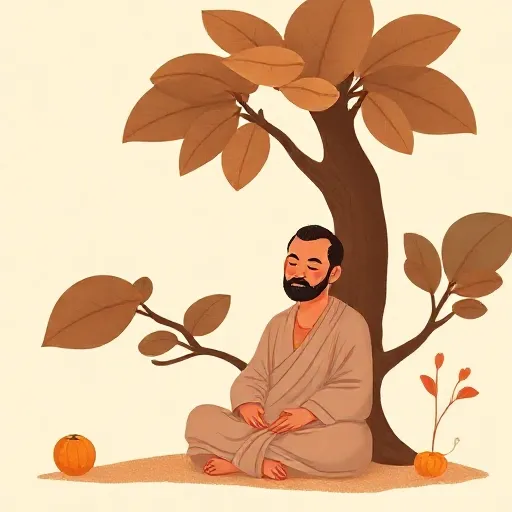
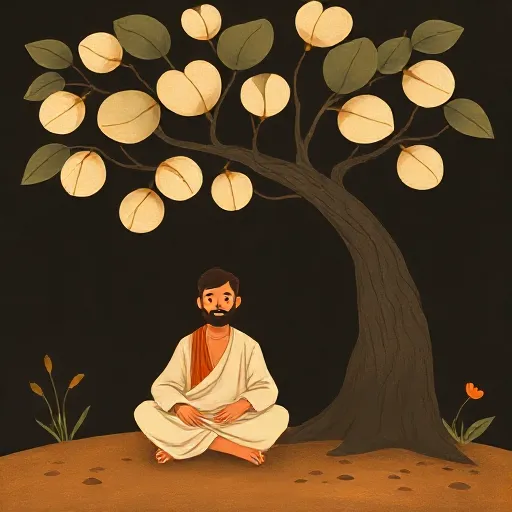
Gautama had seen that everyone—rich or poor, young or old—eventually faces sickness, old age, and death. He believed there had to be a way out of this endless cycle of distress. For years he studied with wandering teachers and tried extreme practices like fasting, but nothing worked. Finally, he sat down under a tree and vowed not to get up until he understood the truth. Through deep meditation, he had a breakthrough. He became the Buddha—the “awakened one”—and spent the next 45 years teaching others what he had discovered.
The Doctor’s Diagnosis: The Four Noble Truths

The Buddha summed up his discovery in four simple statements, called the Four Noble Truths. He compared himself to a doctor. The first truth is the diagnosis: there is suffering. By this he didn’t just mean pain like a stubbed toe. He meant the deep frustration, sadness, and unease that comes from the fact that everything—including you—is constantly changing and eventually ends.
The second truth is the cause: suffering arises because we crave and cling to things that cannot last. We want to hold on to pleasant feelings, to people, to life itself, and we push away what we dislike. This craving is fueled by ignorance—not knowing how things really are.
The third truth is hopeful: there is a way to stop suffering. If we remove its causes, we can reach nirvāṇa, a state of peace and freedom. The fourth truth is the treatment plan: the Eightfold Path, a set of practices that train you to see clearly, act wisely, and develop mental focus.
But the hardest part of the Buddha’s diagnosis was his claim about what we really are. He said we are not permanent selves.
No Self: The Argument from Impermanence and Control
The Buddha’s teaching of non-self (anātman) is the idea that there is no unchanging “I” or “me” inside us. He said a person is just a bundle of five kinds of changing psychophysical elements, called the five skandhas: your body, your feelings, your perceptions, your mental habits, and your consciousness.
The Buddha gave arguments for why none of these could be a self. The first is the argument from impermanence: if there really were a self, it would have to be permanent—something that stays the same from one life to the next. But every one of the five skandhas is constantly changing. Your body grows and dies, your feelings shift, your thoughts come and go. So there is no permanent self.
The second is the argument from control: if you had a self, you would expect it to be the part of you that is in charge. But think about a controller that can never control itself. A knife cannot cut itself, a fingertip cannot touch itself. Likewise, if the self were the ultimate controller, it could never want to change its own state. Yet we very often wish our thoughts or feelings were different. So the self as a built-in boss doesn’t exist.
These arguments don’t prove that nothing is real—just that the thing we call “I” is not a single, lasting thing. It’s more like a river than a diamond.
The Karma Puzzle: Who Gets Reborn?
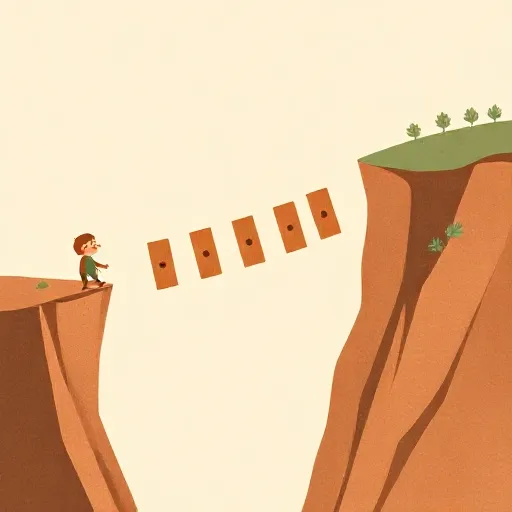
Here’s a problem. The Buddha accepted karma and rebirth: good actions lead to pleasant experiences later, bad actions to suffering, and this process can carry across many lives. But if there is no self, who is it that gets reborn? Who deserves the reward or punishment? If the person in a future life has no self in common with you, it seems unfair.
The Buddha’s answer is called the middle path. He said that the person in an earlier life and the person in a later life are neither the same nor different. At first that sounds like a contradiction. But his point was that strictly speaking, there are no persons at all—only a long, impersonal chain of causes and effects. Ignorance leads to craving, craving to action, action to future experiences, and so on. That whole stream is ultimately just a series of momentary events.
However, from a conventional point of view, it is incredibly useful to call that stream a “person” and to talk about moral responsibility. If I identify with my future self, I’m less likely to do things that bring future pain. So the person is a conceptual fiction that helps reduce suffering—but when we take it too seriously and think it’s a real, permanent self, that very fiction becomes the source of our deepest distress.
The Buddha illustrated this with a fire simile. When a fire goes out, you can’t say it went north, south, or any direction—it has simply ceased. Similarly, when a fully awakened person dies, you can’t say they exist, don’t exist, both, or neither. Those questions only make sense if you assume a permanent self that could go somewhere. Once you drop that assumption, the puzzle dissolves.
Reason, Silence, and the Wounded Arrow

So was the Buddha a philosopher? Some say no. They point to stories where he refused to answer big questions—such as whether the world is eternal, or whether the soul and body are the same. He called these questions distractions. In a famous simile, he said a person who demands answers to such things is like “someone who has been wounded by an arrow but will not have the wound treated until they are told who shot the arrow, what sort of wood the arrow is made of, and the like.” That sounds like someone who only cared about practical results, not deep thinking.
But the arrow story has another side. On other occasions, the Buddha used careful reasoning to show that a question itself made a false assumption. For instance, he explained the “neither the same nor different” puzzle by pointing out that the words “exists” and “does not exist” don’t apply when there’s no thing to describe in the first place. That’s a philosophical move, not mystical silence.
Later Buddhist thinkers developed the Buddha’s ideas into a full philosophical tradition, debating metaphysics, logic, and language for centuries. They believed the Buddha himself had used reason to wake people up. While we can’t be certain exactly what the historical Buddha intended, many interpreters see him as a pragmatist who used philosophy as a tool—one that could be set aside when it didn’t help end suffering, but was never forbidden.
Why It Still Matters: Who Are You, Really?
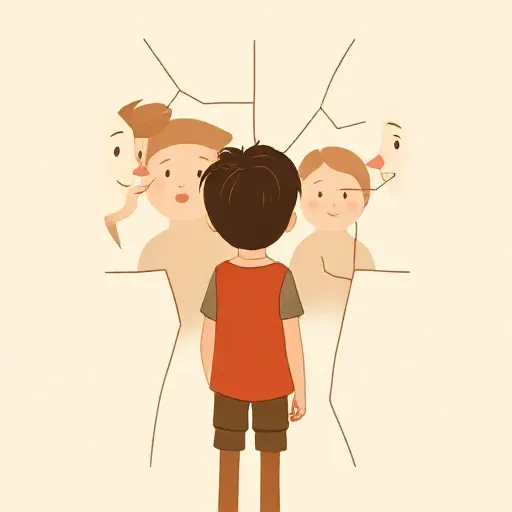
The Buddha’s challenge is still alive. Today, psychologists and neuroscientists talk about the self as a process, not a stable thing. Your memories, personality, and body are constantly being rebuilt. Yet most of us walk around feeling like there’s a solid “me” inside that owns our thoughts and makes our choices.
So ask yourself: if there were no permanent you, would that be a relief or a terror? Could you still care about your future without clinging to a fixed identity? The Buddha suggested that letting go of the fiction of a permanent self could reduce suffering—but he also showed how hard that idea really is.
Think about it
- If you could swap all your memories with someone else’s, would you still be the same person? Why or why not?
- The Buddha said clinging to things causes suffering, but could some attachments be good—like caring deeply about a friend or a dream? Where would you draw the line?
- If there is no permanent self, should you be less harsh on yourself when you make mistakes? What would change about the way you live?