Is Your Sadness a Sickness? The Fight Over Mental Disorders
A Sadness That Won’t Lift
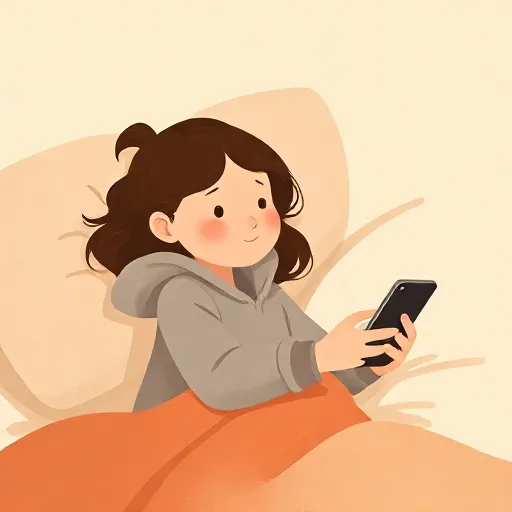
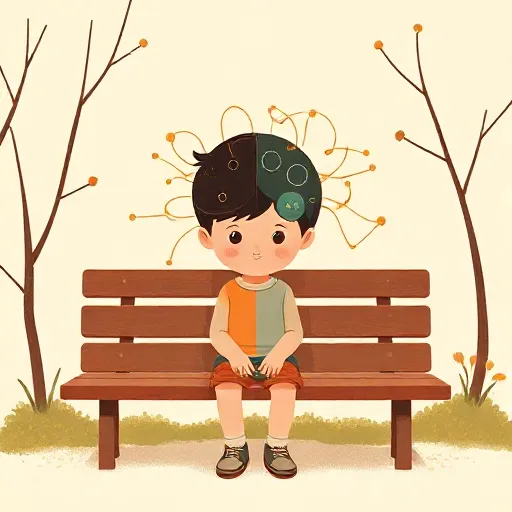
Three months after her grandmother died, Maya still can’t get out of bed some mornings. She quit soccer. Her friends whisper that she’s depressed; her mom insists it’s just grief that needs time. The disagreement raises a bigger question: where does ordinary sadness end and a mental disorder begin?
This is the boundary problem. Psychiatrists use handbooks like the DSM (the Diagnostic and Statistical Manual of Mental Disorders) to decide whether someone has a disorder. But those handbooks are rewritten every few years, and what they count as a disorder keeps changing. Philosophers step back and ask: what kind of thing is a mental disorder, anyway? Is it a broken part inside you—like a fractured bone—that you can discover with science? Or is it a label that a culture invents to mark behavior that makes people uncomfortable? That fight splits thinkers into two rough camps. Naturalists believe mental disorders are objective dysfunctions we can uncover through research. Evaluativists hold that values, social norms, and history shape what gets called a disorder, and there is no value‑free fact of the matter.
Maya’s case is the perfect laboratory for that argument. Looking just at her behavior and feelings, can we—without any shred of social opinion—pick out a line that separates healthy grief from illness? The next two sections show why philosophers have fought about this for decades.
The Broken Machine: Dysfunction as a Clue
Naturalists think the answer is yes—at least in principle. They try to define disorder in terms of some part of the person not working the way it is supposed to. The simplest version, from the philosopher Christopher Boorse (20th–21st century), is the biostatistical theory. On this view, a disease is a state that depresses a bodily or mental function below the level typical for your species, age, and sex. A heart that pumps too weakly, for instance, is statistically abnormal and therefore diseased. No value judgment about harm is needed—just a measurement against a reference class.
A more influential proposal is the harmful dysfunction analysis from Jerome Wakefield (20th–21st century). He broke the concept into two pieces. First, there must be a dysfunction: a failure of some internal mechanism to perform the natural job it was shaped to do by evolution. For example, the fear system is supposed to fire when real danger is near. If it triggers during a math test, that system is not doing its evolutionary job. Second, that dysfunction must cause harm to the person, where harm is judged by the standards of the person’s own culture. Wakefield hoped that the first piece—dysfunction—could be described in purely scientific, value‑free terms, while the second piece admits that values creep in when we decide that the faulty fear response actually makes life worse.
Both attempts run into trouble. The biostatistical theory has to pick a reference class—healthy women my age? healthy men who exercise the same amount?—and that choice already depends on what you consider relevant, a value‑laden decision. And Wakefield’s notion of a natural “function” is slippery. Evolution doesn’t come with a blueprint; it just shows which traits happened to help ancestors survive. Merely proving that a trait reduced reproductive fitness in some ancient environment doesn’t automatically make its current failure a disease. Moreover, the harm half of Wakefield’s definition is openly cultural, so even if dysfunction were objective, the disorder label would still depend on what a community finds harmful. That brings values straight back in.
Drawing the Line: Who Decides What’s Crazy?
Evaluativists say you cannot purify the concept of mental disorder of social judgment even at the first step. They point to dramatic historical changes. Until 1973, the DSM listed homosexuality as a mental disorder. Psychiatrists didn’t suddenly discover a brain mechanism that made it healthy; society’s moral attitudes changed, and the diagnosis was voted out. Thinkers like Thomas Szasz (1920–2012) concluded that mental illness is a myth—a convenient label for “problems in living” that we would rather treat as medical issues than as social or moral ones. Michel Foucault (1926–1984) traced how modern science gave psychiatrists new forms of power, letting them sort people into categories of normal and abnormal, sane and insane. In this picture, a diagnosis is as much an act of social control as a medical fact.
Even today, evaluativists warn about medicalization: turning ordinary troubles into disorders. Grief can become major depressive disorder; shyness becomes social anxiety; childhood tantrums become oppositional defiant disorder. Once a label is official, psychiatrists and drug companies can influence how we understand our own lives, sometimes in helpful ways, sometimes not. Yet even the strongest evaluativist usually concedes that some conditions—schizophrenia, for instance—involve such severe suffering and disorganization that they cannot be reduced to a value choice alone. The real philosophical challenge is to figure out how much of a disorder is built by society, and how much is forced on us by our bodies and brains.
Where Does That Leave You?
So what do these giant arguments mean for you, sitting in a classroom or lying awake at midnight, wondering whether your own worries count as something “wrong”? Even if philosophers don’t agree on a final definition, the disagreements give you tools. You can ask: Who is drawing the line between normal and disordered here—my doctor, my culture, my own feeling? Does the label open up help I need, or does it box me into a story that isn’t mine?
The neurodiversity movement applies this questioning directly. It argues that some mental differences, like autism, are simply natural variations—more like being left‑handed than having a broken arm. Supporters of neurodiversity push for accommodation and respect rather than medical treatment. But even they have to wrestle with cases where a difference causes intense suffering. The debate between naturalists and evaluativists doesn’t have a referee who can blow the final whistle. Instead, it stays alive every time a new diagnosis is proposed, every time an old one is removed, and every time someone glances at a checklist and wonders: is that me?
The next time you feel sad, scared, or unfocused, remember that you are standing at the very edge that philosophers have been mapping for centuries. You get to ask not just “am I sick?” but “what do I want health to mean for me?”
Think about it
- If a psychiatrist said that your sadness after losing a pet was a clinical disorder, would you accept that label? What might you gain, and what might you lose?
- Suppose two cultures disagree about whether hearing voices is a spiritual gift or a mental illness. Is one culture right, or are they both just using different values?
- If scientists could scan brains and find a reliable “depression marker,” would that settle whether someone has a disorder, or would we still need to consider how they feel and what they want?