Is a Disease a Natural Fact or a Value Judgment?
When a Fever Is Not Just a Hot Day

Imagine it’s 10 a.m. and the school nurse checks a student’s forehead. His temperature: 101°F. She sends him home — he has a fever, possibly the flu. Another student walks in, showing off a fresh ear piercing. The nurse doesn’t call it a disease, even though the skin has been deliberately pierced. What’s the difference? And why does a doctor treat a broken arm but not a bad haircut, even if both make you unhappy?
This puzzle lies at the heart of the philosophy of medicine. If we want to know what health and disease really are, we have to ask: is a disease something objective — a biological breakdown scientists can discover — or is it a judgment we make based on our values? The answer matters because it affects who gets called sick, who gets treated, and who gets blamed for being different.
The Naturalist View: Your Body as a Broken Machine
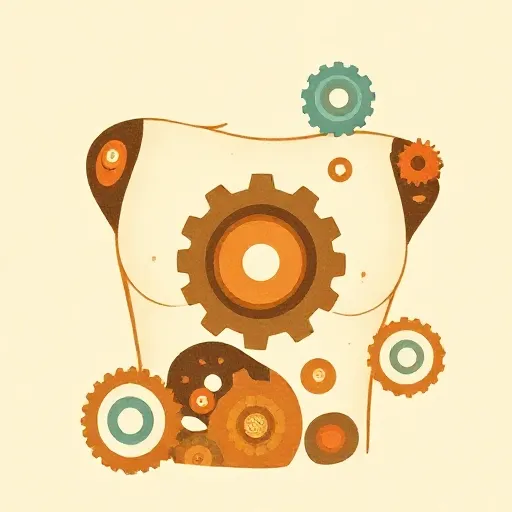
The most influential answer among philosophers is called naturalism. Naturalists say that diseases are real, objective facts about how a body is supposed to work. The human body, they argue, is a biological system made up of organ systems, each with a natural function. When one of those systems fails to perform its job — when it malfunctions — that is a disease.
The classic version of this view was defended by the philosopher Christopher Boorse (born 1946) in the 1970s. Boorse claimed that health is simply the body functioning as a member of our species typically does. A disease, then, is a deviation from that species-typical design — a statistically abnormal way of working that makes you less fit for survival and reproduction. He distinguished “disease” (the biological malfunction itself) from “illness” (the experience of suffering because of that malfunction).
Most naturalists today accept a two-stage picture. First, we identify a biological malfunction — a heart that doesn’t pump properly, a lung that can’t transfer oxygen. Second, we decide that this malfunction causes harm and needs medical attention. The harm part involves a value judgment, but the malfunction part is supposed to be a purely scientific fact, independent of what anyone thinks. So when a doctor diagnoses strep throat, she is discovering a real breakdown: bacteria have invaded, your immune system is fighting, and your throat tissue is damaged. It’s not just that we dislike sore throats — something in the biology has gone wrong.
The Constructivist Counterpunch: Disease in the Eye of the Beholder
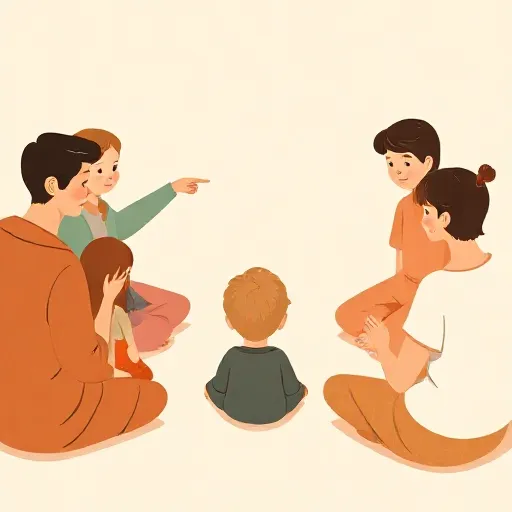
The rival view is constructivism. Constructivists think that disease is not an objective fact about biology but something we invent — a label we attach to conditions we find harmful or undesirable. A constructivist would say that you don’t first discover a malfunction and then decide it’s bad. Instead, you first decide that a condition makes someone’s life worse, and then you look for biological processes to pin the blame on. As the philosopher Ron Amundson put it, “the partitioning of human variation into the normal versus the abnormal has no firmer footing than the partitioning into races.” What we call a disease is just a difference that society disapproves of.
A strong form of this idea appears in the social model of disability, pushed by disability activists in the 1970s. They argued that what makes people with impairments worse off is not their bodies, but the way society is set up — stairs instead of ramps, stigma instead of support. The same logic can be applied to disease: maybe the suffering comes from how we treat people, not from any biological error.
More recently, philosopher Shane Glackin (21st century) refined the constructivist picture by emphasizing “grounding.” The biological facts about someone’s body exist, but what makes those facts count as a disease is a prior set of value judgments — the normative frame determines which biology we even notice. For a constructivist, diseases are not discovered like new species; they are decisions we make about which kinds of lives are acceptable.
The Big Problem for Constructivists: Why Not Call Everything a Disease?
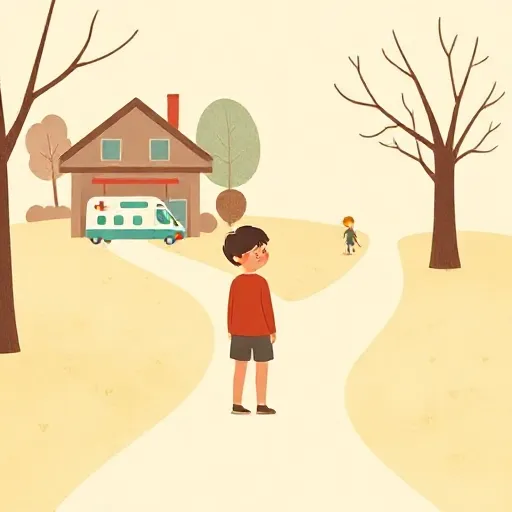
Constructivism has a major hurdle. We don’t treat every kind of disadvantage as a disease. The ugly, the poor, people with no sense of humor — we may think their lives go badly, but we don’t rush them to the emergency room. So what is special about medical complaints?
Philosopher John Harris (21st century) proposed the “ER test”: a condition is a disorder if emergency room staff would be negligent not to fix it. But that test is too broad. Not speaking the local language can make someone’s life much worse; should ER doctors be required to teach it? Clearly not. We need to explain why some problems are medical and others are social or legal, without already assuming a notion of biological malfunction.
Naturalists have a ready answer: the conditions we call diseases are those caused by a special kind of inner process — a breakdown of normal physical or psychological function. That causal story comes first, even if we first notice the harm. Constructivists who try to avoid talking about malfunction, like Rachel Cooper (21st century), end up saying that a disease is just a bad state that requires medical attention. But that still doesn’t tell us what makes attention “medical” in the first place without sneaking in the idea of a broken body.
The naturalist claim is not that doctors never misapply the disease label. They have — horribly, as we’ll see. But a concept can be misused without being invalid. The concept of disease, naturalists insist, is built around biological breakdown, even when our values lead us to apply it wrongly.
Why It Still Matters: Who Decides What’s Normal?
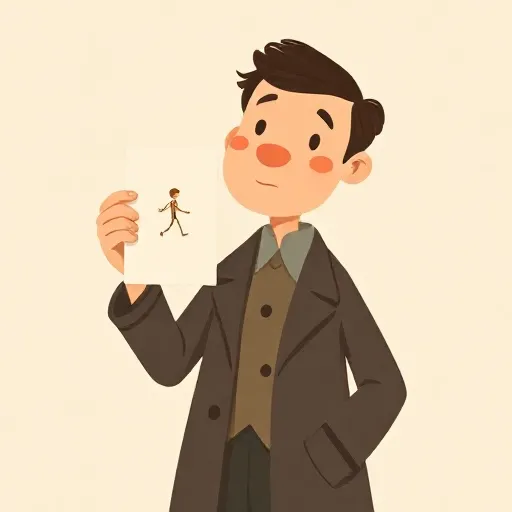
This isn’t just a dusty argument. Throughout history, people in power have used the disease label to control those they didn’t like. In 1843, an American physician named Samuel Cartwright diagnosed enslaved people who ran away with drapetomania — the “disease causing slaves to flee.” Soviet psychiatrists once labeled political dissidents as having “sluggish schizophrenia.” Until the 1970s, homosexuality was officially classified as a mental disorder, largely because of moral disapproval, not scientific discovery.
Constructivists point to these cases as proof that disease categories are tools of social control. Naturalists reply that these were misapplications of the concept. When psychiatrists finally removed homosexuality from the diagnostic manual, they were not inventing a new concept — they were correcting a mistake by finally getting the science right. The concept of disease, properly applied, remains about biological malfunction.
Today, the debate touches your own life. Is extreme sadness a brain malfunction or a normal response to loss? Are high levels of energy and distraction a disorder, or just a different way of being? When doctors lower the threshold for high blood pressure, millions of healthy people become “patients” overnight. The line between disease and ordinary variation is never purely scientific; it always involves a judgment about what kind of life is worth living and what kind of body is acceptable.
What’s at stake is the power to say what’s normal. And that power shapes who gets medicine, who gets sympathy, and who gets told they are simply broken.
Think about it
- If a condition is extremely common, like feeling sad after a disappointment, does it make sense to call it a disease? Why or why not?
- Suppose a future society decides that being left-handed is a disease that needs treatment. Would you accept that judgment? What would you want to know to decide?
- Can you think of something you consider “just different” about a person that someone else might insist is a medical problem?