Is a Disease Just a Broken Body Part? The Fight Over “Sick”
The Vote That Changed a Disease
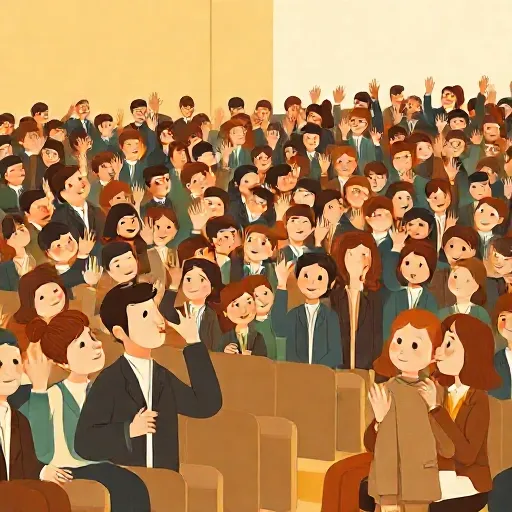
In 1973, a roomful of psychiatrists raised their hands to vote. The question: Should homosexuality stay in the official book of mental disorders? By a majority, they said no. It was removed. But no new microscope had revealed a biological secret. What changed wasn’t the body—it was what society considered acceptable.
This vote shows a deep puzzle. When a doctor says you have a disease, is that a fact about your body, like a broken bone? Or is it always partly a judgment about what is wrong or undesirable? Philosophers call these two sides naturalism (the body-as-machine view) and normativism (the society-as-judge view). The disagreement isn’t just theoretical. It decides who sneezes and gets a day off school, who feels ashamed, and who can say, “I’m not sick, I’m just different.”
The Body as a Machine: Naturalism
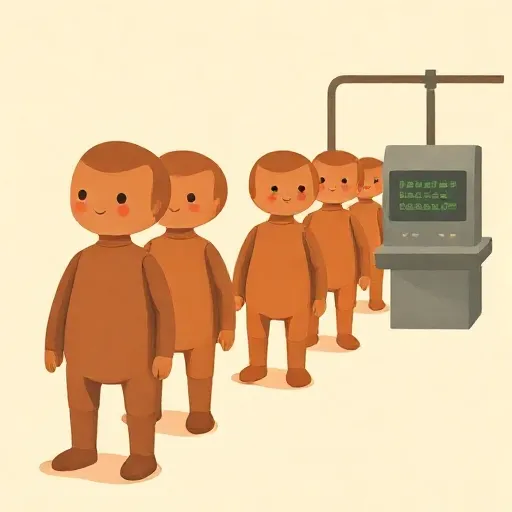
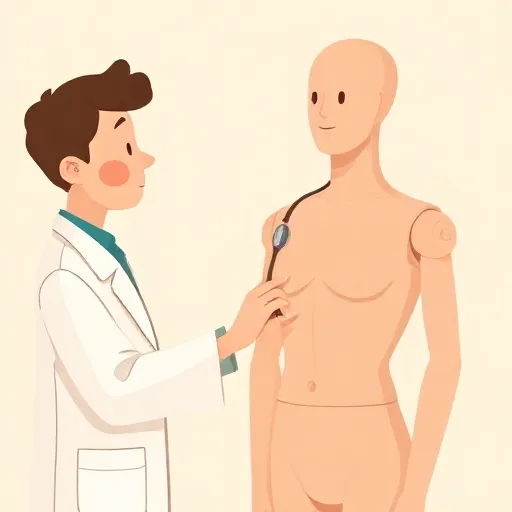
If your bicycle chain snaps, you know something is broken. A naturalist says the body works the same way. Health is simply the absence of disease, and a disease is a part that isn’t working the way it ought to.
The most famous naturalist, Christopher Boorse (born 1942), defined disease as an internal state that impairs normal functional ability. What counts as normal? Not what’s average, but what contributes to survival and reproduction for a person’s age and sex. For example, a heart that pumps blood poorly is malfunctioning relative to the design of a typical human heart. A condition like high blood pressure can be a disease even if you feel fine, because it raises your risk of strokes—a failure in the body’s functional design.
This view feels clean. It suggests that science can discover what a disease is, independent of anyone’s opinions. But critics spot a hole. In the 18th and 19th centuries, doctors in Europe and America considered masturbation a serious disease. Later, that label vanished—not because biology changed, but because moral values did. The same happened with homosexuality. If naturalism were only about biological facts, these flips would make no sense. Naturalists reply that those were mistakes: homosexuality and masturbation were never real diseases, just errors of classification. Yet that still doesn’t tell us how biology alone picks out the correct line. Biologists don’t find one single “natural” design for all humans: genes, organs, and functions vary widely. Deciding which variation counts as a defect seems to require human judgment after all.
Disease Is in the Eye of Society: Normativism
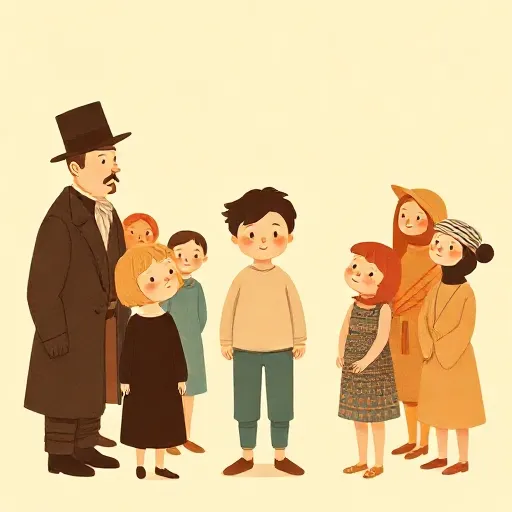
Normativists flip the naturalist story on its head. They argue that calling something a disease is never just describing nature; it’s declaring that a condition is bad and should be treated. Tristram Engelhardt (1941–2018) put it starkly: the concept of disease acts not only to describe and explain, but also to enjoin to action. It indicates a state of affairs as undesirable and to be overcome.
On this view, our definitions of disease are shaped by what a society values. That’s why drapetomania—a “disease” diagnosed in 19th-century American slaves whose only symptom was running away—was once taken seriously by doctors. At the time, slaveholders disvalued that behavior. When values shifted, the “disease” vanished. Normativism can also explain culture-bound syndromes like susto (a condition involving fright and loss of soul in some Latin American cultures) or ghost sickness in some Native American tribes: what counts as sick depends on local beliefs about what hurts a person.
The deepest challenge for normativism is that it makes it hard to say that past doctors were wrong. A normativist can say we don’t value slavery anymore, so drapetomania is out. But they can’t easily claim that the 19th-century doctors were factually mistaken to call it a disease—because on the normativist account, disease just is what a society disvalues. Many people feel strongly that some disease labels are not just unpopular today but were always mistaken. That instinct doesn’t fit neatly into a pure normativist picture.
The Middle Ground: Harmful Dysfunction
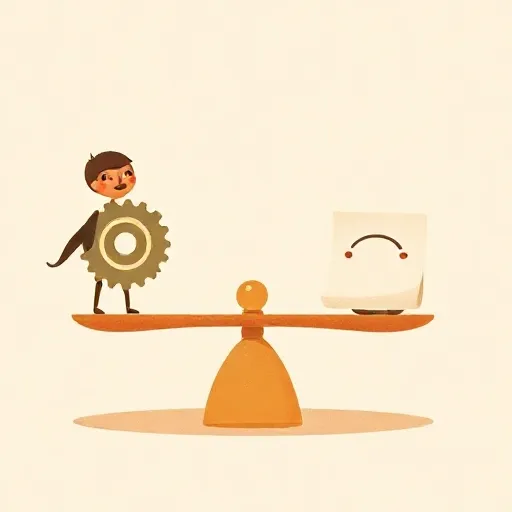
Some philosophers try to blend the strengths of both camps. Jerome Wakefield, a contemporary thinker, proposed that a condition should count as a disorder only if it meets two tests: (1) it causes harm to the person, as judged by society’s values, and (2) it results from some internal mechanism failing to perform its natural function—an evolved biological job. This is a hybrid theory.
Take a heart that races during a panic attack. If the heart’s pounding isn’t doing its job of supporting the body properly and causes the person to suffer, that might qualify as a disorder. But if someone simply has an unusual but harmless trait—like a body part that no longer has a function because of evolution—Wakefield’s view wouldn’t call it a disease. The harm part captures the normativist insight that values matter. The function part preserves the naturalist idea that diseases are about something going biologically wrong, not just something being unpopular.
Critics worry that this hybrid still leans too hard on the idea of a “natural” function, which biology can’t supply without human judgments. And in practice, it can be tricky to agree on what counts as a malfunction—especially in mental conditions. But the harmful dysfunction approach has been influential because it acknowledges that both facts and values matter when we draw the line between healthy and sick.
What Does It Mean to Be Truly Healthy?

If disease is so hard to define, what about health? The World Health Organization (WHO) famously defined health as “a state of complete physical, mental and social well-being and not merely the absence of disease or infirmity.” That’s a huge claim. It means being healthy is more than just not being sick—you’re supposed to flourish in every way. Many philosophers find this too broad, because it turns almost any unhappiness or social problem into a health problem.
The French philosopher Georges Canguilhem (1904–1995) offered a different, more flexible picture. He argued that health can’t be reduced to statistical normality—being average. Instead, health is having a surplus of adaptability. A healthy person, he said, is able to fall sick and recover, to handle changes in the environment, and to keep pursuing what matters to them. Disease, by contrast, is a narrowing of that flexibility—a loss of the ability to cope with the surprises life throws at you. Under this view, you could live with a chronic condition and still be deeply healthy, because you can still adapt, make choices, and live a life you value. Health is less a perfect machine and more a resilient adventurer.
Why This Fight Matters for You

All these philosophical debates hit the ground in school hallways and doctors’ offices. Being called sick isn’t just a biological report; it comes with a social role. The sociologist Talcott Parsons showed that the sick role can excuse you from chores and blame—you get to stay home from school, and people treat you with extra care. But it can also isolate you, make peers whisper, or attach a label that follows you even after you recover.
When a condition is controversial, like chronic fatigue syndrome or some mental illnesses, the lack of a clear disease label can mean you’re denied treatment or told it’s “all in your head.” When a label is applied that shouldn’t be—remember drapetomania—it can be used to control people. These definitions shape which drugs get researched, who gets insurance coverage, and whose suffering is taken seriously. The question “What counts as a disease?” isn’t a dusty puzzle for professors. It’s a real force in your life, deciding what counts as normal and who gets help when they hurt.
Think about it
- If your school decided that being extremely shy is a medical condition that requires treatment, would you want to change the rule? Why or why not?
- Imagine a future where a brain scan can detect “unhappiness” as a disease. Should everyone with that scan be given treatment, even if they don’t feel sick?
- In the past, doctors called enslaved people who ran away mentally ill. Does that show that we can never trust doctors to define disease, or can we learn from past mistakes?