Is Your Body a Machine? The Big Debate Over Modern Medicine
A Sore Throat, a Swab, and a Pill
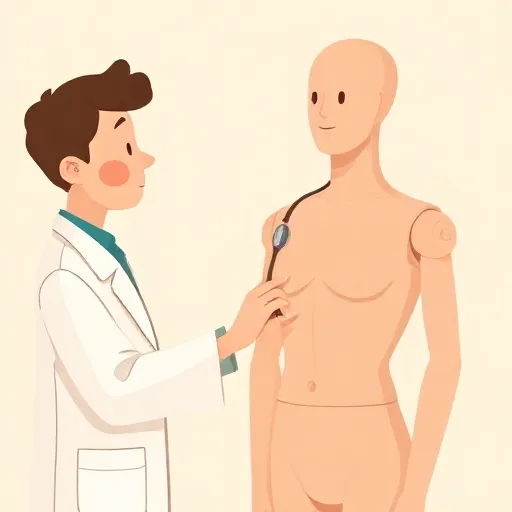
It’s a gray Monday afternoon, and your throat feels like you swallowed sandpaper. Your mom takes you to the doctor. The doctor peeks inside your mouth, swabs the back of your throat, and sends the sample to a lab. Two days later, you pick up a bottle of antibiotics. Soon the pain fades. This is biomedicine—the way most of the world handles sickness today. But that simple trip is built on powerful, and sometimes controversial, ideas about what your body is and how we know what’s wrong with it.
Biomedicine treats disease as a biological problem to be solved with science. It grew rapidly after World War II, when governments poured money into medical research, new drugs were mass‑produced, and hospitals became high‑tech places. Before that, many in the West followed humoral theory—the idea that health was a balance of four body fluids called humors. If you were sick, a doctor might try to rebalance your humors. Biomedicine replaced that with a new picture: your body is a machine made of organs, tissues, and cells that can break down in specific physical ways.
Public health researcher Nancy Krieger identified three core beliefs of biomedicine. First, disease and its causes are only biological, chemical, or physical—no spiritual forces allowed. Second, the best way to learn about disease is through laboratory experiments and randomized clinical trials, where patients are randomly split into groups to test a treatment. Third, biomedicine is reductionist: it tries to understand the whole by breaking it down into its tiniest pieces, like molecules and genes. These beliefs led to incredible successes, but they also raise big questions.
Is Your Body Just Chemical Reactions?

Imagine a chain of dominoes falling. If you want to know why the last one tipped, you trace each knock back. Biomedicine often sees your body that way: a cough is just signals traveling through nerves, muscles contracting, and chemicals being released. This reductionism says we truly understand health by zooming in on the smallest parts—genes, proteins, cells. But is a person really no more than a bag of chemical reactions?
Philosopher Christopher Boorse (born 1946) gave biomedicine a strict definition of disease. His Biostatistical Theory says a part of your body is healthy when it works at least as well as the typical same part in a group of similar organisms. For example, a human heart should pump blood as well as most hearts in people of the same age and sex. If your heart falls short, that’s disease. Sounds logical, but critics ask: who decides what counts as “normal”? If a kid needs glasses, are their eyes diseased? If someone uses a wheelchair because their legs don’t walk, is that a biological malfunction, or is the real problem a world full of stairs? Some philosophers argue that disability isn’t just about broken biology—society can disable people by building barriers. Biomedicine’s reductionist lens can miss that bigger picture.
Biomedicine also excludes anything it can’t measure with physics or chemistry. Philosopher Alex Broadbent (21st century) calls this biological chauvinism: if a cause of illness isn’t biological, biomedicine ignores it. That focus helps science stay sharp, but critics worry it shuts out patients’ own experiences of being sick—like a crushing fatigue that doesn’t show up on any blood test.
Which Evidence Wins? The Fight Over What Doctors Should Trust

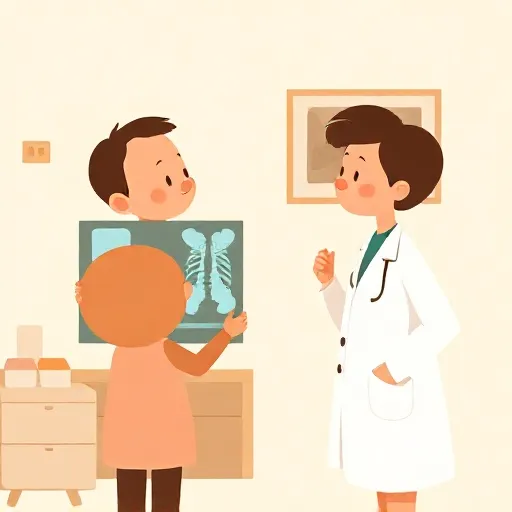
Not all evidence is equal in biomedicine. Suppose you have a backache. Your doctor might suggest ibuprofen or a heat pack based on their own experience. But a movement called evidence‑based medicine (EBM) says that’s not enough. EBM ranks evidence in a hierarchy: at the top are randomized controlled trials (RCTs), where many patients are randomly assigned to different treatments and results are measured with numbers. Even better are meta‑analyses that combine many RCTs. Lab experiments on cells or animals, and a doctor’s gut feeling, sit much lower. For example, green tea contains a chemical that kills cancer cells in a Petri dish, but EBM would still be cautious about telling people to drink it until large human trials prove it works.
That sounds careful, but critics point out that human bodies aren’t simple machines. A treatment that works in a controlled trial might not work for you because your life is messier than a lab. Rigid ranking can also silence patients’ voices. If you tell a doctor you’re in pain and the MRI shows nothing, they might not believe you. That’s an example of epistemic injustice—when someone is unfairly treated as a knower. Philosopher Miranda Fricker (born 1966) described testimonial injustice: prejudice makes a listener give less weight to a speaker’s word, like dismissing a kid’s headache because “kids exaggerate.” Hermeneutical injustice happens when society lacks good words to describe your experience—imagine having a chronic condition that no one has named yet. Under biomedicine, such gaps can make patients feel invisible.
When Medicine Defines “Normal”

Biomedicine doesn’t just treat diseases; it helps decide what counts as a disease in the first place. Over time, medicine has expanded its reach. Sadness after a loss, shyness, or even a child’s high energy can be labeled as medical conditions—depression, social anxiety disorder, ADHD. This process is called medicalization. Sometimes it helps people get treatment, but critics worry it turns ordinary human experiences into things to be fixed with pills.
The philosopher Michel Foucault (1926–1984) argued that medicine has a kind of bio‑power—the authority to define what is normal and what is abnormal, and to control bodies in the name of health. For example, in the 19th century, doctors labeled enslaved people who ran away as having a made‑up mental illness called drapetomania. That label was used to justify oppression. Today, some say that telling stressed‑out workers to practice self‑care—like doing yoga or tracking their steps—puts the blame on individuals instead of fixing unfair jobs or poverty. Fitness trackers can turn your body into a “quantified self” that makes you anxious about every heartbeat. All this raises a tough question: when does medicine help us, and when does it start controlling us?
Beyond the Machine: Listening to Stories and Worlds

Biomedicine isn’t the only way to understand health. A growing number of thinkers argue for a more human‑centered approach. Narrative medicine, championed by physician Rita Charon (born 1951), teaches doctors to listen deeply to patients’ stories, not just check off symptoms. The biopsychosocial model adds psychology and social environment to the biological picture, though critics say it still treats the person as a puzzle to solve. More radically, the population health framework shifts focus away from individual bodies entirely. It says the biggest improvements in health come from clean water, safe housing, fair wages, and ending discrimination—not fancier pills. In many communities, these social determinants matter far more than the latest drug.
Even within biomedicine, some doctors advocate gentle medicine: using fewer tests and medications, because too much medicine can cause harm. Next time you sit in a doctor’s office with a sore throat, you might think beyond the swab. What does this lab result miss about you? Your story, your world, and your feelings are part of your health too. Philosophy keeps that question alive.
Think about it
- If a new pill could cure shyness, should everyone who feels shy take it, or could shyness sometimes be a valuable part of who you are?
- When a doctor can’t find a physical cause for your pain, should they still trust what you say about your body? Why might it be important?
- Imagine a neighborhood where many people are sick because the drinking water is polluted. Would it be more fair to hand out medicines or to clean the water? Why?