When Does Normal Sadness Become a Mental Illness?
A Tale of Two Sad Kids

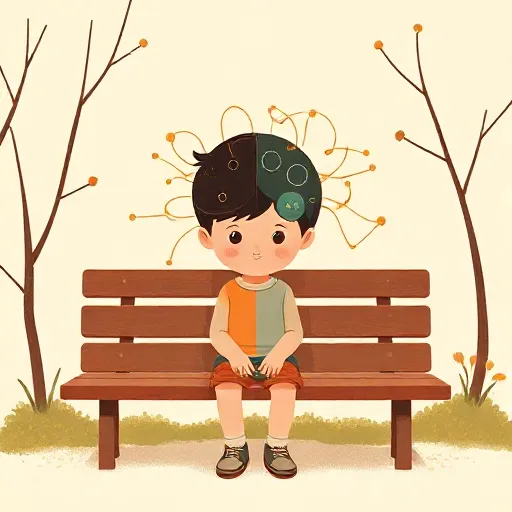
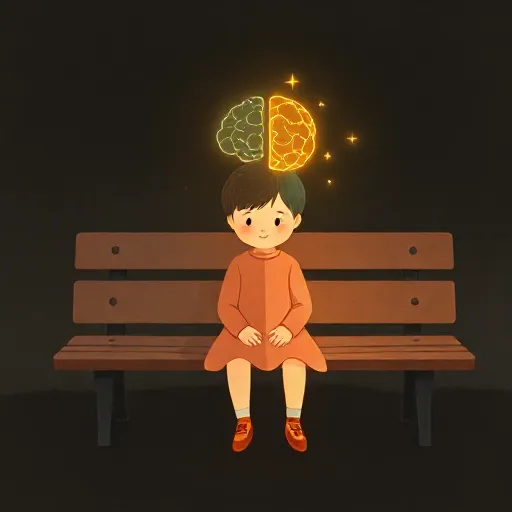
Imagine two kids, Amira and Leo. Both are 13. Both have stopped laughing at jokes, both sleep badly, both drag themselves through school. But here’s the difference: Amira’s grandmother died three weeks ago, and she feels crushed. Leo’s life looks fine, yet he feels heavy and hopeless—and he can’t point to a reason. Are they both suffering from the same mental illness? Should they get the same diagnosis? That question sits at the center of a huge argument in psychiatry: what does it mean to say a mental disorder is a brain disease?
Psychiatrists agree that they follow the medical model. This model borrows thinking from ordinary medicine, treating mental suffering as something caused by the body—specifically, the brain. But what exactly is being modeled? For some, the medical model is just a way of grouping symptoms that often appear together, like a checklist. For others, it means searching for hidden, destructive processes inside the brain, just like a bacterial infection causes a fever. Which version a doctor leans on changes who gets labeled sick, who gets treatment, and what “mental health” even means.
The Medical Model: A Checklist or a Cause?
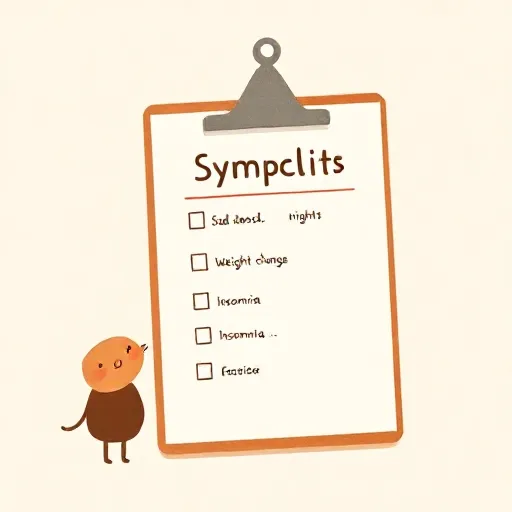
At its simplest, the medical model says mental disorders are unhealthy conditions of the brain. But you can unpack that in two very different directions. The minimal interpretation treats a mental disorder as a set of symptoms that regularly show up together and follow a predictable path over time. It’s like noticing that a cough, a runny nose, and a sore throat often arrive as a package. You don’t need to know which virus is causing it to predict that the next person with a cough will probably also have a sore throat. The minimal view doesn’t ask what’s going on underneath—it just describes what you can see and how things usually unfold.
The main guidebook for psychiatrists, the Diagnostic and Statistical Manual of Mental Disorders (DSM-5, published in 2013), leans on the minimal approach. It defines depression, for example, as a syndrome: if you have at least five out of nine listed symptoms (like depressed mood, weight changes, insomnia, or loss of energy) for two weeks, you qualify. The manual doesn’t require doctors to find a brain malfunction—just to match a story to a checklist.
The strong interpretation of the medical model goes further. It says that a real disease isn’t just a bundle of symptoms; it’s a harmful biological process that causes those symptoms. Think of a fever. A fever might be the sign you notice, but the disease is the infection burning inside. Strong interpreters argue that psychiatry should be looking for comparable hidden causes in the brain—abnormal circuits, chemical imbalances, or misfiring systems that are the real illness. They believe that without understanding the body’s broken machinery, you might label two very different problems as the same thing.
The Depression Debate: When Grief Becomes Diagnosis
This is where Amira and Leo come in. Modern thinkers Allan Horwitz and Jerome Wakefield (writing in the 2000s and 2010s) point out that the DSM’s checklist approach can’t tell normal, healthy sadness apart from mental illness. Both Amira and Leo might check off five symptoms, but Horwitz and Wakefield say only Leo’s feelings might signal a brain dysfunction. Amira’s sorrow is a natural response to loss—a reaction our brains evolved to have. Calling her “depressed” would be like saying a person who bleeds after a cut has a blood disease.
Until DSM-5’s release, there was even a “bereavement exclusion”: if you had just lost a loved one, your sadness wasn’t counted as major depression for two months. That rule protected grieving people. But in 2013, the exclusion was removed. Now, even someone whose heartbroken symptoms follow a death can be diagnosed with depression after just two weeks. Horwitz and Wakefield argue that this pathologizes ordinary misery, creating an epidemic of unnecessary diagnoses. On the other side, researchers point out that severe grief can sometimes trigger a brain-based depressive episode—so perhaps the timing shouldn’t matter. The deeper worry, though, is that without pinning diagnosis to a biological cause, we might call millions of normal, struggling people “sick.”
Brains on the Hunt: Searching for Hidden Causes
Proponents of the strong medical model don’t just criticize checklists; they hunt for biomarkers and malfunctioning circuits that separate true disorders from mere trouble. The U.S. National Institute of Mental Health launched a project called the Research Domain Criteria (RDoC) in 2010 to encourage scientists to classify mental illnesses based on brain circuits, genes, and behaviors, not just symptom clusters. The idea is that a diagnosis should be valid—it should track something real in the world, not just useful for prediction.
The philosopher Don Ross and his team showed why this matters in 2008. They studied gambling. Some problem gamblers lose too much money but function okay. True addicted gamblers, though, have a specific breakdown in their brain’s reward system—something like how stimulant drugs affect the brain. Their behavior looks similar from the outside, but the inner biology is different. A checklist lumps them together; brain science pulls them apart. For strong-model believers, that’s the whole point: you want a label that points to the real cause, so you know what you’re treating.
Culture Clash: Is Depression the Same Everywhere?
There’s another twist. The DSM was written mainly in North America, and people in other parts of the world often experience distress differently. In some Latin American communities, for instance, a severe panic-like reaction called ataque de nervios includes shouting, trembling, and a sense of heat rushing through the body—and it can last much longer than a typical panic attack described in the DSM. Should that be called the same “anxiety disorder,” or is it its own thing, shaped by local culture?
The DSM-5 tried to handle this by including “cultural concepts of distress” and by designing interviews that let patients describe their problems in their own words. But the manual still often assumes that some conditions, like depression, are universal—just dressed up in different cultural clothes. Critics reply that what we call depression in the West, with its heavy load of guilt and self-blame, might itself be a culture-bound syndrome peculiar to some societies. If that’s true, then the medical model’s dream of a single biological blueprint for mental illness gets a whole lot trickier.
Why This Debate Matters to You

So why should any of this matter to a twelve-year-old? Because how we answer the “checklist or brain cause?” question shapes real life. If a friend is heartbroken after a breakup, or a classmate can’t concentrate because their parents are fighting, the minimal model might quickly stick them with a diagnosis and a pill. The strong model, by contrast, would demand we find an underlying brain glitch before calling them ill. Pushing too far in either direction has risks: over-treating normal sadness, or missing real illness because we can’t yet see it in a brain scan.
Philosophy doesn’t settle which view is “right”—but it gives you the tools to ask sharper questions. It reminds you that a diagnostic label is not the whole truth about a person. And it suggests that science, culture, and personal stories all have a seat at the table when we try to understand an aching mind.
Think about it
- If a computer could predict your feelings perfectly just by looking at your brain chemistry, should that replace talking about your experiences?
- Can a person be mentally healthy even if they are deeply sad, and what should ultimately decide that?
- If different cultures describe emotional pain in completely different ways, how should doctors figure out what counts as a real illness?