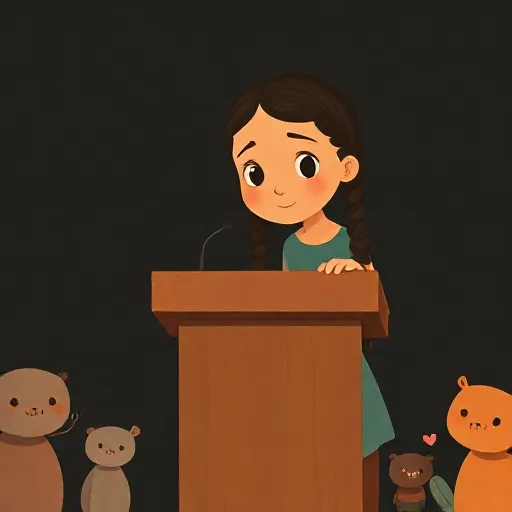
Can Capitalism Last Forever? Rosa Luxemburg Said No
The Book That Shook the Socialists

In 1899, a middle-aged German socialist named Eduard Bernstein (1850–1932) published a book that shocked his own political party. He had been a close friend of Karl Marx (1818–1883) and Friedrich Engels (1820–1895), the founders of modern socialism. Everyone expected him to defend their revolutionary ideas. Instead, he argued that capitalism was not going to crash. It was getting better. Workers were earning more, winning the right to vote, and forming unions. The socialist party, Bernstein said, should stop dreaming of overthrowing the whole system. It should work for small, steady reforms — higher wages, safer factories, more votes. The final goal of a completely new society? That did not matter as much as the daily fight.
A young Polish woman in exile fired back. Rosa Luxemburg (1871–1919) was already known as a fierce thinker, and she answered Bernstein point by point. She insisted that capitalism could never be made truly fair through reforms alone. It was like a machine that must keep growing or break apart. Her reply became the pamphlet Social Reform or Revolution. It asked a question that still echoes today: can you fix a broken system with the same tools, or do you need to build a different one entirely?
Capitalism’s Secret: It Needs to Devour the World
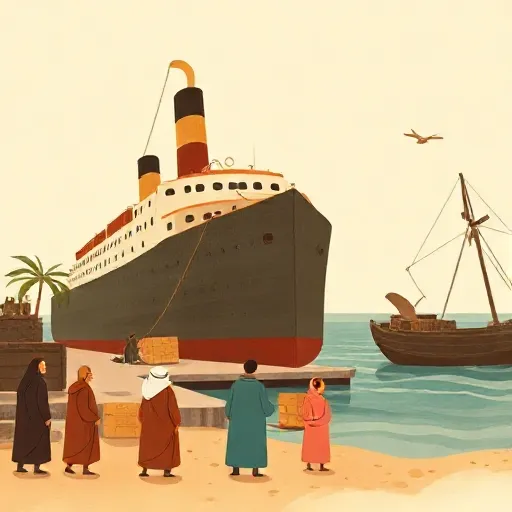
To understand her answer, you need to see how a capitalist economy actually works. Luxemburg was a close student of Marx’s book Capital. She focused on surplus value — the extra wealth that workers produce beyond what they are paid. A factory owner pays a worker just enough to survive, but the worker makes far more in value. The owner keeps the difference and reinvests it to make even more money. This process is called the accumulation of capital.
The problem, Luxemburg noticed, is that workers themselves cannot buy all the goods they produce. Their wages are kept low so that profits stay high. So who buys the extra shoes, cloth, and machines? Marx had imagined a closed world where only capitalists and workers existed, but Luxemburg argued that was a fantasy. Capitalism, she said, always reaches beyond its borders into noncapitalist parts of the world — countries that still rely on farming or older ways of life. It sells them cheap mass-produced goods, grabs their natural resources, and forces their people into mines and plantations for starvation wages.
This is why capitalist countries compete so fiercely for colonies. They need fresh markets to keep the machine running. Imperialism, the domination of one country by another for economic gain, is not a mistake capitalism makes. It is something the system cannot survive without. When those outside markets shrink because the rest of the world has been carved up, capitalism plunges into violent crisis. Luxemburg saw this in the Opium Wars, the scramble for Africa, and the way international loans trapped young nations in debt. For her, the economic and the political were bound together — the sugar in your tea in Berlin was paid for with the misery of workers in the Caribbean and West Africa.
Strikes and the Power of the Crowd
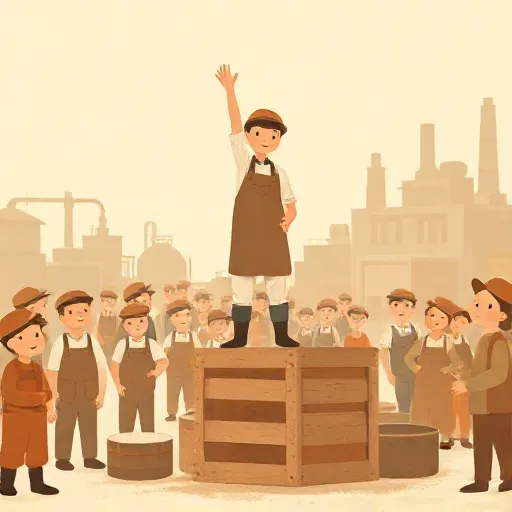
If capitalism is a global force that constantly invades new spaces, then how can working people fight back? Luxemburg’s answer grew from watching Russia explode in 1905. That year, a series of mass strikes — walkouts involving hundreds of thousands of people — shook the Tsar’s empire. She saw something remarkable. What started as a local demand for shorter hours or better pay could suddenly become a political storm, sweeping up whole cities and opening a debate about who should rule.
Luxemburg called this tool the mass strike. It was not a quiet petition or a vote in parliament. It was people leaving their machines, their mines, or their docks all at once. She noticed that such strikes did not follow any neat plan handed down from a party headquarters. They erupted from the daily experience of workers, mixing economic anger with a hunger for dignity and power. She called this unpredictable energy spontaneity, not meaning chaos, but a kind of collective learning that happens when oppressed people act together. Revolutions, she insisted, do not “allow anyone to play schoolmaster with them.”
This put her in direct disagreement with another rising revolutionary: Vladimir Lenin (1870–1924). Lenin believed workers needed a tightly organised “vanguard” party — a small, disciplined group of professional revolutionaries who would guide the masses and make the right decisions for them. Luxemburg warned that such a party would end up fearing the crowd it claimed to serve. She thought that only by struggling openly, making mistakes, and arguing freely could working people develop the ability to rule themselves. For her, the method of the struggle was already a taste of the freedom to come.
Dictatorship of the Class, Not of a Party

When the Bolsheviks seized power in Russia in 1917, Luxemburg cheered the courage of the revolution but immediately pointed out dangers. From her prison cell in Germany, she wrote a sharp critique. The new government claimed to rule in the name of the working class, but it was actually a small clique at the top. A real dictatorship of the proletariat, she argued, was never meant to mean a few people ruling over everyone else. Marx and Engels had used the phrase to describe a temporary emergency measure in which the mass of workers would hold power — openly, with newspapers free to criticise, with assemblies that anyone could join, and with elections where dissent was welcome.
Her most famous words still ring: “Freedom only for the supporters of the government, only for the members of one party — however numerous they may be — is no freedom at all. Freedom is always freedom for those who think differently.” She believed that a socialist society could not grow if it silenced its own people. The active, noisy, sometimes messy participation of ordinary men and women was not a weakness. It was the only way they would learn to govern and to spot the return of old forms of oppression. The history of the twentieth century, with its secret trials and closed states, proved her warnings painfully accurate.
What Can We Learn from Rosa Luxemburg Today?
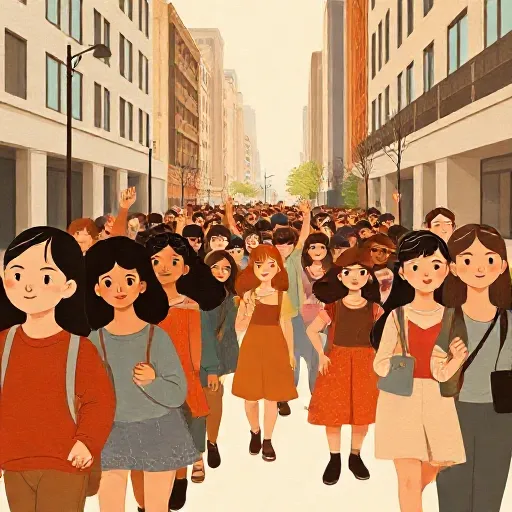
Luxemburg did not separate the fight against economic injustice from the fight against racism or the oppression of women. She was horrified by the genocide of the Herero and Nama peoples in German South‑West Africa and condemned the liberals who looked away. She insisted that the suffering of Black people in the colonies was “just as near to me” as the suffering of Jews in Europe. At the same time, she attacked a shallow feminism that only asked for the right to vote for wealthy women. Proletarian women, she wrote, were doubly exploited — in the factory and in the home as unpaid domestic labourers. Real emancipation, for her, would come only when working women of all colours joined the mass movement against capitalism itself, not when they settled for a seat at the old table.
Her ideas matter today because the machine she described still runs. Financial crises shake the globe, poor countries remain trapped in debt, and many people feel that elections do not truly give them control over their lives. Luxemburg’s challenge is this: If injustice is built into a system that must constantly expand, then patching a few holes will never be enough. The hard work is to build a kind of power that comes from below, that makes mistakes openly, and that refuses to silence those who disagree. That is a demanding vision — and it has never been more alive.
Think about it
- If you could change one unfair rule by joining a mass strike or by voting for a new law, which would you choose and why?
- Luxemburg said freedom must include freedom for people who think differently. Do you think a movement should allow members who disagree with its main goal?
- Can a country’s economy keep growing forever without harming other countries or people?