What Can Art Do That Thinking Can't? Art, Capitalism, and Critical Theory
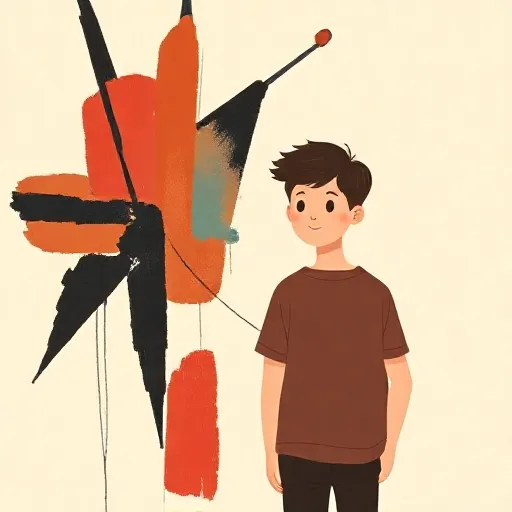
Imagine you’re in a record store (or scrolling through a music app). You see two albums. One has a cover showing a factory with smokestacks, and the title is Capitalism Is Destroying Us. The songs have lyrics like “The bosses take our money / The system isn’t funny.” The other album has a weird, abstract cover—no clear image at all. The music is strange: it doesn’t follow a normal song structure, the chords don’t resolve the way you expect, and there are no lyrics.
Which one is more likely to make you think differently about capitalism?
If you’re like most people, you’d pick the first one. It’s obviously about capitalism. The second one seems like it’s just confusing for no reason. But a group of philosophers—called the Frankfurt School—had a surprising answer. They thought the weird, difficult art was actually more powerful. And their reasons for thinking this lead into some of the strangest and most interesting ideas about art, experience, and society you’ll ever encounter.
The Problem: We Can’t See What’s Right in Front of Us
Let’s back up. These philosophers were Marxists, which means they thought capitalism was deeply harmful. But they noticed something weird about how people experience capitalism.
Normally, when you buy something—say, a pair of sneakers—you don’t think about all the people who made them, the conditions they worked in, how much they were paid, or how the price you pay relates to the actual labor that went into making them. You just see a price tag. The sneakers look like they naturally have that value, like it’s a property of the shoes themselves, like “blue” or “size 10.”
The original Marxist thinker Karl Marx called this commodity fetishism. It’s like a magic trick: social relationships between people (who worked, who got paid what, who profited) get hidden, and instead we see relationships between things (this sneaker is worth $120, that one is worth $80). The social world starts to look like it’s just natural—like this is just how things are, always have been, and always will be.
Another philosopher named Georg Lukács took this further. He argued that this isn’t just a mistake you can correct by learning the facts. It actually changes how you think in general. He called this reification—turning living, complex reality into fixed, dead categories. Under capitalism, Lukács said, we start to see everything in terms of general types and categories, not as unique, particular things. A tree becomes “timber resource.” A person becomes “worker” or “consumer.” The world loses its richness, its unpredictability, its weirdness.
Here’s the crisis for the Frankfurt School: if reification is as total as they thought, then normal thinking and experience are completely shaped by capitalism. You can’t just think your way out of it, because your thinking itself is the problem. So where can a different kind of experience come from?
The Answer (Sort Of): Art
This is why the Frankfurt School got so interested in art. They thought that genuine art—the right kind of art—might be able to do something that ordinary thinking can’t. Art might be able to create a kind of experience that breaks the spell of reification.
But this leads to a second problem. If art is bought and sold like everything else, doesn’t it just become another commodity? Doesn’t it just get absorbed into the same system it’s supposed to criticize?
Think about it: you can buy a protest song on iTunes. You can stream an album about how capitalism destroys the soul on Spotify. The act of buying and consuming it makes it part of the very system it’s complaining about. The message gets neutralized. It becomes just another product.
This is why the Frankfurt School was suspicious of directly political art. If a painting says “capitalism is bad” in its content, that content can be absorbed, sold, and defanged. The political message becomes part of the product’s appeal—it’s what makes it marketable to people who like to think of themselves as rebels.
So what kind of art can’t be absorbed? This is where their answer gets interesting.
Content Becomes Form
For the Frankfurt School thinkers—especially Theodor Adorno and Herbert Marcuse—the key is that a successful artwork’s meaning isn’t in its surface content. It’s in its form. The way the artwork is put together, its structure, its organization—that’s where the real action is.
Here’s what they mean. Take Franz Kafka’s novel The Trial. On the surface, it’s about a man who gets arrested and put on trial for a crime no one will tell him about. The story is weird, frustrating, and never resolves. Nowhere does Kafka say “capitalism produces absurd and inhumane situations.” But Adorno thought the novel’s real meaning—its critique of modern life—was expressed through its form: the way it’s organized, the way it frustrates your expectations, the way it creates a feeling of being trapped in a senseless system. The social content has been “sedimented into form,” as they put it.
Why does this matter? Because if the meaning is in the form, you can’t easily separate it out and sell it. You can’t say “oh, this novel’s message is X” and then package X as a slogan on a t-shirt. The meaning is tied to the experience of engaging with the work itself. To get the meaning, you have to actually go through the experience of the artwork—and that experience might change how you see things.
This is why the Frankfurt School valued difficult, challenging art. Art that is too easy, too familiar, too comfortable just reinforces your existing ways of thinking. It fits into the categories you already have. But art that resists easy categorization, that doesn’t follow familiar patterns, that makes you work—that kind of art might actually disrupt your reified thinking.
What Does the Experience Do?
So you have this difficult, formally challenging artwork. You engage with it. What happens?
This is where the Frankfurt School thinkers disagreed with each other.
Ernst Bloch, a friend of the group, thought that art shows us possibilities that are hidden by everyday experience. He called this the “not-yet”—things that could be real but aren’t yet. Art gives us a glimpse of a different way of living, a utopian possibility. It’s imaginary, but it’s not just imaginary—it shows us that the way things are isn’t the only way they could be.
Theodor Adorno was more pessimistic. He didn’t think art showed us a better future. He thought it showed us how bad the present actually is. Remember, reified consciousness thinks everything is fine, that the world matches our categories. But great art—by being difficult, by refusing to fit into easy categories—shows us the gap between our concepts and reality. It’s a process of disillusionment. You realize you didn’t understand the world as well as you thought. This doesn’t tell you what to do, but it breaks the spell of thinking everything is okay.
Herbert Marcuse tried to combine both views. He agreed with Adorno that art indicts the present. But he also agreed with Bloch that art shows us possibilities for liberation. How can these both be true? Marcuse brought in ideas from Freud. He thought that art allows for “desublimation”—the release of repressed urges and potentials that society has forced us to suppress. This isn’t just emotional catharsis (where you feel an emotion, release it, and go back to normal). It’s more like discovering parts of yourself you didn’t know you had. And if those parts exist in you, maybe they could exist in society too.
Popular Culture: The Broken Promise
You might be thinking: “Okay, so these philosophers valued difficult, challenging art. Doesn’t that just make them snobs who hated popular music and movies?”
It’s more complicated than that. Adorno and Horkheimer (another key figure) actually coined the term “Culture Industry” as an insult. They meant it as a contradiction: culture (which should be creative, free, challenging) was being turned into an industry (standardized, predictable, made for profit).
But they weren’t just hating on pop music because it wasn’t classical. Their criticism was more subtle. They argued that popular culture promises things it can’t deliver. Popular music promises excitement and novelty, but it actually follows the same formulas over and over. It promises to satisfy your desires, but it only teases them. Movies promise to show you something new, but they follow the same story structures.
Adorno also objected to broadcasting classical music on the radio. Not because the public didn’t deserve Beethoven, but because the technology couldn’t deliver the real experience. The public was being told they were getting the genuine article when they were actually getting a poor substitute.
The point isn’t that popular = bad and difficult = good. The point is that under capitalism, both high culture and popular culture fail us. High culture has become isolated and inaccessible. Popular culture promises satisfaction it can’t deliver. Both are symptoms of the same sickness.
Why This Still Matters
These ideas are strange, difficult, and sometimes contradictory. The Frankfurt School never fully answered how social content gets “sedimented” into artistic form. They never fully explained how a weird painting or a strange piece of music actually changes your consciousness. Adorno and Marcuse disagreed with each other on fundamental points.
But here’s why this still matters. We live in a world where almost everything can be bought and sold, where experiences are packaged and marketed, where even rebellion becomes a brand. The question the Frankfurt School asked is still urgent: is there any experience that can’t be absorbed by the market? Any form of thinking or feeling that can’t be turned into a product?
Their answer was art—but really difficult, demanding art that resists easy consumption. They might have been wrong. But they identified a real problem that hasn’t gone away. And their work suggests something interesting: maybe the most political art isn’t the one with the clearest message. Maybe it’s the one that refuses to give you a message at all, that forces you to think differently, that won’t let you consume it and move on.
Appendices
Key Terms
| Term | What It Does in This Debate |
|---|---|
| Commodity fetishism | The way capitalism hides social relationships between people and makes them look like natural properties of objects |
| Reification | The process by which capitalism shapes all of our thinking into fixed, dead categories, making the world seem fixed and unchangeable |
| Form | The structure and organization of an artwork, which the Frankfurt School thought carried the artwork’s real meaning |
| Content | The surface subject matter of an artwork (its story, its images, its lyrics) |
| Culture Industry | The system that turns creative, challenging culture into standardized, predictable products made for profit |
| Desublimation | Marcuse’s term for the release of repressed urges and potentials through art, which he thought pointed toward liberation |
Key People
- Karl Marx (1818–1883): The original thinker whose ideas about capitalism and commodity fetishism the Frankfurt School built on.
- Georg Lukács (1885–1971): Extended Marx’s ideas into a theory of reification, arguing that capitalism warps all of our thinking, not just our economic thinking.
- Theodor Adorno (1903–1969): The most extreme and difficult member of the Frankfurt School; thought art works by revealing the gap between our concepts and reality, not by showing us a better world.
- Herbert Marcuse (1898–1979): Combined Adorno’s critical approach with ideas from Freud and Bloch, arguing that art both indicts the present and reveals possibilities for liberation.
- Ernst Bloch (1885–1977): A friend of the group who emphasized the “utopian” function of art—its power to show us hidden possibilities for a better world.
Things to Think About
-
The Frankfurt School thought directly political art (art with a clear message) was actually less effective than difficult, challenging art. Can you think of examples from your own experience where a song, movie, or book changed how you thought without telling you what to think? Are there cases where direct political art did change something?
-
Adorno thought that even the best art only shows us how bad things are, not what to do about it. Is that enough? If art reveals problems but doesn’t offer solutions, is it valuable? Or do we need art that shows us the way forward too?
-
The Frankfurt School was suspicious of popular culture. But do their criticisms still apply today? Are there popular songs, movies, or games that actually do disrupt your thinking, that don’t just follow formulas? Or has everything been absorbed?
-
The idea of “content becoming form” is hard to grasp. Can you think of a movie, song, or book where the way it’s made—its structure, its weirdness, its difficulty—seems to be communicating something that the actual story or lyrics aren’t saying directly?
Where This Shows Up
- Reviews of experimental art: When critics say a difficult film or album “rewards repeated listening” or “repays close attention,” they’re echoing Adorno’s idea that the meaning is in the form, not the surface content.
- Debates about streaming and algorithms: When people worry that Spotify or Netflix recommendations trap you in a “bubble” of similar content, they’re worrying about something like reification—your experience being shaped by the system.
- Arguments about “selling out”: When people criticize artists for making their work more commercial, they’re engaging with the Frankfurt School’s concern that art loses its power when it becomes a commodity.
- Political protests and art: When activists debate whether protest songs actually change anything, or whether posting a political statement on social media is real action, they’re wrestling with the question of whether art can really disrupt the system or just becomes part of it.