Can You Change the Future Before It Happened?
A Philosopher Declares War on Logic Itself
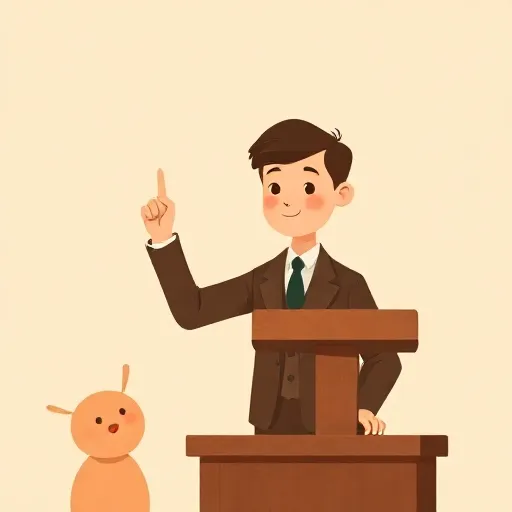
The year was 1918. Jan Łukasiewicz (1878–1956), a Polish philosopher and mathematician, stood before a lecture hall at the University of Warsaw. He was supposed to be giving a goodbye talk — he was leaving to work for the government. Instead, he made a dramatic announcement. “I have declared a spiritual war,” he said, “upon all coercion that restricts man’s free creative activity.” His enemy? A rule of logic that had stood for over two thousand years.
That rule is called the Principle of Bivalence. Bivalence means “two values.” It says every statement is either true or false, full stop. The sky is blue — true. The moon is made of cheese — false. There is no third option, no “maybe.” This idea goes back to Aristotle (384–322 BCE), and for most of history, it seemed unshakable.
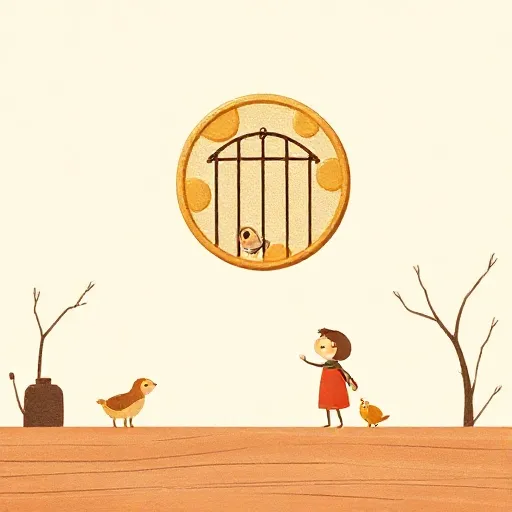
Łukasiewicz thought it was a cage. If every statement about the future is already true or false right now, then the future is already locked in place. Your choices would be an illusion. So he did something radical: he invented a logic where some statements are neither true nor false. They are possible. He gave the future a “maybe” — and with it, a chance for real freedom.
The Chain of Dominoes: Why Bivalence Worries Freedom
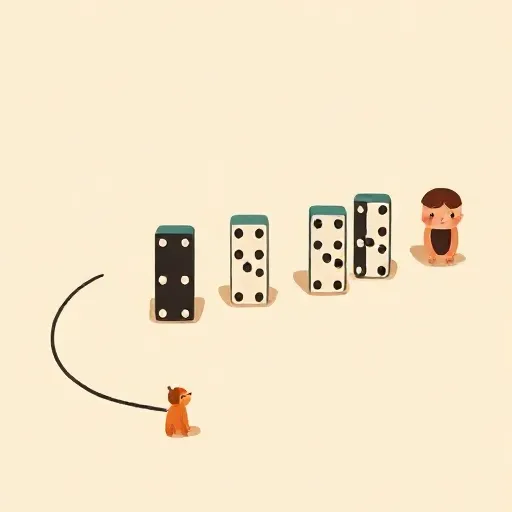
Imagine a long line of dominoes stretching back to the Big Bang and forward into next Tuesday. Each domino knocks over the next one. If you knew the exact position and force of every domino at the start, you could predict the whole chain — every wobble, every fall, forever. This is a picture of determinism, the idea that everything that happens is caused by earlier events, all the way back. Nothing is random. Nothing is a surprise.
Now imagine that your brain is part of that domino chain. Your thoughts, your desires, your decisions — all just very complicated domino falls. If someone knew every single fact about the universe yesterday, could they predict with absolute certainty what you will choose for breakfast tomorrow? If the answer is yes, then your feeling of choosing freely is just a feeling. The choice was already made, long before you were born.
This is where the Principle of Bivalence tightens the knot. Consider the sentence: “You will eat toast tomorrow.” If that sentence is true right now, then you will eat toast — you have to. If it is false right now, then you will not eat toast — you cannot. Either way, there is no room for you to genuinely decide. The future is a book already written. Łukasiewicz found this picture morally repulsive. To him, a world without real choice was a world of spiritual coercion. Something in logic had to give.
The Crack in the Ancient Wall: Future Facts That Are Not Yet Facts
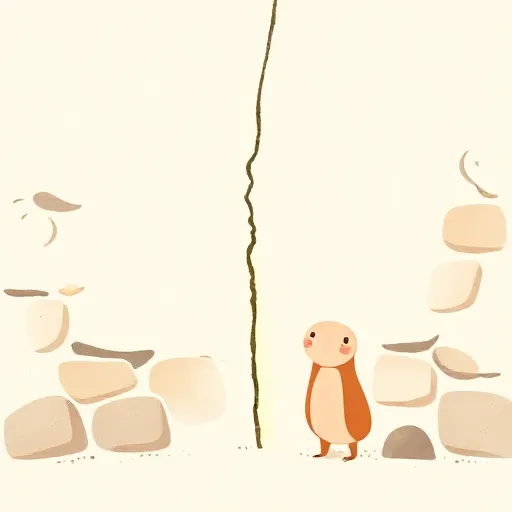
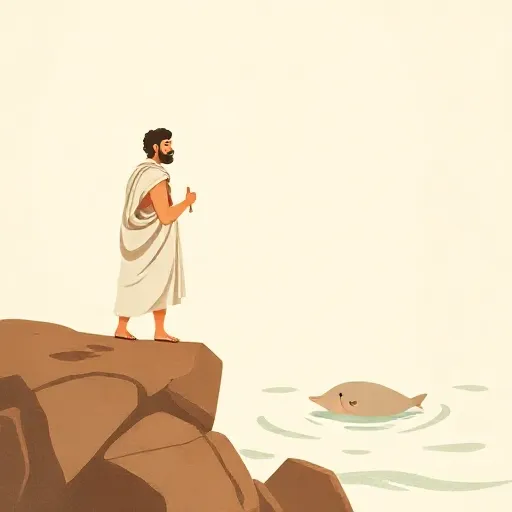
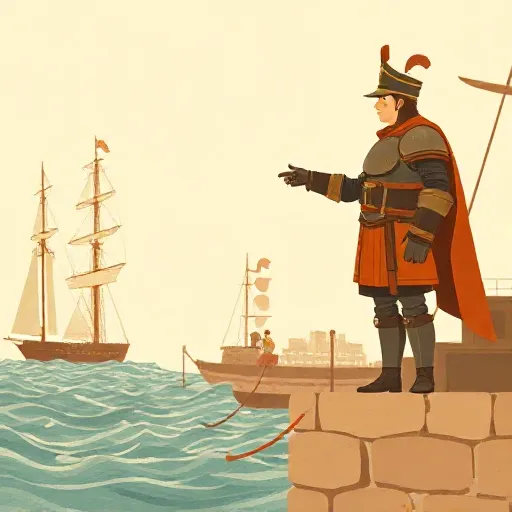
Łukasiewicz was not the first person to spot a problem with statements about the future. Aristotle himself worried about a famous puzzle: the sea battle. Suppose someone says, “There will be a sea battle tomorrow.” If that is true today, then the battle must happen — it seems necessary. If it is false today, then the battle cannot happen — that also seems necessary. But it feels wrong that the future is already forced in this way. The battle might happen, and it might not. Sailors still have to decide whether to sail.
Łukasiewicz dug deeper into this puzzle in a 1910 book on Aristotle’s principle of contradiction. In that book, he distinguished three versions of the rule — an ontological one (no thing can have and not have the same property), a logical one (a statement and its opposite cannot both be true), and a psychological one (you cannot believe contradictory things at the same time). He showed they are not all the same claim. But he still could not solve the problem. He was not yet ready to abandon bivalence entirely.
The breakthrough came around 1917. Łukasiewicz realized that the sea-battle puzzle points to a genuine gap in our thinking. A statement about a future choice — “you will eat toast” — is different from a statement about the past or the settled present. It is not just that we do not know the answer. The claim is stronger: there is no answer yet. The world itself has not settled the matter. So we need a third truth-value, a label for statements that are, at this moment, objectively undecided. He called this value possibility and gave it a number: ½. True is 1, false is 0, and possible sits right in the middle.
Three Lights Instead of Two: How a New Logic Works
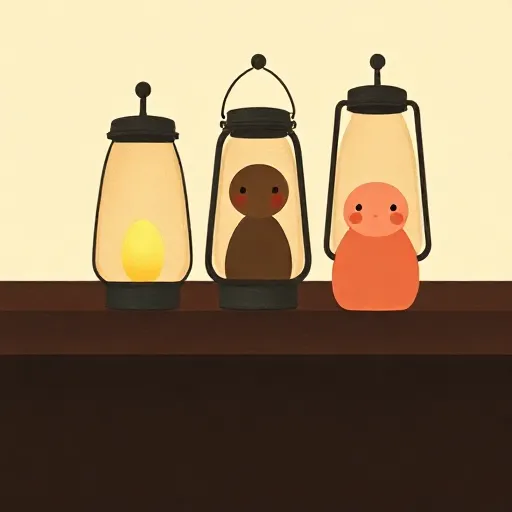
To make his idea rigorous, Łukasiewicz needed to rewrite the rules. In ordinary two-valued logic, you have truth-tables. If you know the truth-value of “it is raining” and “I have an umbrella,” a truth-table tells you the exact truth-value of the complex statement “it is raining AND I have an umbrella.” The rules are crisp. For AND, both parts must be true; for OR, at least one part must be true.
Now add a third value — possible — and things get interesting. If “you will eat toast” is possible (½), what about its negation, “you will not eat toast”? If the negation were false (0), that would force the original to be true (1), which it is not. So the negation of a possible statement must also be possible (½). Look at what happens: the statement “you will eat toast” and its opposite “you will not eat toast” both get the same truth-value, ½. This means the complex statement “you will eat toast AND you will not eat toast” is not automatically false. In Łukasiewicz’s new logic, a contradiction about an open future is not a crash — it reflects the genuine open-endedness of things.
Łukasiewicz published this system, called three-valued logic, in 1920. He was thrilled. He wrote that he had succeeded in creating a non-Aristotelian logic. He compared it to the discovery of non-Euclidean geometry — a whole new way of describing what is. The logic was just as consistent as Aristotle’s, he argued, and far richer in what it could express. It was a tool built specifically to make room for human freedom.
The Spiritual War: Why He Thought Logic Had to Change

Why did Łukasiewicz care so deeply about a technical point in logic? The answer is not mainly about mathematics. It is about what kind of world you want to live in. In his 1922 inaugural lecture as rector of the university, he spelled out the stakes. If a prediction about your future action — say, “you will tell a lie tomorrow” — is already true today, then when tomorrow comes, you cannot avoid telling a lie. You are trapped. The only way to rescue your freedom, Łukasiewicz believed, is to deny that the prediction is strictly true. Assign it the third value. Say it is merely possible.
He distinguished between logical determinism (the idea that truth-values force future events) and causal determinism (the idea that physical causes force future events). His target was logical determinism, which he saw as the deeper root of the feeling of constraint. Break the lock of bivalence, and you break the spell. The future becomes a branching tree of genuine possibilities. You, the creative individual, get to prune the branches by acting.
Not everyone agreed then, and not everyone agrees now. Other philosophers pointed out that you can accept bivalence without being a determinist. Maybe a statement about the future is true because of what you will freely choose, not the other way around. Łukasiewicz himself acknowledged his system had odd features. Later in life, he even revised his approach, building a four-valued modal logic in 1953 that kept some of his original spirit but abandoned some of his earlier claims. The core conviction, however, never wavered: logic should not force us to see human beings as machines.
Why This Still Matters When You Choose Dessert

You probably do not think about truth-tables when you stand in front of an open fridge, weighing ice cream against fruit. But the question Łukasiewicz raised is sitting right there in that moment. When you feel yourself genuinely deciding, is that feeling reliable? Or is it just a mental movie playing out a script that was written by your genes and your upbringing and the state of the universe a billion years ago?
If the future is genuinely open, then your choice has weight. It adds something new to the world that was not there before. That is a thrilling idea — and a slightly scary one, because it means you are responsible in a deep way. If the future is already fixed, then your choice might feel lighter, but at the cost of making you a passenger in your own life. This debate did not end in 1918. Philosophers, neuroscientists, and physicists still argue about whether the world is deterministic, and what that would mean for our sense of ourselves.
Jan Łukasiewicz did not win the war he declared. Most logicians today still use two-valued logic for most purposes, and they handle the free-will debate with other tools. But his attempt changed philosophy. He showed that logic is not just a set of dusty rules handed down from ancient times — it is something we build, shape, and sometimes rebuild to make sense of our deepest human concerns. Next time you face a hard choice, you might feel a faint echo of his question: is that door really open, or does it just look that way?
Think about it
- If a supercomputer could predict every choice you will make tomorrow with 100% accuracy, would that prove you have no free will — or would it just show the computer is a very good reader of your personality?
- Would you rather live in a world where the future is completely fixed, or one where it is completely random? What would be missing in each?
- Can you think of a question about the future whose answer is genuinely impossible to know — not just for you, but for anyone or anything in the universe?