Can You Become a Buddha Right Now, in This Very Body?
A Young Man Walks Away from Books
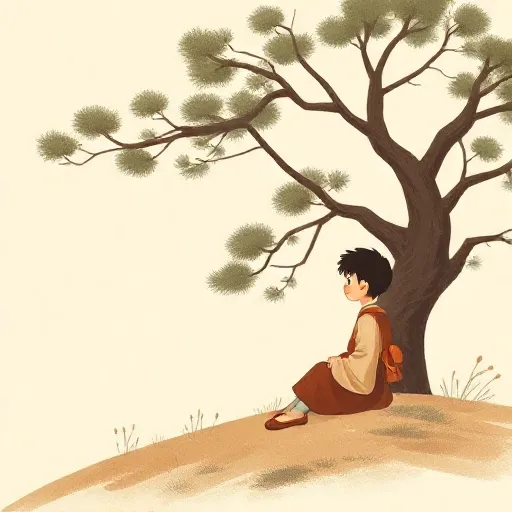
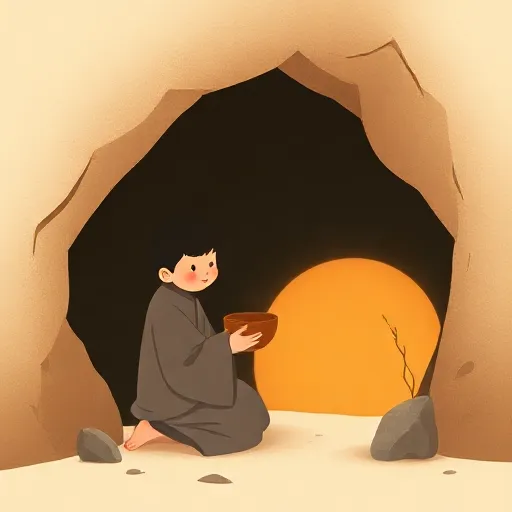
In the 780s, a teenage aristocrat named Kūkai (774–835) enrolled in Japan’s state university to study the Chinese classics. But something about book learning felt hollow. The words were tidy, the rules were clear, and yet he sensed that the deepest truths cannot be captured on a page. Disillusioned, he dropped out, left the capital, and retreated into the mountain forests of Shikoku.
There, according to legend, he threw himself into esoteric practices — secret techniques that used the body, voice, and mind to reach states most people only read about. He chanted mantras a million times, hoping for a flash of insight that no lecture ever gave him. Already, Kūkai was chasing a bold idea: that real wisdom is something you live, not something you memorize.
A Secret Tradition Carried Across the Sea
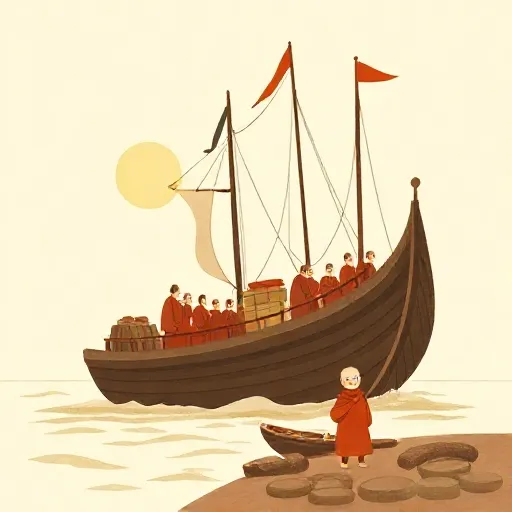
Years later, in 804, Kūkai joined an official embassy to China. He settled in the cosmopolitan capital Chang’an, where his life changed. There he met a master named Hui-kuo (746–805), the seventh patriarch of a Buddhist path called Chen-yen — “true word” Buddhism, known in Sanskrit as Mantrayāna, the mantra vehicle.
From Hui-kuo, Kūkai received initiation into two lineages built around two sacred texts and their paired cosmic diagrams, or mandalas. Before long he was himself named the eighth patriarch. He studied Sanskrit, calligraphy, poetry, and the intricate rituals that made this tradition different from other forms of Buddhism. In 806 he returned to Japan carrying sutras, paintings, ritual objects, and a conviction: the Buddhism practiced in Japan was missing something crucial.
Kūkai called his new teaching Shingon, the Japanese pronunciation of “true word.” He insisted that most Buddhism was exoteric (kengyō) — public, explained in words, and meant for a general audience. Shingon, by contrast, was esoteric (mikkyō) — secret, immediate, and not fully expressible through ordinary language. An exoteric teaching is like a map; an esoteric teaching is the feeling of actually being in the landscape.
The Universe Is the Buddha’s Body
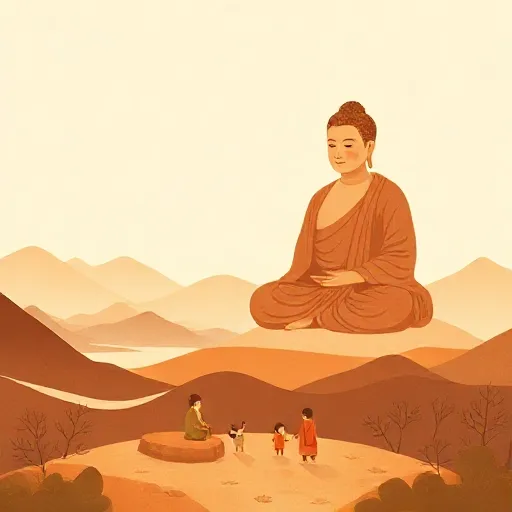
In mainstream Mahāyāna Buddhism, the ultimate truth, or Dharma, is an abstract principle. The dharmakāya — the “embodiment of truth” — was often seen as impersonal and silent. Kūkai turned that picture upside down.
He identified the dharmakāya with a personal cosmic Buddha called Dainichi (Sanskrit: Mahāvairocana, “Great Sun”). Dainichi’s body is not a flesh-and-blood body but the whole cosmos itself. Every star, every chirping insect, every thought that flickers through your mind is a part of that body. And because Dainichi is always moving — the wind blows, rivers run, leaves rustle — the cosmos is constantly preaching the Dharma. Kūkai called this hosshin seppō: “the dharmakāya expounds the dharma.”
So when you hear rain tapping on the roof, that is not just water. It is Dainichi communicating truth. The same goes for the shape of a mountain, the warmth of sunlight, and even your own heartbeat. Exoteric teachings, Kūkai argued, traced their lessons back to a historical human Buddha who spoke to a particular audience at a particular time. Esoteric teaching comes directly from the cosmos, right now, all at once.
Reading the World Like a Secret Book

If the cosmos is speaking, what language does it use? Kūkai’s answer: mantra. A mantra is a condensed sound-syllable that contains a whole teaching. In its broadest sense, every phenomenon — visible, audible, or mental — is a syllable in Dainichi’s never-ending sermon. The world itself is a vast sacred text.
Kūkai used a special term for this: shōjijissō, “sound, sign, reality.” A sound (shō) becomes a sign (ji) by marking a difference from other sounds, and together they point to reality (jissō). In the same way that the letters in a word only mean something because they are not the other letters, each thing in the universe is what it is through its interdependence with everything else. That’s why everything is empty of a separate, fixed self — a core Buddhist idea called emptiness (kū). For Kūkai, emptiness is not nothingness; it’s the open space that lets all these mutual relationships happen.
The most important mantric syllable was the sound A. In Sanskrit, A is the first letter, the negative prefix, and the first letter in “origin” (ādi) and “unborn” (anutpāda). It stands for the fact that nothing has a solid, independent starting point. Every thing arises interdependently, without a first cause — “primal non-origination,” Kūkai said. When a Shingon practitioner chants A, they are tuning into the root note of the cosmos.
The written form of the letter A was also used in meditation. A practitioner might stare at its shape until it ceased to be a simple mark and revealed the emptiness and interconnectedness it signifies. Mandalas — geometric paintings of buddhas, bodhisattvas, and symbols — worked the same way: they are visual mantras, maps of the enlightened universe that you learn to see with your mind’s eye.
Enlightenment in This Very Body
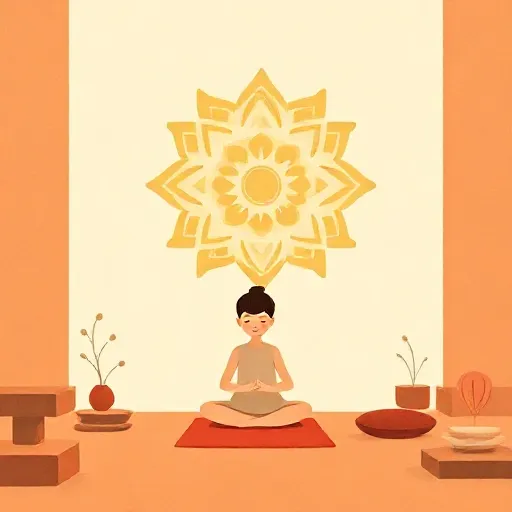
Other Buddhist schools taught that reaching full enlightenment takes countless lifetimes of practice. Kūkai disagreed. He called his alternative sokushinjōbutsu — “attaining Buddhahood in this very embodied existence.” The key is that you are already a microcosm of the cosmic Buddha; you just don’t realize it yet.
To wake up, Kūkai prescribed a three-part practice he called the three mysteries (sanmitsu): body, speech, and mind.
- Body uses mudras — symbolic gestures of the hands and fingers that embody specific wisdoms.
- Speech is the chanting of mantras, each one a compact form of Dainichi’s cosmic speech.
- Mind engages with mandalas and visualizations, seeing the world as a realm of enlightened activity.
When you perform all three together — your hands folded in a mudra, your voice reciting a mantra, your imagination holding a mandala — you are deliberately mirroring the way Dainichi expresses the Dharma through the universe. In that moment, Kūkai taught, your body, voice, and mind become indistinguishable from the Buddha’s own. The boundary between you and the cosmos dissolves. That is kaji, often translated as “empowerment” or “grace”: Dainichi’s compassion flows down like sunlight, and your practice holds it like a still pond reflecting the light.
The result, he claimed, is that enlightenment is not a distant goal. It is right here, in the very body you inhabit right now.
Why Your Body Matters More Than a Bookshelf

Kūkai never said that books and doctrines are worthless. In fact, he later wrote a comprehensive system ranking ten stages of the mind, showing how everything from ordinary animal-like desire to the most subtle philosophy can be a stepping stone toward the final, holistic vision of Shingon. But his deepest conviction was that abstract knowledge is never enough. Without the body, without gesture, sound, and image, the truth remains a distant rumor.
That idea still echoes today. When people practice mindfulness, use breathing exercises to calm anxiety, or notice that moving their body changes how they think, they are tapping into a wisdom Kūkai systematized over 1,200 years ago. He also leaves us with a startlingly generous view of the world: if every leaf, every stranger’s voice, every gust of wind is a teaching from a vast living intelligence, then paying attention is not just a school skill — it’s a form of awakening.
Think about it
- If you really believed that every sound and shape around you was a message meant to wake you up, how would your walk to school change?
- Kūkai thought that using your body with focused intention could bring deep understanding. Can you think of a time when doing something physical — not just thinking — helped you “get” a difficult idea?
- Is it fair to say that the universe is always “preaching,” or is that just a beautiful metaphor? What would you need to experience to decide one way or the other?