Is Everything Empty Yet Perfectly Real?
The Boy Who Learned to Argue Before He Could Grow a Beard
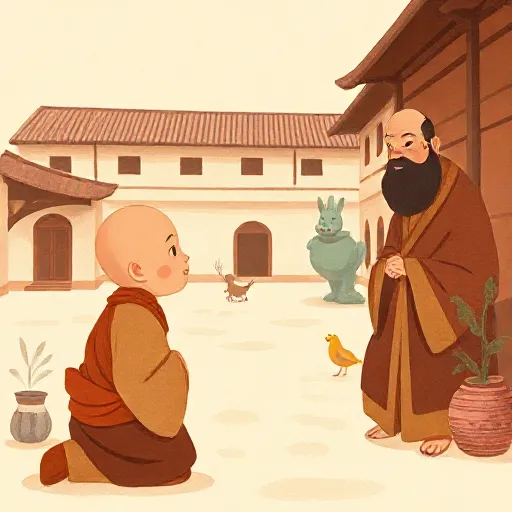
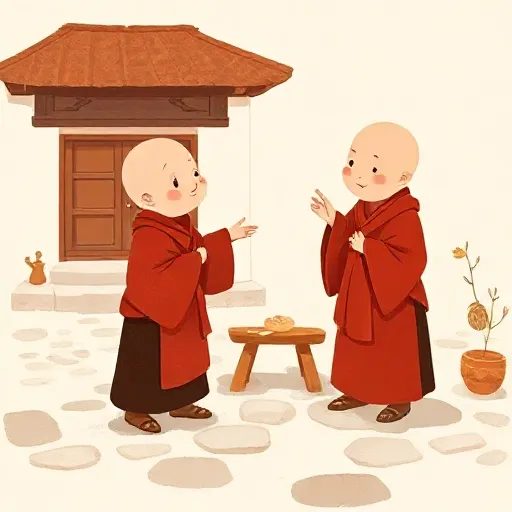
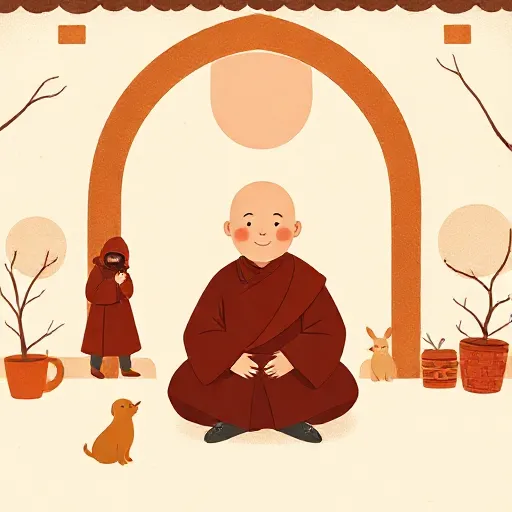
In the autumn of 1357, in the onion-growing region of Tsongkha (in what is now Qinghai, China), a boy named Losang Drakpa was born. You know him better as Tsongkhapa (1357–1419), meaning “the man from the Land of Onions.” By age six, he had left his family to live with a tutor and study Buddhist scriptures. By sixteen, he could recite and debate large chunks of Indian monastic texts from memory. He was restless, never staying long in one monastery, traveling on foot over thirteen hundred miles to Central Tibet to find better teachers and fiercer arguments.
That hunger for answers never left him. Tsongkhapa would grow up to become the most influential thinker in Tibetan Buddhism, founding the Geluk school and writing works that scholars still argue about today. The question that drove him was deceptively simple: if nothing has any fixed, solid nature — if everything is empty — then how can our ordinary lives, with their clear rules of cause and effect, make any sense?
Two Fences and a Very Wide Pit: The Middle Way
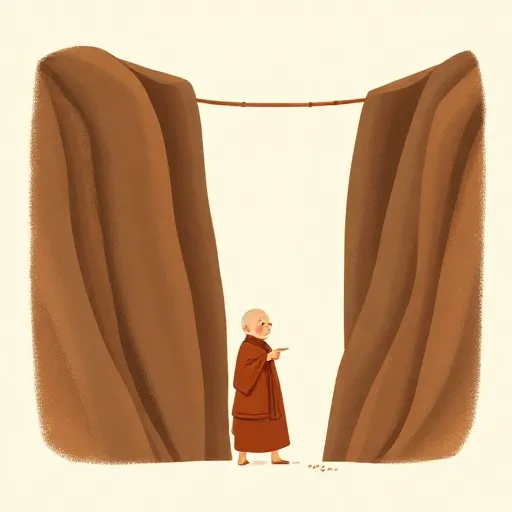
Tsongkhapa was working within a tradition called Madhyamaka, the “Middle Way” school founded by the Indian philosopher Nāgārjuna (2nd century CE). The Middle Way wants to avoid two mistakes. One mistake, over-reification, treats things as if they have an unchangeable, independent essence deep inside — like thinking your smartphone has some “phoneyness” that never alters even if you drop it in water. The other mistake, over-negation, says nothing is real at all, leaving you unable to explain how a seed grows into a flower.
Tsongkhapa sided with the Prāsaṅgika branch of Madhyamaka. The name means “those who reveal unwelcome consequences.” Instead of building big theories, Prāsaṅgikas show you that whatever solid nature you think something has, you’re forced into absurdities. They don’t need to prove anything with fixed logical steps that assume an essence; they just expose cracks in your beliefs. For Tsongkhapa, this wasn’t just wordplay — it mirrored the truth of dependent origination.
Dependent origination says that everything arises because of causes and conditions, and everything is labeled by our thoughts. There is no “car” apart from its parts, its assembly, and the idea we agree to call it a car. Once you see this, emptiness no longer looks like a black hole swallowing reality. Instead, emptiness enables things to function — because nothing is frozen with its own nature, a caterpillar can become a butterfly, and a burnt cake can be explained by a faulty oven, not a mysterious cake-demon.
The “Eight Difficult Points”: Tsongkhapa’s Philosophical Hand Grenades
Tsongkhapa’s mature view is captured in “eight points that are difficult to understand.” These points flip common Buddhist beliefs of his time. Here are three big ones:
First, he denied the storehouse consciousness (ālaya-vijñāna). Many Yogācāra Buddhists taught that beneath your everyday mind there’s a basement-like consciousness that holds all your past actions like seeds. Tsongkhapa said this might be a useful metaphor temporarily, but it’s wrong. The real you is just a flowing stream of dependently arisen moments; you don’t need a secret mental attic to explain memory or karma.
Second, he insisted external objects are real on the conventional level. Yogācāra thinkers often argued that everything is mind-only, with no outside world. Tsongkhapa replied: “Let’s not overdo it. If we’re just talking about how we normally function, there really are tables and mountains out there — just not ones with a hidden, fixed essence.”
Third, he rejected self-referential awareness (sva-saṃvedana). That’s the idea that when you see a cloud, part of your consciousness also lights up to know that you are seeing it, like a lamp illuminating itself while illuminating the room. Tsongkhapa thought this created endless puzzles. Memory, he argued, doesn’t need a self-witnessing mind; when you remember a friend’s face, you don’t also remember the “act of seeing” it — you simply recall the friend, and you know the experience was in the past.
These points weren’t academic exercises. Tsongkhapa was dismantling a rival system called Great Middle Way (gzhan stong), made famous by the thinker Dolpopa (1292–1361). Dolpopa taught that an absolute, pure, eternal wisdom exists beyond the everyday world. Tsongkhapa called that a disguised form of over-reification. Everything, even the purest enlightened mind, is empty of its own nature.
How a Monk Can Eat Meat and Still Be Ethical
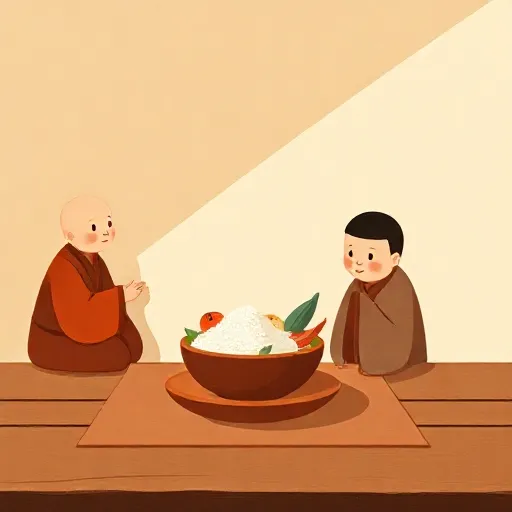
Tsongkhapa’s practical side shows up in his ethics. Tibetan Buddhism holds that different people follow different codes: basic monastic rules, the bodhisattva code (for those devoted to universal compassion), and tantric codes. For Tsongkhapa, a higher code doesn’t wipe out the lower one; it includes and sometimes adjusts it.
Take meat-eating. The basic code allows a monk to accept whatever food is put in his begging bowl, but the bodhisattva code says that if you are advanced enough in compassion, eating meat harms your altruistic mind. Tsongkhapa argued that a bodhisattva monk who goes ahead and eats meat is actually breaking his higher ethical obligation — even though the basic rule doesn’t forbid it. He didn’t stop there. In rare cases, a tantric practitioner of extreme altruism might eat meat, even human flesh, if it were a genuine act of benefiting others — but this was only for a theoretical elite, not a recipe for ordinary behavior.
The whole system hinges on dependent origination. Actions have consequences based on real cause and effect, not because some cosmic lawbook says so. The person who acts is themselves empty, yet conventionally real — so responsibility doesn’t vanish. This is miles away from “anything goes.”
The Hermit’s Secret: Thinking Your Way to Silence
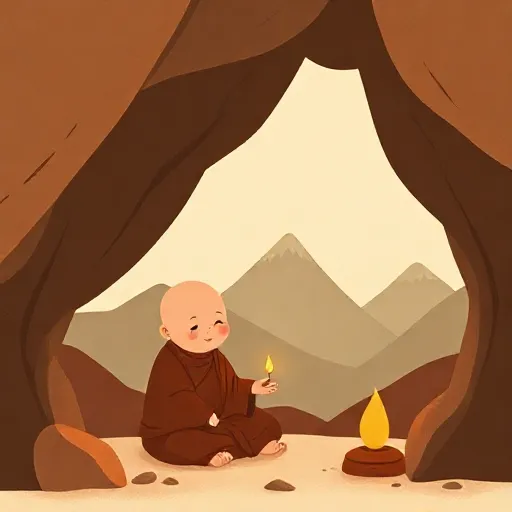
Tsongkhapa believed you can’t just read about emptiness. You have to train your mind through three stages: listening and studying, then critical contemplation, and finally meditative placement. Unlike some who said you should empty your thoughts entirely, he championed analytic meditation — using reasoning to break apart false assumptions. Only after you’ve intellectually seen through the illusion of solid things do you rest your mind in that understanding.
This wasn’t just a personal quirk. It became the heartbeat of the Geluk school he founded through the great monastery of Ganden in 1409, and soon after Drepung and Sera. Monks there spent years debating every crack in reality before entering long retreats. For Tsongkhapa, the sharpest logic and the deepest silence were two sides of the same coin — both needed to truly feel dependent origination in your bones.
Why It Still Matters When You Choose Dessert
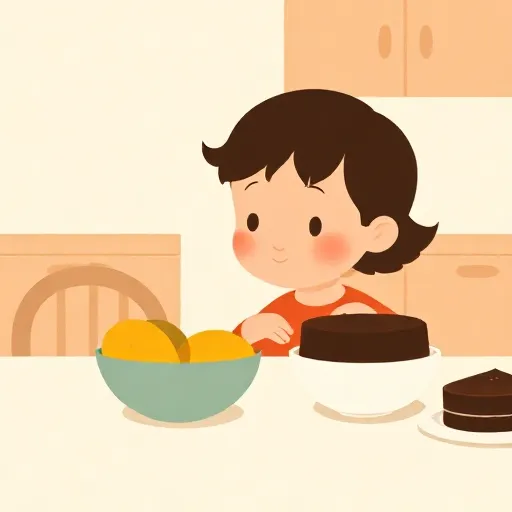
So why should a twelfth-century Tibetan monk concern you today? Because Tsongkhapa’s core idea is right on your kitchen table. When you pick a chocolate cake over a mango, you don’t think there’s an invisible “cake-essence” forcing you to choose it. You know your choice depends on your mood, your taste, what you ate earlier, and maybe the memory of grandma’s baking. Yet you still make a real choice, and you’re still responsible if you spoil your dinner. That’s dependent origination in action.
Tsongkhapa’s insistence that emptiness and everyday life aren’t enemies is a powerful antidote to all-or-nothing thinking. Things can be fully real in a conventional sense while being utterly empty of a fixed, independent core. This insight doesn’t require you to be a monk; it just asks you to notice the intricate web of causes and labels that make up your world. His legacy — a Buddhist tradition that values both rigorous study and deep meditation — still thrives in monasteries from Nepal to California. The man from the Land of Onions planted seeds that are still growing.
Think about it
- If someone told you your whole personality is just a collection of habits and labels, and there’s no “real you” underneath, would that change how you feel about yourself? Why or why not?
- Imagine you have a prized baseball signed by a famous player. Over time, every part of the ball — the leather, the ink, the player’s memory — changes. Is it still the “same” ball? What makes it special?
- Can you think of a situation where calling something “true” or “real” is just a useful label, not a fact about the universe? What happens when people disagree on that label?