What If True Wisdom Means Having No Thoughts at All?
A Monk in a Time of Trouble

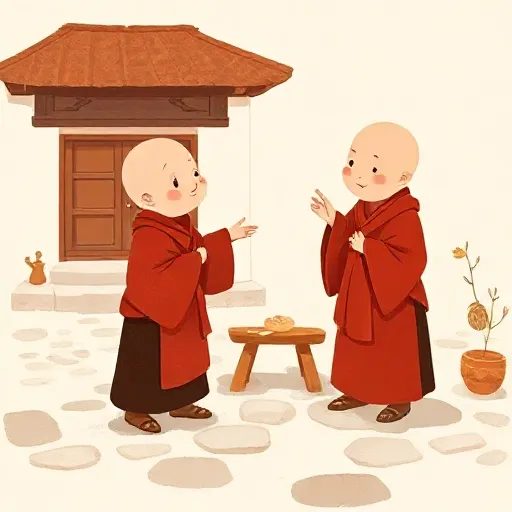
In 1429, a boy named Gorampa was born in eastern Tibet. At nineteen, he set out into the mountains to become a monk. He studied Madhyamaka — a school of Buddhist philosophy that asks what is really real — with the great scholar Rongton Sheja Kunrig. Rongton died the next summer, so Gorampa traveled widely to learn from many teachers. By his forties, he had founded his own monastery and developed a demanding curriculum that balanced logic with deep meditation.
Gorampa lived during a messy, dangerous era. His Sakya school had lost political power, and many groups were fighting for control of Tibet. Sakya thinkers needed to prove their ideas were the best. That may be why Gorampa’s writings were so fierce. He sharply attacked the views of Tsongkhapa (1357–1419), the founder of the rival Gelug school. When the Gelugpas later seized power, the Fifth Dalai Lama ordered Gorampa’s books destroyed. Many were hidden in remote monasteries and survived. Today they fill thirteen volumes — and his Madhyamaka philosophy still sparks debate.
Two Ways of Seeing: Tables, Towers, and Floaters
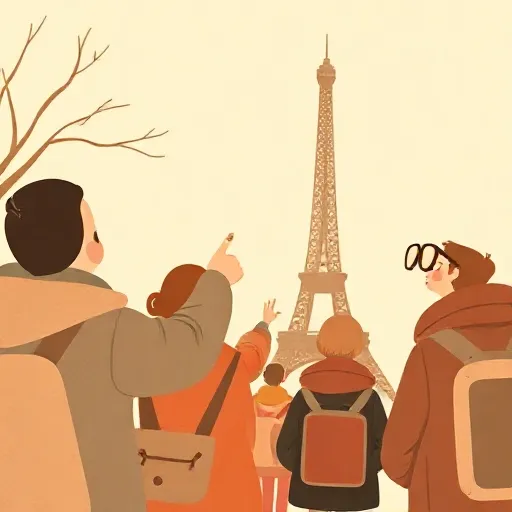
Gorampa’s core idea starts with two kinds of reality. The conventional truth is the everyday world — the way things appear to ordinary people with normal senses. The ultimate truth is the way things actually are, beneath all the appearances. For Gorampa, the difference is not just about objects. It’s about how a person sees them.
Imagine you are in Paris. You and your friends can point at the Eiffel Tower and agree, “That’s it.” The tower is conventionally true. It works for buying tickets, taking selfies, and giving directions. But what if someone drinks too much wine and starts seeing two towers? That double‑vision is not a new conventional truth. Their senses are messed up. Gorampa borrowed an old analogy: a person with an eye disorder might think the little floaters in their vision are actual hairs on their plate. A person with healthy eyes sees no hairs. The conventional truth is what all healthy, ordinary observers can agree on.
The ultimate truth is completely different. It is not built out of words, concepts, or shared agreements. Gorampa said that as long as you are using language and reasoning to grasp it, you are only handling a teaching tool — what he called the ultimate that is taught. A fully awakened person directly experiences the ultimate that is realized, which is beyond any thought. After that experience, the conventional world stops feeling completely real. It becomes merely conventional — like a dream you see through but still move around in. Unlike Tsongkhapa, who argued that every object has both conventional and ultimate sides, Gorampa insisted that the shift happens entirely inside the knower. The same table looks solid to an ordinary person and flimsy to a buddha.
The Four‑Step Trap That Unlocks Reality
How do you get from ordinary confusion to that direct nonconceptual seeing? Gorampa used a tool called the tetralemma — a four‑cornered argument that dates back to the Indian philosopher Nāgārjuna. It eliminates every possible way you could describe the ultimate status of a thing.
Start with a chair. You might say, “It truly exists.” Using tight reasoning — Gorampa lists five standard Madhyamaka proof styles — you search for any independent essence behind the appearance and find nothing. Existence is refuted. Your mind then wants to say, “So the chair does not exist!” But Gorampa points out that “nonexistence” makes sense only as a contrast to existence. If existence is fully undone, “nonexistence” can’t stand on its own. That’s the second step gone.
Third, could the chair somehow both exist and not exist? That’s impossible once each half has been knocked down separately. Fourth, might it be neither existent nor nonexistent — some vague in‑between? Gorampa replies that if you have any concept at all, however blurry, you are still clinging to a wrong view. With all four limbs toppled, you have no concept left to grab. The only “answer” is dropping concepts entirely.
Gorampa calls each of these refutations a non‑affirming negation: it wipes something away without secretly putting something else in its place. Tsongkhapa disagreed. He accepted a rule of double negation, where negating nonexistence could point back to existence at the conventional level. For Tsongkhapa, the tetralemma eliminates only extreme wrong views, not all thought. Gorampa said that approach underpervades — it doesn’t negate enough. The point of the tetralemma, he argued, is to burst the whole logical container.
When Logic Runs Out: Why a Buddha Has No Concepts

The debate gets really sharp here. If ultimate truth is totally nonconceptual, then a completely awakened buddha must live without any concepts at all. Tsongkhapa’s followers thought that was absurd. They said Gorampa’s view overpervades — it wipes out too much. If you remove every concept, they objected, you would be no different from someone who is simply unconscious or asleep. Where is the wisdom in that?
Gorampa answered carefully. He never said you can just “stop thinking” and call it enlightenment. First you must burn away ignorance step by step, using the razor‑sharp logic of the tetralemma. You prove to yourself, beyond any doubt, that no conceptual position can capture reality. Then, through repeated meditation on those refutations, the habit of clinging to concepts weakens and eventually vanishes. It’s like learning to stop flinching at a loud noise — not by willing yourself still, but by slowly losing the reflex.
So an awakened buddha does not fall into a blank void. Because of past compassion and karmic connections, a buddha appears to ordinary beings as wise, active, and omniscient. But from the inside, there is no inner chatter. The mind is awake without having to “think about” anything.
Different Paths, Same Destination?

Tibetan scholars fought over the right way to do Madhyamaka. They divided Indian masters into two camps: Prāsaṅgika, who mainly refute opponents’ mistakes without setting up their own position, and Svātantrika, who use independent logical proofs. Almost everyone wanted to be a Prāsaṅgika, because the respected Candrakīrti was seen as one. Tsongkhapa made a list of eight deep differences between the two approaches and claimed they had different final views.
Gorampa saw it otherwise. Since the real goal is a mind free of all conceptual positions, there cannot be different “final views.” Nonconceptuality has no versions. The difference between the schools is only about method — how you use logic and reasoning along the way. This mattered enormously: it meant you didn’t have to follow one rigid style of argument to reach awakening. His openness appealed to Kagyu and Nyingma meditators who wanted to defend themselves against Gelugpa logic without abandoning their own practice styles. In later centuries, his ideas helped feed a nonsectarian movement that drew tools from many Tibetan traditions.
Why It Still Matters: Letting Go of Overthinking
Gorampa’s books were banned for centuries. Yet they were copied in secret, recovered, and studied again. Today, monks from several schools still train in his arguments. Outside monasteries, his challenge echoes a common human experience. You struggle with a math problem or a friendship trouble, turning it over and over in your head. The harder you think, the more tangled it gets. Then you go for a walk, or stare out the window, or sleep on it — and suddenly the solution is just there. No extra thinking needed.
Gorampa’s radical claim is that the deepest kind of knowing isn’t built out of thoughts at all. That doesn’t mean you should abandon learning or reasoning — he himself insisted on rigorous logic first. But it does mean that thinking is a ladder you eventually step off. Whether that ladder really vanishes or just becomes invisible is still a live argument. For now, the next time your mind feels like a browser with too many tabs open, you might remember a monk from 15th‑century Tibet who was convinced that real wisdom can be found in the space between words.
Think about it
- Have you ever solved a problem by stopping your efforts to think it through? What might that say about the limits of thinking?
- If someone with no inner thoughts at all could still be wise, could a machine ever be wise in the same way?
- If two different ways of reasoning both lead to the same truth, how would you decide which one is better — or does it even matter?