Is Anything Real? The Buddhist Monks Who Said Yes and No
A Cup, a Monk, and the Most Dangerous Question
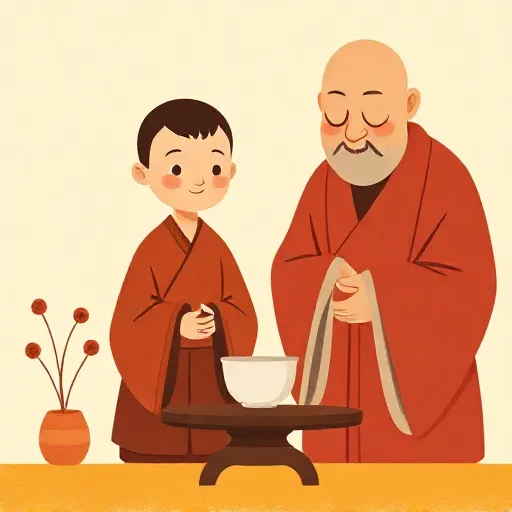
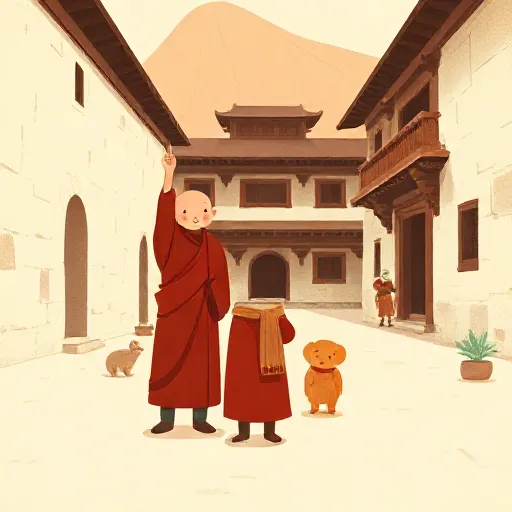
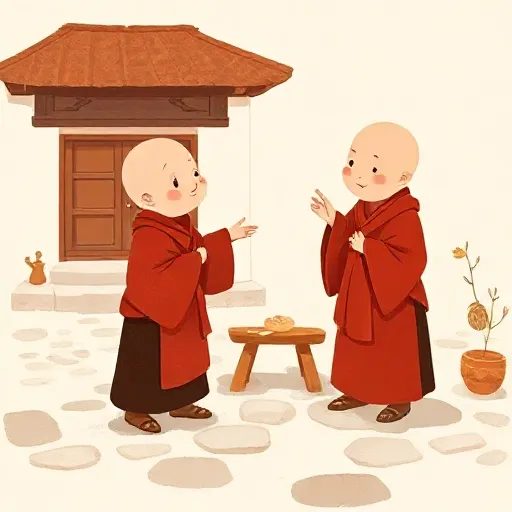
It is a sun-drenched courtyard in Tibet, around the year 1400. A teenage monk named Tenzin sits cross-legged on the stone floor. His teacher places a clay cup on the table between them and slams a wooden block. “Does this cup exist from its own side?” the teacher asks. Tenzin hesitates. The cup looks solid, real, and perfectly cuplike. But his training warns him: nothing is quite what it seems.
This was the kind of question that obsessed the Buddhist master Tsongkhapa (1357–1419). Tsongkhapa founded the Geluk school of Tibetan Buddhism — a tradition whose name means “way of virtue.” He and his followers claimed something that sounds like a riddle: nothing in the world has a fixed, independent essence, yet the world you touch, taste, and see is completely real. This is the doctrine of the two truths — ultimate truth and conventional truth. The Geluk philosophers were not trying to confuse people. They were trying to solve a deep puzzle about how things exist.
Tsongkhapa built his ideas on Indian thinkers of the Middle Way school, especially Candrakīrti (c. 600–650 CE). The Middle Way rejected two extremes: that things are independently real, and that things are utter illusions. Geluk philosophers sharpened this into a system where the ultimate truth is emptiness, and the conventional truth is everything that works in everyday life.
Emptiness: The Ultimate Truth That Isn’t a Thing

For Geluk thinkers, the ultimate truth is that everything is empty of intrinsic existence — a built-in, independent core that makes something exactly what it is. You cannot find the “cupness” of the cup separate from its clay, its shape, the potter who made it, and the purpose it serves. When you search for an essence that belongs to the cup all by itself, you find nothing. That non-finding is emptiness.
Emptiness is not a secret substance hiding behind appearances. It is a non-implicative negation — a pure absence that points to nothing else. Think of the silence after a bell stops ringing. The silence does not announce a hidden sound; it is just the absence of ringing. Likewise, emptiness is simply the lack of any fixed essence. And here is the twist: emptiness itself is empty. You cannot find some ultimate “emptiness-stuff” either.
Yet Geluk philosophers also insist, “to exist is to be empty.” Far from destroying the world, emptiness is what allows things to function. Picture a glass of water. The empty space inside the glass is what lets it hold water. If the glass were a solid block with no hollow, it could not do its job. In the same way, the cup’s lack of an independent essence is why it can hold tea, stand on a table, and be seen. Emptiness and conventional existence go hand in hand — they are two aspects of the same reality, not two separate worlds.
The King of Arguments: Because Everything Depends, Nothing Stands Alone
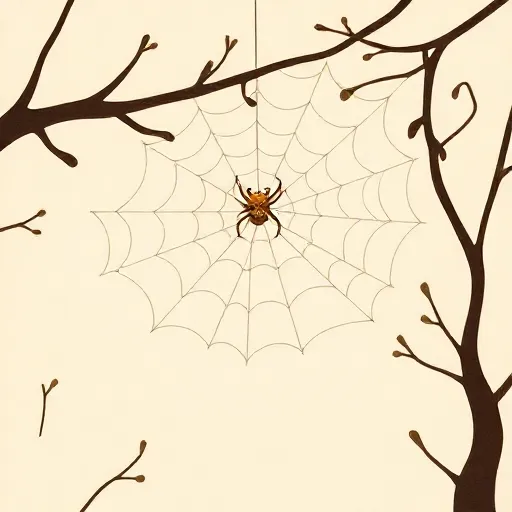
Geluk philosophers call one reasoning the king of arguments. It runs like this: everything arises because of causes and conditions. A seedling needs a seed, soil, water, and sunlight. A cup needs clay, a potter, and a need for drinking. Because all things depend on other things, no thing can possess its own independent nature. Whatever depends cannot stand on its own feet. Therefore, all things are empty of intrinsic existence.
The king argument does two jobs at once. It proves emptiness — nothing exists from its own side. And it proves that things still appear and work dependently — the cup holds tea, the seedling grows. Emptiness is not a threat that makes the world vanish. It is the very reason appearances arise. Tsongkhapa taught that this single line of thought can stop two mistakes: the reification that treats things as solidly real, and the nihilism that says nothing exists at all.
So what decides whether something is conventionally real? The Geluk answer sounds strikingly modern: it works like a game. A soccer goal counts because the players, the referee, and the fans agree on the rules. If the ball crosses the line in the right way, everyone treats it as a goal. That is a conventional truth — a transactional usage that holds up in shared life. Tsongkhapa gave three tests for conventional truth: it must be known by ordinary ways of knowing, it must not be contradicted by other ordinary knowledge, and even a deep analysis of ultimate nature doesn’t disprove its everyday existence. Emptiness never cancels the cup; it only cancels the mistaken belief that the cup has a hidden, ultimate “cupness.”
Mind or Matter? The Geluk Battle Against the Dream World
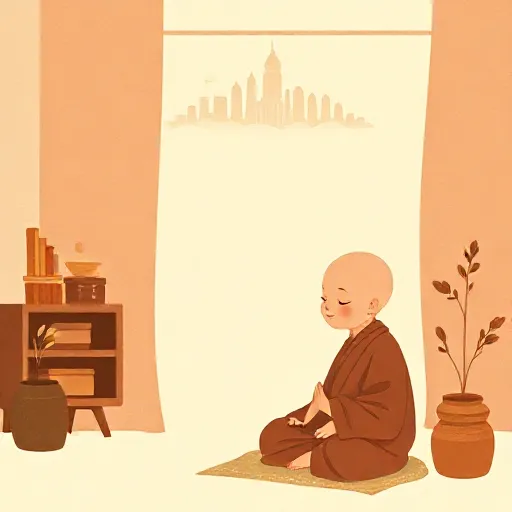
Some Buddhist schools, like the Mind-Only school, argue that the external world is just a dream projected by the mind. They claim the mind itself is ultimately real, a kind of foundational consciousness, and that the mind knows itself through a special reflexive awareness — a first-person glow that is unlike knowing any other object.
Geluk thinkers flatly reject all of this. Tsongkhapa and his followers argue that if external objects are mere dreams, then the mind that dreams them is just as dreamlike. When you perceive a cup, there is both a cup and a perception of it. The two arise together and fall away together. They are tied in a dependent pair. Neither can claim to be more fundamentally real. No hidden foundational consciousness exists, and the mind does not know itself in some magical, private way. The mind is just another dependently arisen phenomenon, known through the same interdependent processes as everything else.
This means Geluk philosophers are not idealists (they don’t make the world a dream of the mind). But they are also not external realists (they don’t say the material world exists independently). Both the mind and the cup are equally conventional, equally empty. When you look at a mountain, it is not a hallucination — it is a dependently arising mountain, real enough to climb and measure, and real only within the web of conventions.
Why the Geluk Way of Virtue Matters Today
Geluk philosophy is not just a theory. The name “Geluk” means “way of virtue,” and emptiness is tightly linked to how we live. If nothing has a fixed essence, then you don’t have a frozen, unchanging self either. Tsongkhapa taught that we suffer because we cling to the idea of a solid “me” and treat the world as if it were made of hard, independent things. Seeing emptiness loosens that grip. It reveals that you are a dependently arising person — shaped by family, friends, experiences, and choices — and that this constant change is not a loss but a freedom.
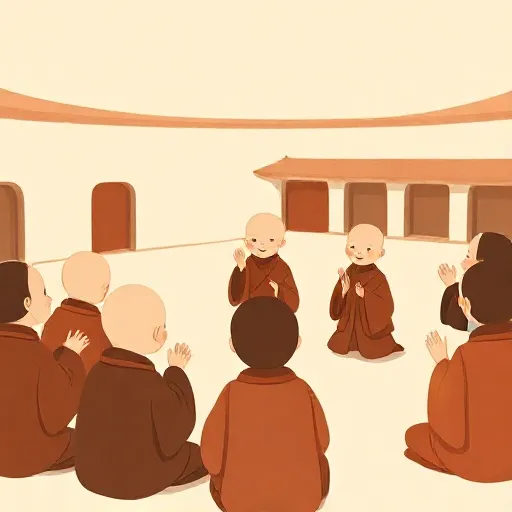
The Geluk tradition insists that the way to see this truth is through reason, not by escaping into a mystical trance. Monasteries became schools of debate where monks sharpened their understanding by arguing in courtyards, clapping their hands to emphasize a point. They studied logic and epistemology with the same seriousness they brought to meditation. Reason, they said, is more reliable than scripture or blind faith. If you want to understand reality, you have to think your way there.
This matters for you, too. You are not a pre-packaged identity waiting to be discovered. You are a web of connections: to your friends, your language, your stories, your choices. Emptiness means there is no cosmic label that fixes who you are forever. At the same time, it means that your actions ripple through the interdependent world. Being kind, asking good questions, and treating conventions seriously — those are the moves of someone who understands that the game is real because we all play it together.
Think about it
- If nothing has a fixed essence, is it ever fair to call someone “lazy” or “smart” as if that’s just what they are? Why or why not?
- Imagine you’re playing a video game where falling into lava kills your character. If the programmers change the rule tomorrow, was the old rule “real”? What makes any rule real?
- Your identity depends on everything around you — family, friends, language, even the food you eat. Can you ever point to something and say, “this is the real me, all by itself”? What would be missing?