
Can “Nothing” Be More Real Than Everything?
The Professor and the Zen Riddle
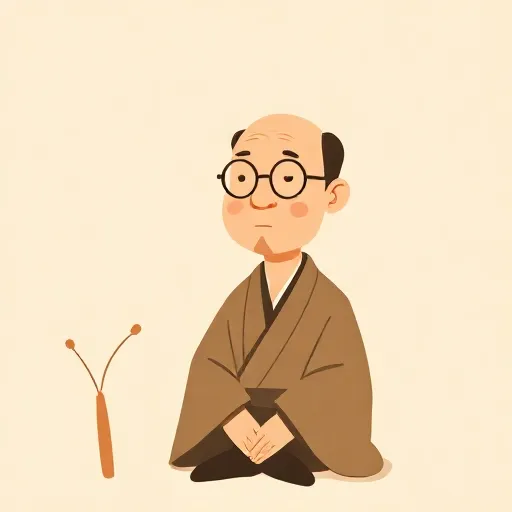
In the early 1900s, a Japanese professor named Nishida Kitarō (1870–1945) spent almost ten years wrestling with a single word: mu, which means “nothingness.” It was not a dictionary word but a Zen kōan, a riddle meant to short-circuit ordinary thinking. Nishida passed through the kōan’s barrier, but he was not satisfied with a purely religious experience. He wanted to bring that insight into philosophy. Could nothingness be not just the absence of things, but the very ground of everything? That question launched the Kyoto School, a group of thinkers who set out to change how East and West talk about reality.
Why Nothing Is Not Just Empty
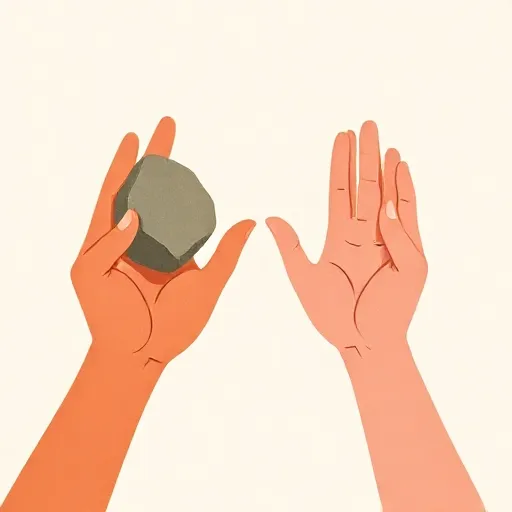
Most Western philosophy starts with being. When Aristotle asked “What is really real?” he looked for substance — the stuff things are made of. Later Christian thinkers pictured God as the highest being. But Nishida and his circle noticed that in East Asian traditions like Mahāyāna Buddhism and Daoism, the deepest reality is often described as a kind of nothingness. This is not an empty void or the mere absence of things. They called it absolute nothingness — a no-thing that is not opposed to beings, but that allows all beings to appear and change. Picture a stage: the actors are the beings, but the stage itself is an open space. Without that emptiness, no movement could happen. In the same way, the Kyoto School argued that absolute nothingness is the place where everything comes to be and passes away.
Nishida’s Place of Absolute Nothingness
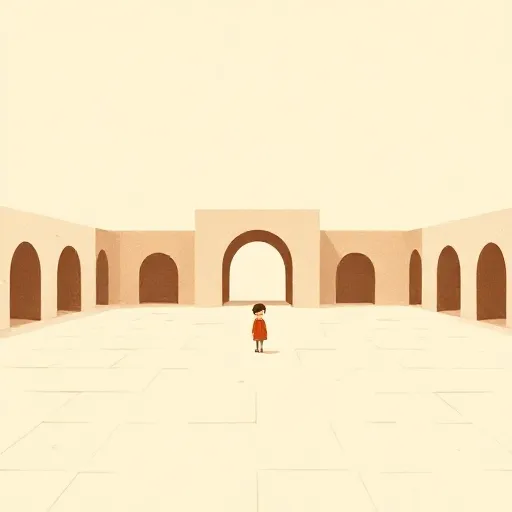
In the 1920s Nishida developed his core idea: the place of absolute nothingness. Think of how you know a red apple. Your mind provides a field where color, shape, and taste come together so you perceive one thing. But consciousness is still a subject looking at objects. Nishida wanted to go deeper. What if there is a place that holds both subject and object — a groundless ground that is neither physical nor mental? That, he said, is absolute nothingness. It is not a thing, yet it is the dynamic setting where you and the world encounter each other. For Nishida, your true self is not an isolated ego; it is more like a knot in a net woven from nothing. When you truly empty your ego, you become a clear mirror that can reflect things just as they are.
Tanabe’s Challenge: Nothingness as a Movement
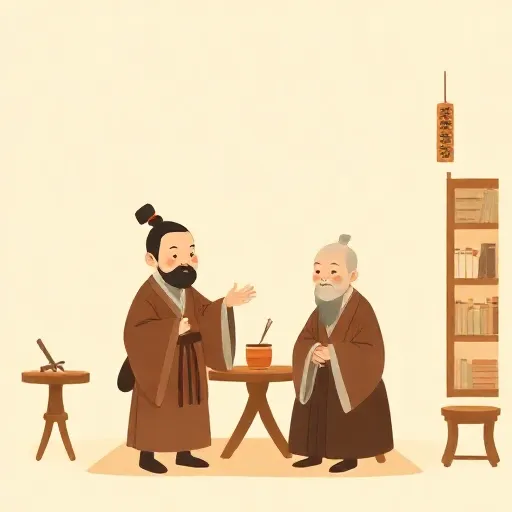
Nishida’s younger colleague Tanabe Hajime (1885–1962) thought the “place of absolute nothingness” was too static. In 1930 he wrote a sharp critique. Why, he asked, should nothingness be a stage? He argued it must be a constant movement of self-negation. Imagine a river: you cannot point to a fixed “thing” — the river is the flowing itself. For Tanabe, absolute nothingness works like that. It is not somewhere you arrive; it is the process of letting go that keeps everything alive. He called this absolute mediation or absolute dialectic. Even human reason, he said, must keep dying to its own limits and being reborn. He eventually called this turn metanoetics, a word meaning a total about-face of the mind. Only when your own efforts fail, he argued, can an Other-power — a term he took from Shin Buddhism — help you break through. Tanabe’s criticism pushed Nishida to make his own philosophy more dynamic, and their debate became the engine that drove the whole school forward.
Nishitani and the Crisis of Nihilism

The most famous Kyoto School figure in the West is Nishitani Keiji (1900–1990). He studied in Germany with the philosopher Martin Heidegger and returned to Japan worried about a modern sickness: nihilism. Science and industry had made the world feel like a giant machine. Old religious certainties were crumbling, and many people felt their lives had no real meaning. Nishitani called this gnawing emptiness nihility or relative nothingness — a black hole where all values disappear. But he did not think we should run from it. Instead, he said, you must walk straight into the abyss. If you do not turn away, you might break through to what he called the field of emptiness (śūnyatā). On that field, you stop clinging desperately to things and to your ego, yet you do not fall into despair either. You discover a freedom that embraces everything just as it is. Nishitani compared it to learning to float in water: when you stop thrashing, the water holds you. Emptiness, he argued, is not a vacuum that destroys — it is a clearing where things can truly be themselves.
Why Absolute Nothingness Still Matters

You might think all this is just old philosophy, but the Kyoto School’s ideas are surprisingly alive today. In a world that constantly tells you to build a brand, perform, and achieve, the idea of absolute nothingness offers a different path: true freedom is not always about adding more — sometimes it is about learning to let go. That does not mean giving up on life. It means meeting others and the world without your ego getting in the way, so you can actually see what is in front of you. The Kyoto School also modeled how to think across cultures without simply imitating the West or retreating into nationalism. To be sure, some members made political missteps during World War II when they tried to influence their country — a reminder that even brilliant thinkers can stumble when philosophy meets power. But their central project remains urgent: every culture, and every person, can contribute something unique to an ongoing global conversation about what it means to be human. The real ground of that conversation, they might say, is not a set of fixed ideas — it is the open, self‑emptying nothingness we all share.
Think about it
- If you could let go of your ego completely for one day, how do you think your relationships with friends and family would change?
- The Kyoto School thought that “nothing” could be the ultimate reality. Can you name something in your everyday experience that feels like it is “nothing,” yet is actually very important?
- Some of these philosophers tried to influence their country during a war, and later many people accused them of supporting bad policies. Do you think philosophers have a duty to speak up even if they might make mistakes, or should they stay out of politics?