A Skull, a Cave, and the Idea That Your Mind Paints the World
A Thirsty Night in a Cave
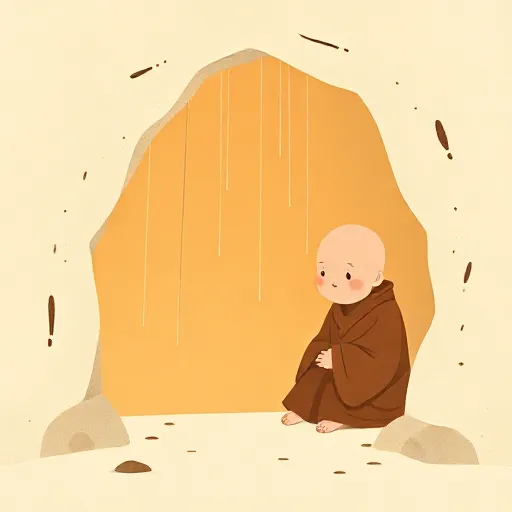
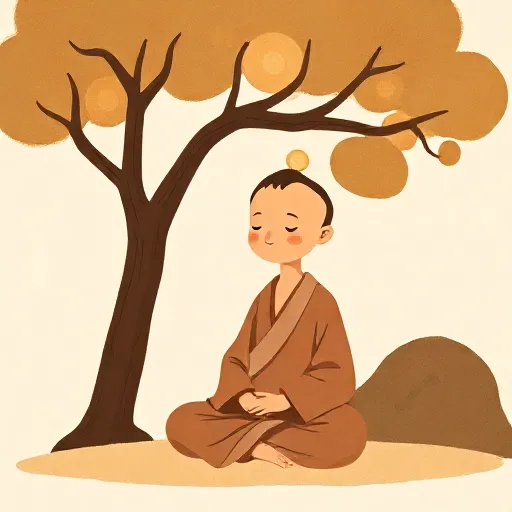
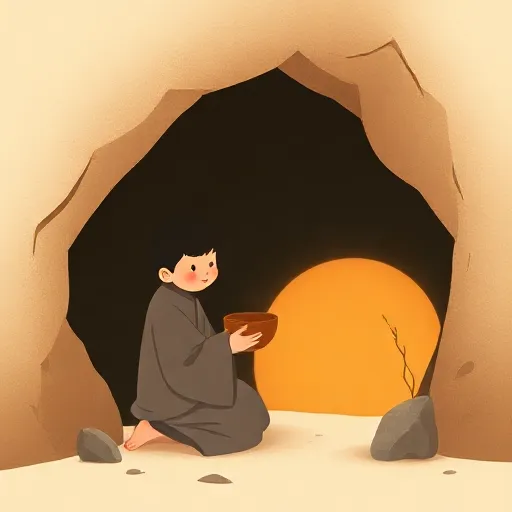
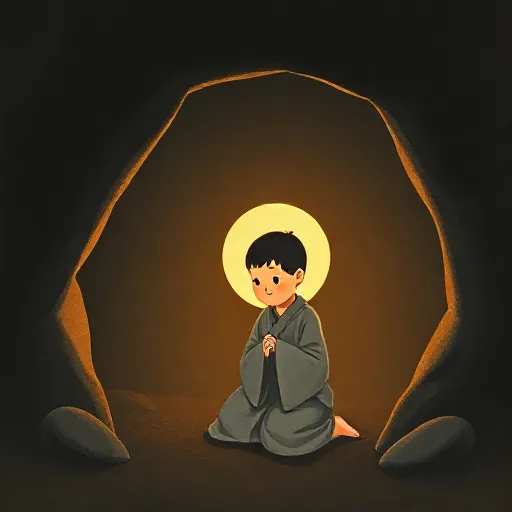
In the year 650 or so, two young Korean monks set out on a long journey. Wŏnhyo (617–686 CE) and his friend Ŭisang (625–702 CE) were traveling from the kingdom of Shilla to China, where they hoped to study with a famous teacher. But on the way to the harbor, a sudden storm soaked them, and they ducked into a small cave for shelter.
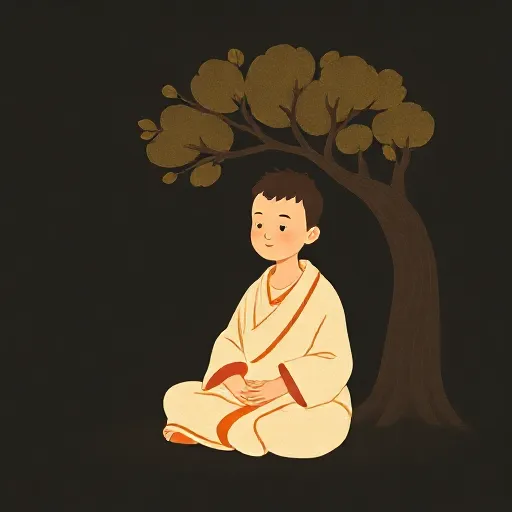
Sometime during the night, Wŏnhyo woke up desperately thirsty. In the total blackness, his hands found a bowl of water. He drank from it eagerly and felt deeply satisfied. Come morning, though, the light showed him the truth: the bowl was a human skull, and the water was murky and stale. He immediately vomited.
Then something clicked. The water hadn’t changed between night and morning. What changed was his mind. At night, when he didn’t know, the water felt clean and good. In the daylight, when he saw the skull, the exact same water became disgusting. Wŏnhyo realized that the difference was not in the thing itself—it was entirely in his own consciousness. Everything he had ever experienced, he thought, might be shaped this way, by the mind. He decided he didn’t need to go to China anymore. He had already touched the teaching he was looking for.
The Mind’s Eight Layers
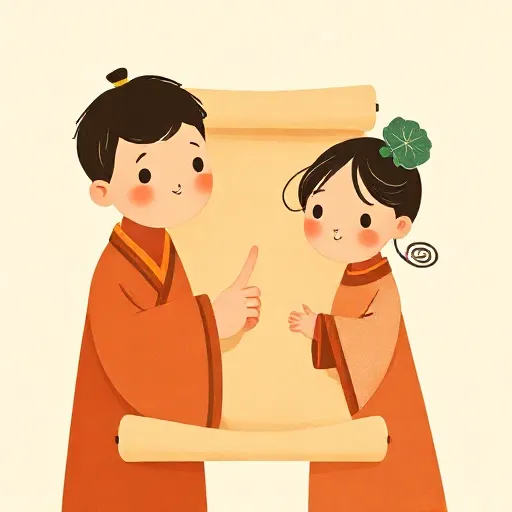
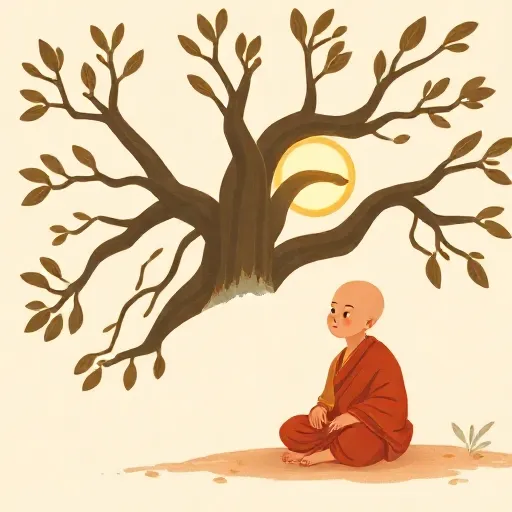
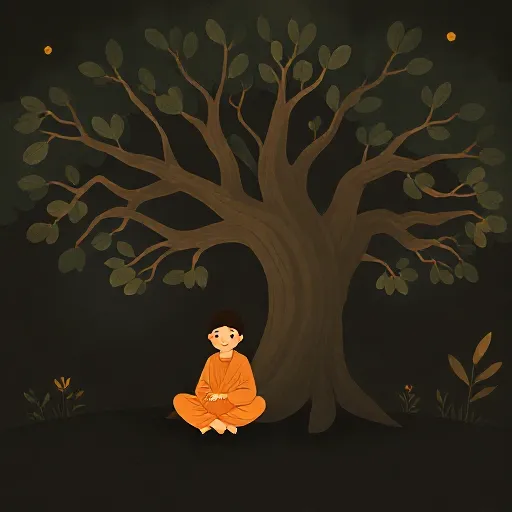
Wŏnhyo’s insight wasn’t just a personal feeling—it was connected to a powerful school of Buddhist thought called Yogācāra, which was spreading through Korea at the time. Yogācāra means “practice of yoga” but it’s really a philosophy about how consciousness works.
Yogācāra teaches that everything you experience is a display of consciousness-only. That doesn’t mean the world is a dream you can ignore. It means that your mind doesn’t just passively receive the world; it actively shapes it through many layers. Think of your awareness as a tower of eight levels. The first five are the senses—seeing, hearing, smelling, tasting, touching. The sixth is the mind that makes sense of those inputs. The seventh is a deep sense of “me,” which clings to everything as “mine.” And the eighth is the storehouse consciousness, a kind of hidden basement where every thought, word, and deed drops a tiny seed. Those seeds sprout later into habits, tastes, fears, and even the way you see a new person or a rainy day.
Yogācāra practice aims to scrub all these layers clean, so that the mind can see clearly without twisting things. Some teachers argued that underneath the eighth consciousness there is a completely pure ninth consciousness—a Buddha nature that is already perfect. Wŏnhyo studied these debates deeply, and he came to believe that even the ordinary mind contains pure elements, mixed up with the dirt, like gold ore hidden in rock.
One Is All, All Is One: The Universe Inside a Seed

Wŏnhyo wasn’t the only thinker making discoveries. His friend Ŭisang dove into a school called Hwaŏm, which comes from the Flower Garland Sūtra. Hwaŏm philosophy introduces a breathtaking idea: the whole universe and every single part of it are interwoven so tightly that you can’t find a thing that stands alone.
The teaching is often summed up like this: “one is all, and all is one.” Imagine a spiderweb made of light. If you pluck one thread, the whole structure shimmers. Every single being—a beetle, a cloud, a friend who annoys you—is like a thread in a vast, living net. Reach out and touch any one of them, and you’ve touched the whole thing.
Ŭisang expressed this in a poem shaped like a maze, 210 words arranged to form a mandala. In it he described an enlightened person who can see the entire cosmos in a single mustard seed and can experience endless time in a snap of the fingers. He wasn’t talking about magic—he was showing that when the mind stops chopping the world into “me” and “not-me,” the boundaries soften. Even opposites, like happiness and sadness, can be seen as strands of the same fabric.
This philosophy traveled deep into Korean life. Ŭisang himself practiced it by treating all his students equally, no matter how rich or poor, because if all is one, no one deserves less dignity than anyone else.
Why Wŏnhyo Thought Nobody Had It Completely Wrong
Wŏnhyo had a mind that didn’t like to throw anything away. Deep in Buddhist philosophy, two schools were at odds. The Mādhyamaka school said that everything is empty—nothing has a fixed, permanent nature. The Yogācāra school said that everything is a display of consciousness. They seemed to contradict each other. Wŏnhyo, however, found a way to hold both together.
He was guided by a scripture called The Awakening of Faith in the Mahāyāna, which speaks of the One Mind. The One Mind has two sides. One side is suchness—quiet, still, empty like a cloudless sky. That fits the Mādhyamaka view. The other side is arising and ceasing—the way thoughts, feelings, and whole worlds bubble up from the storehouse consciousness. That fits the Yogācāra view. Wŏnhyo said the One Mind includes both without contradiction. It is like the ocean: sometimes stormy, sometimes flat, but always the same water.
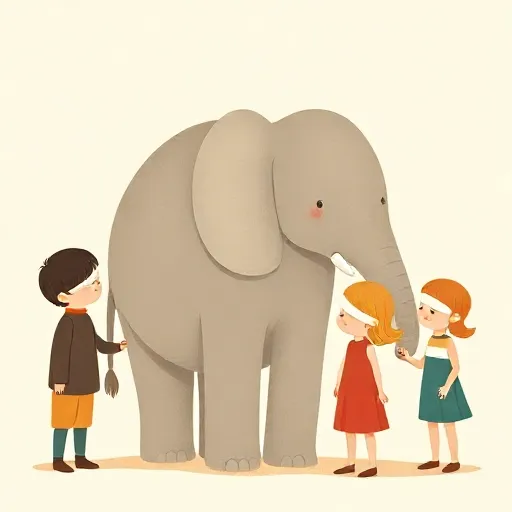
This way of thinking led him to develop a special approach called hwajaeng, which means “reconciling disputes.” Wŏnhyo used a famous parable about blind men and an elephant: each man touches a different part—trunk, leg, tusk—and insists he knows the whole animal. In the same way, Wŏnhyo believed, every Buddhist school had grasped a real piece of truth, but no single school had the only true picture. Hwajaeng doesn’t say “you’re right, you’re wrong.” It says: language can never capture the full truth, so clinging to any one description just leads to fighting. Instead, you can learn to hold all the pieces together and see a bigger shape.
Wŏnhyo even put this into practice for ordinary people. He walked through villages singing the name of Amitābha Buddha, inviting everyone—whether they could read or not—to connect with the One Mind through a simple chant. To him, the most elaborate philosophy and the simplest faith were two paths to the same mountain peak.
Why an Ancient Skull Still Speaks to You
These ideas from more than a thousand years ago are not locked in a museum. They keep echoing, because they touch something basic in every human life.
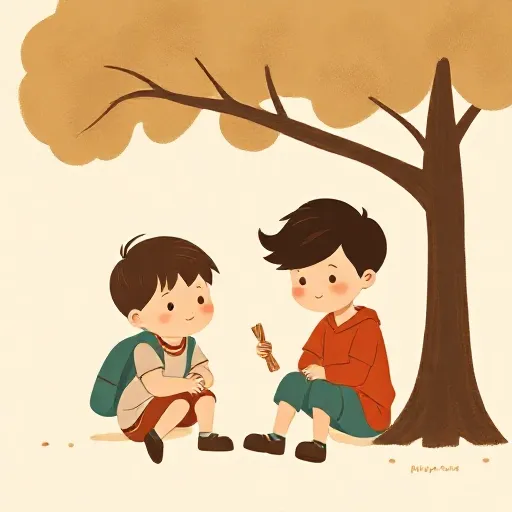
When you get into an argument with a sibling or a friend, it’s easy to believe your side is the only correct one. But hwajaeng suggests that you and the other person may each be touching a part of the truth. Your anger might be real, but so is theirs. Seeing that doesn’t mean you have to agree—it means you can stop treating the disagreement like a battle that must be won.
The Hwaŏm vision of “one is all, all is one” has also shaped how people today think about the environment. Groups like the Indra’s Net Community in modern Korea took the old image of a cosmic net where every jewel reflects every other jewel, and they used it to argue that hurting the earth is exactly like hurting yourself, because you are not separate from it.
Wŏnhyo’s realization in the cave is still alive every time you notice that your mood changes how the world seems—when a gray sky feels sad on a lonely day and beautiful on a day you feel loved. The skull didn’t pour out clean water or dirty water; it just sat there. Your mind, layer by layer, painted the experience. And if your mind can paint a world of division and disgust, it can also learn to paint one of connection and care. That is the long, steady practice that Korean Buddhist philosophy handed down—not a doctrine to memorize, but a way of seeing freshly, and maybe a little more peacefully.
Think about it
- Think of a time you and a friend fought because you saw the same situation differently. If Wŏnhyo were listening, what might he say about your two points of view?
- Is it possible that the way you feel right now is coloring everything you notice—like changing the tint on a camera lens? How could you tell the difference between a “real” problem and a problem your mood is creating?
- If you believed, deep down, that every living thing is connected to you like threads in a web, what is one small choice you might make differently today?