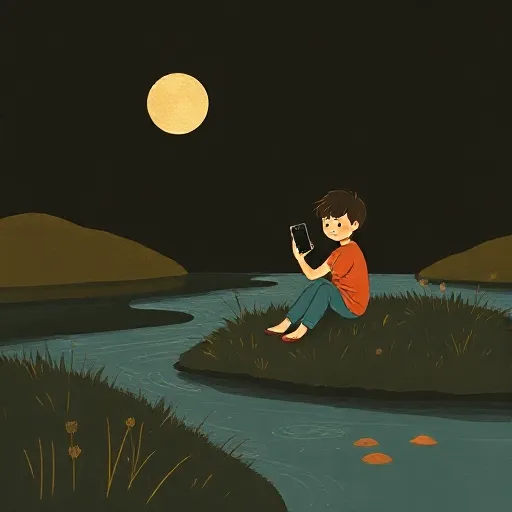

Socrates Hated Books. What Would He Think of Your Smartphone?
A Philosopher Who Hated Writing

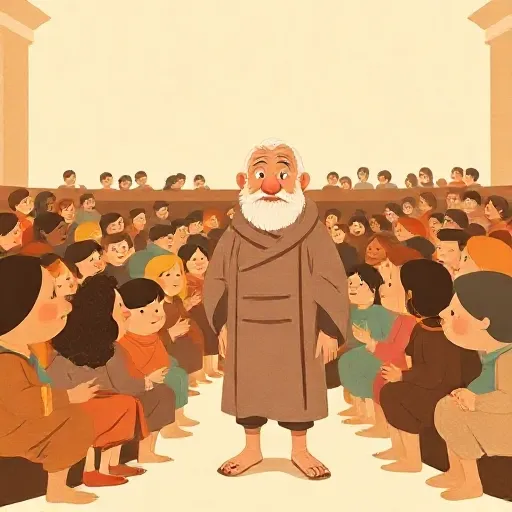
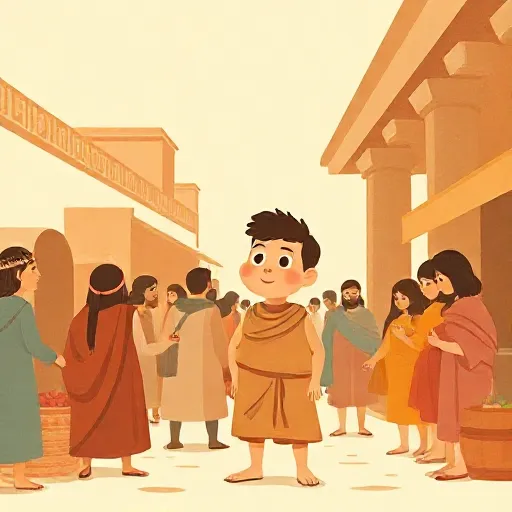
Imagine the most talkative person you know — someone who loves a good argument. Two and a half millennia ago, that was Socrates (470–399 BCE). He spent his days in the marketplace of Athens, questioning everyone about justice, courage, and truth. But when a new technology came along, he refused to use it: writing. Socrates worried that writing things down would weaken people’s memories. He told a story about an Egyptian god named Theuth who gave the gift of writing to a king. The king was not grateful. If people learned this, the king said, they would stop exercising their memory and rely on “external marks” instead. Worse, Socrates added, you can’t ask a book a question. It just repeats the same words forever. His student Plato (c. 428–348 BCE) ignored him and wrote everything down — that’s how we know about Socrates today.
Socrates was the first philosopher to argue that information technology — any tool that records, communicates, or organizes information — can change our moral lives. A string tied around your finger to remind you of a task is a simple information technology. A library, a telephone, and a smartphone are much more powerful ones. Every time a new one appears, people must ask: is this making us wiser, or just making it easier to forget?
The Power of Your Data: Who Owns Your Life?
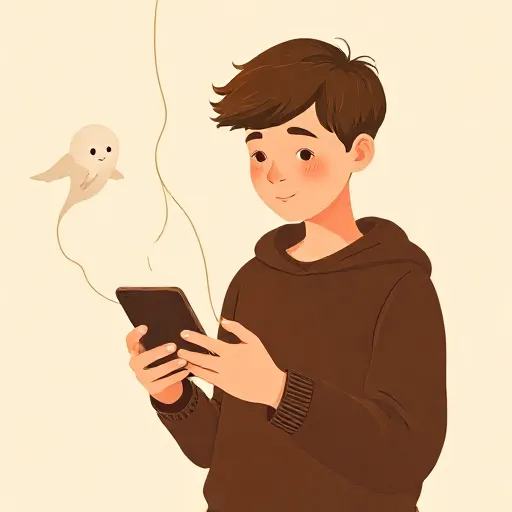
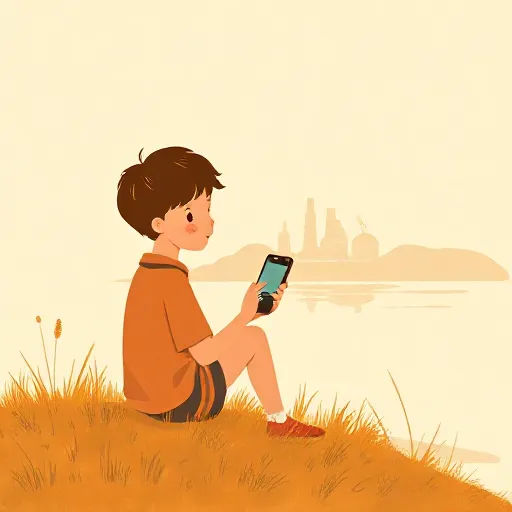
Today, the amount of information you produce every day is staggering. Your browser remembers every site you visit. Your phone tracks your location. Apps collect your heart rate, your sleep patterns, and what you search for. This data is incredibly useful — it can help you get healthier or find a better route home — but it also creates huge moral puzzles.
In 1986, the scholar Richard Mason warned that new technologies would threaten four core values: privacy, accuracy, property, and accessibility. He called them the PAPA principles and said we needed a brand-new social contract to protect them. Mason could not have guessed how fast things would change, but he was right about the dangers.
The biggest fight has always been about privacy. In the 1960s, Alan Westin (1929–2013) argued that privacy means having control over your personal information. If a company, a government, or a stranger knows something about you, you should decide whether it gets shared. Today that sounds obvious — until you realize you have almost no control over the data that Google, Facebook, and your favorite apps collect about you. You agree to long terms-of-service documents without reading them. Your clicks, likes, and searches are turned into a profile that advertisers pay for.
The philosophers Herman Tavani and James Moor (2004) pushed back against Westin’s idea. They argued that no one can possibly control all the information their daily lives create. If you focus only on the tiny fraction you can manage, you ignore the mountains of data that are already out there. Real privacy, they said, depends not on controlling everything, but on trusting the companies and institutions that hold your data to restrict access to it. That’s a big shift: your privacy is in someone else’s hands, and you have to hope they treat it carefully.
So there’s an uncomfortable trade-off. The services you use are free, but the price is your personal information. And while it’s easy to feel like this is a fair deal, the information can be stolen, sold, or used to manipulate you. Identity theft has exploded. In 2018, cybersecurity experts estimated that cybercrime cost the world over $600 billion — not counting the time and stress people lose rebuilding their lives after an attack.
The Transparency Trap: Why Sharing Everything Isn’t Always Good

Social media promised to make the world more open and connected. Mark Zuckerberg, the founder of Facebook, once wrote that helping people share more would create “a more open culture” and strengthen relationships. But the philosopher Shannon Vallor argues that things are not so simple. She looked at friendship through the eyes of the ancient Greek thinker Aristotle (384–322 BCE), who believed that the best friendships involve reciprocity, empathy, self-knowledge, and a shared life — actually living through ordinary days together. Social media, Vallor says, can support the first three, but it struggles with the fourth. You can share activities and messages online, but you can’t truly share a life there. A virtual friend is not the same as someone who sits beside you when you’re sick.
Vallor also named a deeper problem: the technological transparency paradox. The promise of total openness, she explains, is supposed to make powerful organizations more accountable. But instead, it often does the opposite. Users pour their most personal details into Facebook or Instagram, but the algorithms that mine that data and the third parties who buy it remain completely hidden. You are radically transparent; the companies are not. That uneven relationship exploded into public view in 2018, when it was revealed that a political consulting firm had harvested personal data from millions of Facebook profiles without clear consent, using it to target propaganda during a national election. Transparency for the user, secrecy for the powerful — that’s the paradox.
When Machines Judge You
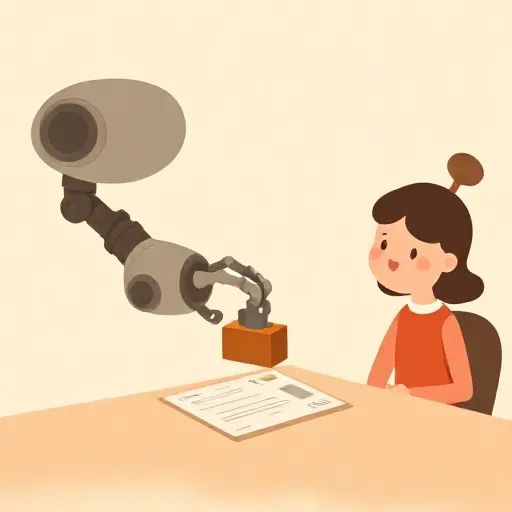
Not all moral questions about technology are about privacy. Some are about fairness — and power. Increasingly, it is not a person who decides whether you get a loan, what you pay for car insurance, or even which job ads you see. It is an algorithm: a set of rules run by a machine.
In their book Moral Machines (2008), Wendell Wallach and Colin Allen tell a story about one of the authors whose credit card suddenly stopped working while he was travelling. He called the bank and learned that an automatic anti-theft program had calculated a high probability that the charges were fraudulent. The program was trying to protect him, but it also caused real harm — leaving him stranded with no way to pay for anything. The decision was made entirely by a machine, and there was no human he could appeal to.
Now scale that up. Algorithms decide which prisoners get parole, which neighborhoods receive extra police patrols, and which students are flagged as likely to struggle in school. The formulas are usually secret, owned by private companies. If the machine makes a mistake — or if it learns to be biased because the data it was trained on contained bias — there is often no way to question it. Philosophers have been warning since the 1980s that the designers of technology bake their own values into the code. As Deborah Johnson and others have pointed out, technologies are not neutral tools; they shape the choices you can make and the kind of society you live in.
Can a Robot Do Something Wrong?
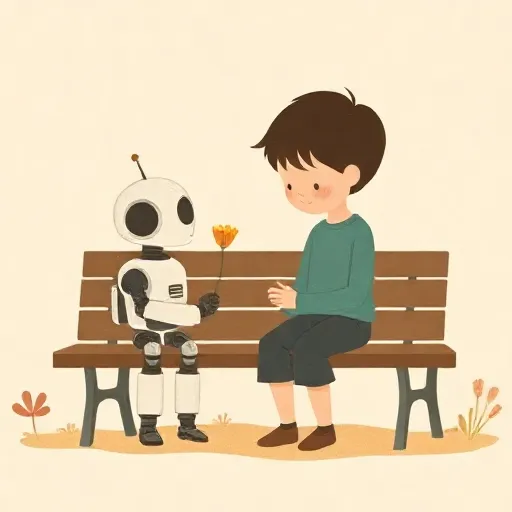
Long before the internet, people dreamed of machines that could think. Alan Turing (1912–1954), one of the founders of computer science, predicted in 1950 that one day we would speak about “machines thinking” without being contradicted. We are not there yet, but Artificial Intelligence (AI) systems already make decisions that affect human lives. That raises the most unsettled question of all: can a machine be a moral agent — a being that has duties and can be praised or blamed?
Some philosophers, like David Gelernter, worry that if a machine lacks consciousness, we would have no reason to treat it as anything more than a tool. You can turn it off, sell it, or break it, and nobody will complain. But John Sullins (2006) disagrees. He points out that we already grant some moral status to animals, rivers, and forests — things we don’t believe are conscious in the way humans are. What matters, Sullins argues, is whether a machine can act in ways that affect others in morally significant ways. If a self-driving car can choose to swerve and hit one person rather than another, then its programming is making a moral choice, whether we admit it or not.
The philosopher Luciano Floridi (b. 1964) has gone even further. He suggests that we can measure evil in terms of information — specifically, the irretrievable loss of information. A computer virus that wipes out a hospital’s records, a bot that spreads lies and ruins a person’s reputation, a surveillance system that erases someone’s right to a private life — all of these destroy something valuable. In Floridi’s view, artificial agents can therefore be said to do evil, not just accidentally cause it. And if they can do evil, then building them to do good is one of the most urgent tasks of our century.
Why This Still Matters — To You
The moral questions information technology poses are not going away. They are getting bigger and faster. The inventor Norbert Wiener (1894–1964) saw this coming decades ago and believed we could design machines that actually improved human moral reasoning, if we made that a goal from the start. Today, philosophers and engineers are working together on machine ethics — the attempt to give artificial agents a sense of right and wrong.
But you don’t have to be an engineer to be part of the conversation. Every time you decide what to share, which app to trust, or whether a homework-suggesting AI is actually helping you learn — you are making a moral choice. Shannon Vallor calls the skill we all need technomoral wisdom: the ability to think carefully about how technology shapes our character, our friendships, and our society.
Socrates was afraid that writing would make us forgetful. Writing turned out to be one of the most powerful tools for wisdom ever invented — but only because people kept asking whether it was being used well. The same challenge now faces you. Not to reject technology, but to ask of it the question Socrates asked of every idea: is this making us more just, and more wise, or just easier to fool?
Think about it
- If a streaming app recommends shows based on everything you have ever watched, does that feel helpful or unsettling? What is the difference, and why does it matter?
- Should a self‑driving car always protect its passenger, even if that means harming someone outside? Who gets to decide?
- Imagine a robot that learns to tell small lies to keep you happy. Would it be wrong to build one? What would you teach it instead?