
Is Your Phone Just a Tool, or Is It Changing Who You Are?
A Tool in Your Hand
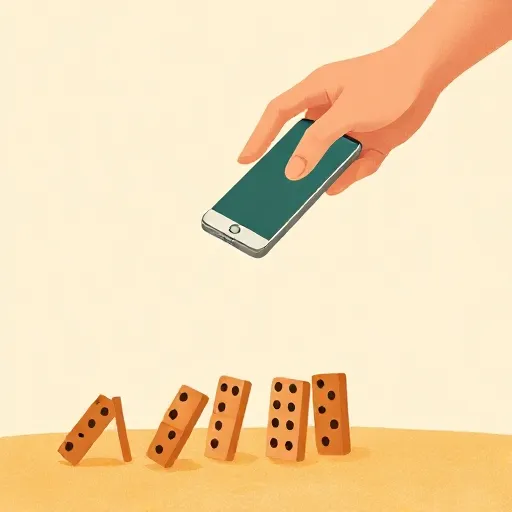
You pick up your phone to message your friend. You’re using it to get something done — just like you’d use a hammer to drive a nail. This seems obvious. Technology is a tool, a thing you can use or not use. It helps you achieve what your body alone cannot.
Many people think about information technology this way: it’s an artifact that extends human ability. A word processor lets you rearrange ideas without rewriting everything. A mobile phone lets you talk to someone far away. These tools change how you do things, but they don’t change what you are. The important question, according to this view, is what impact a tool has on society once people start using it.
Believers in this approach often worry about technological determinism — the idea that a technology more or less forces certain ways of doing things to happen. A determinist might argue that the internet’s open, non-hierarchical design will almost automatically make society more open and less hierarchical. Critics like Neil Postman warned that we focus too much on whether a tool is useful and forget to ask what it might unknowingly destroy. Underneath the impact question lies a picture of technology as something that arrives fully formed, an engineering solution to a problem, working pretty much the same way in every situation.
Made by People, for People?
But who decided a phone should work the way it does? Thinkers who study social construction argue that technology does not simply appear. It is the outcome of complex, messy design choices shaped by culture, money, and politics. A camera could have been built very differently; the one we have is the option that won out among many. Things could have been otherwise.
From this perspective, technology and society don’t just bump into each other — they co-construct each other from the start. The philosopher Bruno Latour (1947–2022) said that technologies carry scripts: they suggest how you should behave, but you can also push back. A speed bump scripts you to slow down, yet you might still speed over it. Users often find unexpected ways to use a device that its designers never imagined.
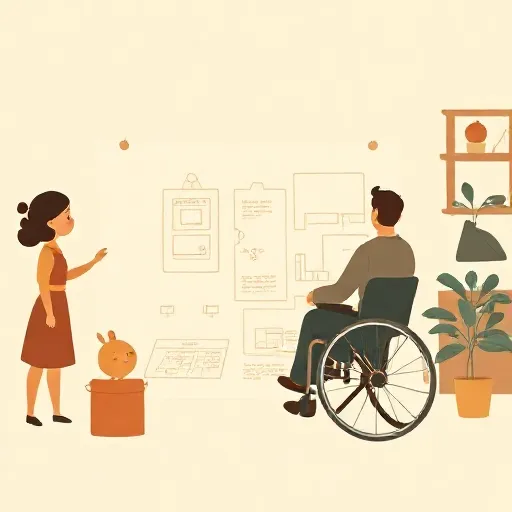
Social construction also shows that technology has politics built into its very shape. The ATM bank machine assumes a particular person standing in front of it: someone who can see the screen, read it, remember a PIN, and press the right buttons. If you are blind, use a wheelchair, or have trouble remembering, the machine’s design may exclude you. The philosopher Langdon Winner (born 1944) argued that artifacts always embody certain interests and values. Because those values can be hidden inside software or hardware, ethicists in this tradition say we must open the “black box” to see what’s really going on — a practice called value-sensitive design.
How Technology Paints Your World
For many phenomenologists, something deeper is going on. Technology is not just a tool “out there” or a social agreement “in here.” It is part of what makes us human in the first place. They say technology and human beings co-constitute each other — each is the ongoing condition for the other to be what it is.
The German philosopher Martin Heidegger (1889–1976) put it dramatically: “the essence of technology is nothing technological.” He meant that the gadgets around us are only possible because modern humans already see the world in a technological way — as a collection of resources waiting to be ordered and used. He called this mood enframing. Think of a river. In an earlier time, a craftsman might have built a wooden bridge that “lets the river run its course.” In an enframing age, the same river looks like a hydroelectric plant waiting to happen — a resource on standby for our projects.
Albert Borgmann (born 1937) extended this idea. He said modern technology often turns things into devices that hide the full reality they depend on. A thermostat on the wall replaces chopping wood, building a fire, and tending it. You just set a number and feel warm. Borgmann worried that if everything becomes a device, we lose contact with the rich, demanding world that actually sustains us. Against this, he championed focal practices — things like cooking a meal with friends instead of grabbing a fast-food burger — that call for our full, engaged presence.
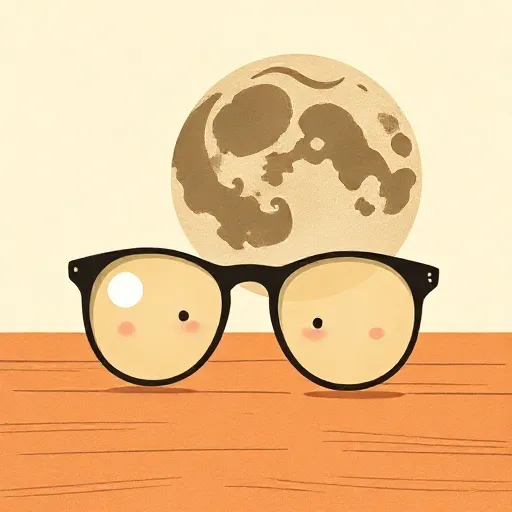
Don Ihde (1934–2024) gave us a more detailed map of how we live through technologies. When you wear glasses, you don’t just look at the lenses; you look through them, and they become part of your body’s way of experiencing. This embodiment relation always has a double effect: it magnifies something and reduces something else. The moon through a telescope becomes huge and detailed, but the dark sky around it disappears. Ihde also pointed out that some technologies, like a robot pet, act as a “thou” — a being with a world of its own. Others, like automatic traffic control systems, hum quietly in the background, shaping your world without you noticing.
The Ethics of Every Click

These three big pictures lead to very different ethical questions.
If you see technology as a tool, ethics is mostly about managing impact. You ask: does this software violate privacy? Does a policy protect free speech? You try to balance rights and values, often using familiar moral theories like fairness or the greatest good for the greatest number.
If you see technology as socially constructed, ethics turns toward disclosive analysis. You pry open the black box to find whose interests got built into the design and whose were left out. The goal is not just a rule but an ongoing practice of uncovering hidden assumptions — especially in the code and algorithms that most people can’t inspect.
Phenomenologists go one step further. They ask what sort of world — and what sort of human being — is being brought into existence. This is sometimes called ontological disclosure. Take virtual communities. Many early internet champions said cyberspace let you play with identity in limitless ways; you could be anyone. But phenomenologists like Hubert Dreyfus (1929–2017) and Borgmann warned that without a shared, embodied situation, there can be no real commitment or risk. An online identity that costs you nothing can become trivial. Ihde said virtual reality bodies are “thin” and never reach the thickness of flesh. Yet other thinkers, drawing on phenomenology, push back: the stranger who pops up on your screen can genuinely call you to responsibility in a way that is just as real — and sometimes harder to ignore — than a face-to-face encounter. The ethical question becomes: what kind of closeness are we building, and what kind are we losing?
Why This Matters to You

Every time you swipe open your phone, you are living inside one of these pictures — whether you think about it or not. If devices train you to expect comfort without effort, you might stop noticing what it actually takes to stay warm, to learn something, or to be a real friend. If you never open a black box, you might never see who a design leaves out. And if you never ask what world a tool is painting around you, you might wake up one day in a world you didn’t choose.
The deep question is not “Is technology good or bad?” but “What kind of life do you want to live with it?” Try noticing what your phone makes bigger and what it makes smaller. Does it magnify connection and shrink patience? Does it amplify one kind of closeness while muting another? You get to decide what to protect, what to reclaim, and when to put the device down and pick up a focal practice instead. That choice is philosophy in action — and you make it every day.
Think about it
- If a bank machine’s design meant that someone in a wheelchair could not use it, is that just a mistake, or is it unfair? Why?
- Try to go a whole day without using any technology invented after 1900. What would feel most different — the missing tool or the missing way of being?
- When you text a friend, do you feel as close to them as when you are together in the same room? Does it matter if you don’t?