Why Couldn’t Newton Understand Aristotle?
One Pendulum, Two Different Worlds

In the 1940s, a young graduate student named Thomas Kuhn (1922–1996) was reading Aristotle’s physics. It made no sense to him. Aristotle was supposed to be one of the greatest thinkers of all time, yet the text seemed full of bizarre claims — like the idea that a rock falls because it wants to reach its natural place. Kuhn nearly gave up. Then something clicked. He realized that words like motion in Aristotle didn’t mean what they mean today. Aristotle used kinesis to cover not just change of place but growth, decay, and any kind of transformation. Kuhn had been reading Aristotle through modern glasses, and the words looked absurd. When he learned to see through Aristotle’s own lenses, the whole system suddenly made sense.
This experience became the spark for one of the most explosive ideas in the philosophy of science: incommensurability. The term sounds intimidating, but it means something simple: two theories can be so different in their basic concepts that there is no common yardstick to measure one against the other. Imagine two people playing different board games with the same pieces — one is playing chess, the other checkers. They each use the board and the pieces, but the rules and the point of the moves are worlds apart. Kuhn and his fellow philosopher Paul Feyerabend (1924–1994) argued that something like this happens when science undergoes a revolution.
Thomas Kuhn’s Big Idea: Paradigms Are Incommensurable

Kuhn’s book The Structure of Scientific Revolutions (1962) introduced the word paradigm to describe the whole package of theories, methods, problems, and habits that a scientific community shares. Normal science, he said, is what scientists do most of the time: they solve puzzles within their paradigm, like figuring out how to measure a planet’s orbit more precisely. But sometimes anomalies pile up — results that don’t fit — and a crisis erupts. The old paradigm breaks down, and a scientific revolution replaces it with a new one.
When that happens, Kuhn claimed, the old and new paradigms are incommensurable. He meant three things. First, the list of important problems changes. Newton’s theory of gravity was initially rejected by many because it didn’t explain what gravity actually was — a question that Aristotle’s and Descartes’ followers considered essential. After Newton, that question was pushed aside as unscientific. Problems that once seemed urgent disappeared, and new ones arose.
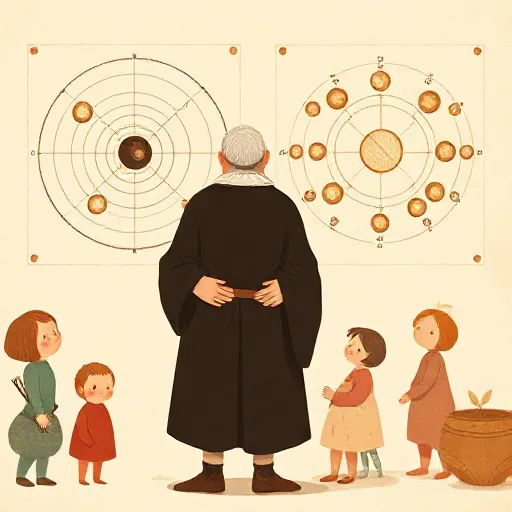
Second, the meanings of key terms shift. The word planet referred to the sun (but not Earth) in Ptolemy’s astronomy; Copernicus’s theory later classified the sun as a star and Earth as a planet. The same word picked out different objects. Kuhn called this “Kuhn loss”: some old facts and problems become invisible in the new framework, even if they were once central.
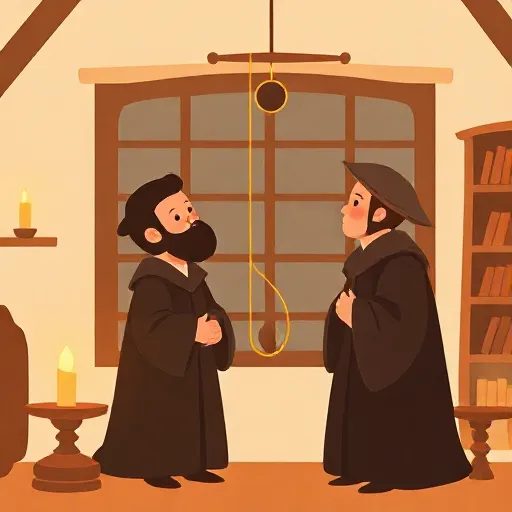
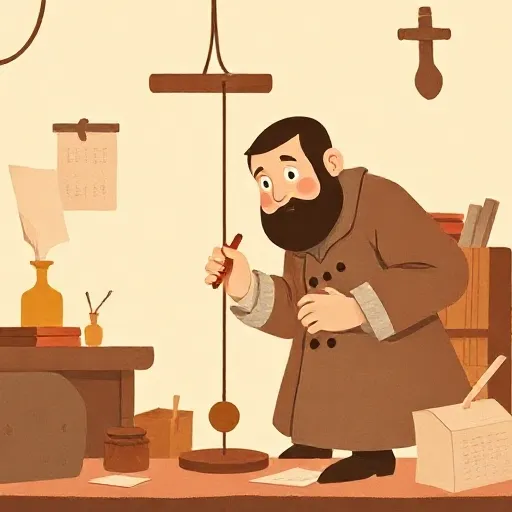
Third, and most controversially, Kuhn said scientists working in different paradigms “live in different worlds.” He didn’t mean they step into alternate universes. He meant that their training shapes what they literally see. A Newtonian looking at a swinging weight sees a pendulum — a device governed by simple laws. An Aristotelian sees constrained downward motion, a special case of a broad category of change. The switch is like the famous duck-rabbit illusion: the same lines on the page, but your brain organizes them into entirely different pictures. Kuhn borrowed this idea from Gestalt psychology, which studies how the mind organizes perception into wholes.
Why Words Change Their Meaning: Taxonomic Incommensurability

Later in his career, Kuhn refined his picture. He focused on taxonomic incommensurability, which is about how theories sort objects into kinds. Think of a kind term like “liquid.” To understand it, you also need the terms “solid” and “gas” — they form a contrast set. Scientific theories are built from such kind terms: “mass,” “force,” “planet,” “element.” They group things together and state laws about them.
Kuhn proposed the no-overlap principle: within a single theory’s taxonomy, no two kind terms may overlap in the things they refer to unless one is a species of the other. A cat can’t also be a dog. But when a revolution happens, the new theory often cross-classifies the same objects into mutually exclusive sets of kinds. Ptolemy’s system put the sun in the category “planet” (because it orbited Earth). Copernicus’s system put the sun in the category “star.” A statement that made perfect sense in the old vocabulary (“Planets orbit Earth”) becomes nonsense in the new one. You can’t just drop the old word into the new theory — it doesn’t fit.
This means the languages of the two theories can’t be fully translated. Kuhn compared it to learning a second language. To understand Aristotle’s physics, you don’t translate his sentences word-for-word into Newtonian terms; you become bilingual. You learn to think inside the old lexicon, keeping it separate from the new one. Only then do the old assertions stop looking like nonsense.
Kuhn also noted that this incommensurability isn’t just about the past. Different scientific sub-disciplines today — like parts of biology and chemistry that branched apart long ago — can develop their own partly incommensurable vocabularies. The same training that lets you master one lexicon may make another one feel alien.
Paul Feyerabend’s Radical Take: Theories That Can’t Deduce Each Other

While Kuhn was exploring paradigms, Paul Feyerabend was developing a sharper version of incommensurability. For Feyerabend, two theories are incommensurable when the meanings of their main descriptive terms depend on mutually incompatible principles about reality. He called this deductive disjointness. Two incommensurable theories are deductively disjoint because you cannot logically deduce the statements of one from the statements of the other, nor can their predictions formally contradict each other.
Here’s an example. In Newtonian physics, mass is an unchanging property of an object. In Einstein’s relativity, mass depends on an object’s speed — there is rest mass and relativistic mass. The word “mass” means something different in each framework. Because the concepts are different, you can’t deduce Newton’s predictions straight from Einstein’s equations. The two theories are conceptually incompatible; they describe reality in incompatible ways.
Feyerabend drew a startling conclusion: established theories can never be formally falsified by incommensurable newcomers in the way some philosophers imagined. A prediction made by the new theory cannot logically contradict a prediction made by the old one because the words mean different things. Instead, he argued, we need theoretical pluralism — the deliberate cultivation of alternative, incommensurable theories. Only by having a rival can you find facts that expose the limits of the old theory. He illustrated this with the history of Brownian motion: tiny particles jiggling in fluid could not be explained by classical thermodynamics. It took the rival kinetic theory (atomic theory) to predict the detailed, stochastic character of that motion. Once confirmed, this evidence undermined the old theory’s picture of matter — not by logically contradicting it, but by offering a more powerful explanation of what was observed. Without the incommensurable alternative, the limits of the old theory would have stayed invisible.
Feyerabend was heavily influenced by earlier thinkers like the physicist Pierre Duhem, who had already noted that what scientists report from an experiment is not just raw facts but facts interpreted through a theory. And he explicitly credited Albert Einstein, who had written about the difficulty of weighing “incommensurable qualities” when choosing between deep physical theories. Feyerabend’s goal was never to make science seem irrational. He wanted to show that fixed methodological rules — like “a new theory must explain everything the old one explained” — would suffocate the very revolutions that drive science forward.
But Can We Still Compare Them? Yes, with Good Reasons

Both Kuhn and Feyerabend were often misunderstood. Critics claimed that incommensurability would make theory choice completely irrational — that scientists would just be shouting past each other with no way to decide. Both thinkers vigorously denied this. Incommensurability does not mean incomparability. You can still compare rival theories, but the comparison is more like a jury weighing evidence than a calculator executing a formula.
Kuhn pointed out that scientists use shared epistemic values to guide theory choice: accuracy, consistency, scope, simplicity, fruitfulness. But these values don’t function like fixed rules. Different scientists may weigh them differently. One might prize a theory’s simplicity, while another insists on its broad scope. This means rational people can disagree about which theory is better — and history shows they do.
Feyerabend, for his part, thought that incommensurable theories can be tested against each other through crucial experiments that reveal novel phenomena. The very fact that a new theory predicts something the old one cannot even conceive of is a powerful reason to take it seriously. His whole case for pluralism was that more alternatives sharpen our empirical grip on the world.
Both philosophers also rejected the idea that science marches steadily toward a single truth. In a revolution, the new theory doesn’t just add new facts to the old pile; it replaces the old ontology. Kuhn compared scientific progress to biological evolution: it moves away from anomalies, not toward a fixed goal. Feyerabend similarly insisted that knowledge is “an ever-increasing ocean of alternatives,” not a narrowing funnel toward one correct picture. Neither was a relativist about truth, but both saw science as a process whose direction is shaped by the problems it encounters, not by some final destination.
Why This Matters for You and Every New Idea

You might not be a scientist facing a paradigm crisis, but you have probably felt the stir of incommensurability. Perhaps you learned a new board game and had to unlearn habits from the old one. Or you encountered an argument where a word like “fair” meant something slightly different to each person, and you talked past each other until you realized the difference. That is the kernel of the idea.
Kuhn and Feyerabend remind us that real intellectual breakthroughs often require us to stop trying to translate and instead learn a new language. When you study history, you can’t just project modern values onto the past — you have to understand how people saw their own world. When you learn a new sport, you don’t just tweak the old rules; you step into a whole set of new moves. Science, at its most revolutionary, is like that. It’s not just collecting more facts. It’s rebuilding the very floor you’re standing on.
So next time two people seem to be missing each other completely, maybe they are not being stubborn or foolish. They might simply be standing in different paradigms. And the way forward isn’t always to prove the other person wrong. Sometimes it’s to learn their language well enough to see what the world looks like from inside it.
Think about it
- Imagine a world where every time scientists make a discovery, they must keep all the old words and meanings. Would science progress faster or slower? Why?
- If you and a friend disagree about whether a certain animal counts as a “pet,” does your disagreement have a right answer, or are you using incommensurable definitions? How could you find out?
- Kuhn compared scientific change to the evolution of new species. Does that metaphor make you more or less comfortable with the way knowledge changes over time?