Why Do Scientists Suddenly See the World Differently?
A Young Physicist Reads Aristotle and Gets Frustrated

In 1943, Thomas Kuhn (1922–1996) was a brilliant physics student at Harvard University. While teaching a course on the history of science, he assigned himself some genuine homework: reading the physics of Aristotle, the ancient Greek philosopher. It drove him crazy. Aristotle’s ideas about motion and the heavens seemed not just old‑fashioned but stupid—like the work of a child. How could someone so famous be so wrong?
Weeks later, everything shifted. Kuhn realized he had been reading Aristotle as if Aristotle were trying to answer modern questions. That was like judging a fish by how well it climbs a tree. Once Kuhn tried to see the world through Aristotle’s own framework, the ancient writings made elegant sense. Aristotle wasn’t a poor scientist; he operated inside a completely different web of ideas. That sudden flip—from seeing nonsense to seeing a logical system—planted the seed for Kuhn’s most famous claim: science doesn’t just march straight ahead. Sometimes it leaps sideways, and afterward the whole world looks different.
Kuhn left physics for the history of science, then moved into philosophy. In 1962 he published a short book that would become one of the most discussed works of the century: The Structure of Scientific Revolutions.
The Old Picture: Science as a Steady Climb
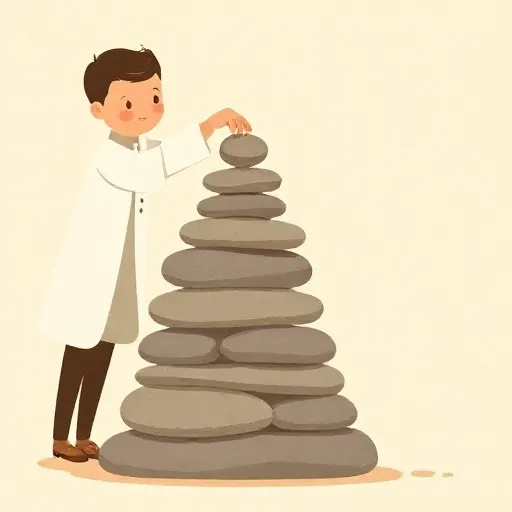
Before Kuhn, most philosophers imagined science as a steady, reliable staircase. You gather evidence, form a hypothesis, test it, and either confirm it or toss it. Over time, the pile of known facts grows higher. Old theories are stepping stones to better ones: Newton’s physics improved on Galileo’s, and Einstein’s relativity perfected Newton’s. The scientific method—if followed correctly—would guarantee progress toward the truth about the universe.
This view was especially popular among logical positivists in the early 20th century. For them, a scientist was a rational rule‑follower: if a theory made a wrong prediction, you abandoned it. No sentiment, no tradition. Kuhn, after studying real episodes in the history of physics and astronomy, decided this picture was a fantasy. The history didn’t look like a tidy staircase at all.
Normal Science: Puzzle‑Solving Under a Paradigm
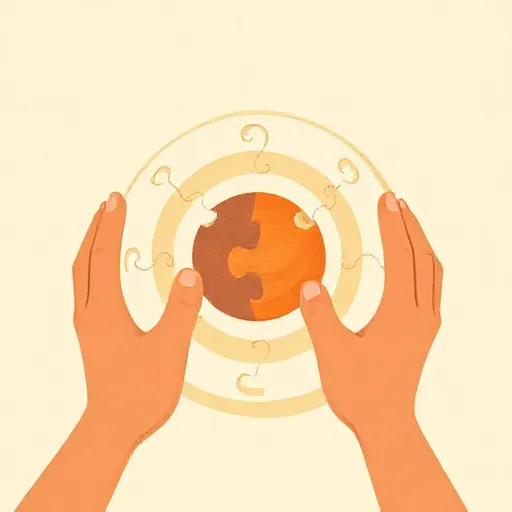
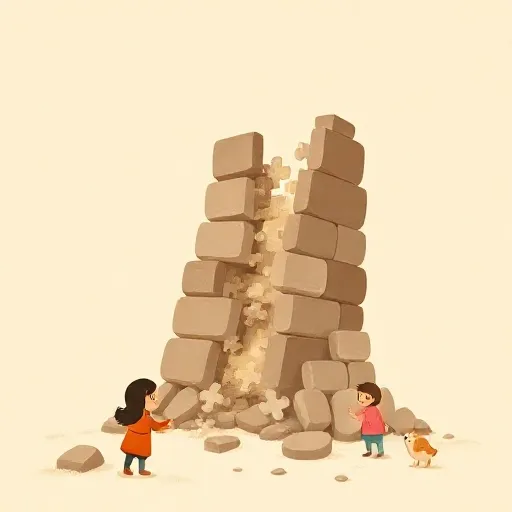
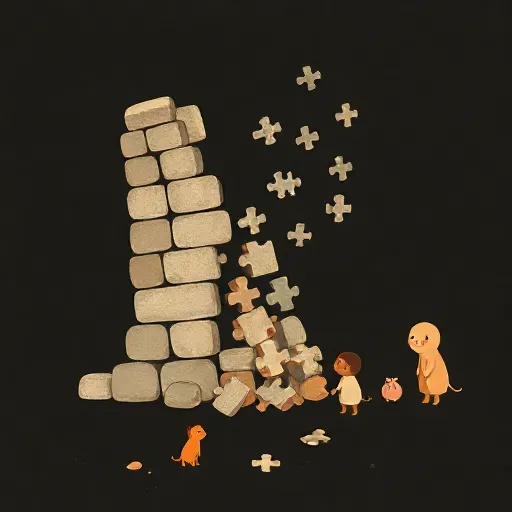
Kuhn observed that, most of the time, scientists aren’t trying to overthrow their basic theories. Instead, they work inside a shared package of beliefs, methods, and model examples that Kuhn called a paradigm. Think of a paradigm as a giant jigsaw puzzle where everyone agrees on the overall picture and the rules for fitting the pieces. A paradigm tells scientists which problems are worth solving, what a good solution looks like, and even what instruments to use.
Kuhn called this day‑to‑day work normal science. It’s not dramatic; it’s puzzle‑solving. A chemist determines the structure of a molecule, a physicist calculates the orbit of a comet, a biologist sequences a stretch of DNA. They all trust that the paradigm has a solution waiting for them—if they’re clever enough. Training in a paradigm usually means studying concrete examples of successful science, like the experiments in Newton’s Principia or Lavoisier’s chemistry textbook. By comparing new problems to those exemplars, young scientists learn to see similarities and apply familiar techniques.
In normal science, anomalies—results that don’t fit the paradigm—pop up all the time. But scientists rarely panic. They assume the anomaly is a mistake, a bad measurement, or a puzzle that will be solved later. The paradigm itself remains safe, like a trusted map that nobody checks.
When Puzzles Become Anomalies: Crisis and Revolution

Some anomalies, however, refuse to go away. They resist every tool the paradigm provides. When enough tough puzzles pile up and the map starts to feel unreliable, the field enters a crisis. Confidence in the old paradigm wavers. At that point, a bold thinker may propose a new paradigm—a whole new jigsaw with a different picture. That’s a scientific revolution.
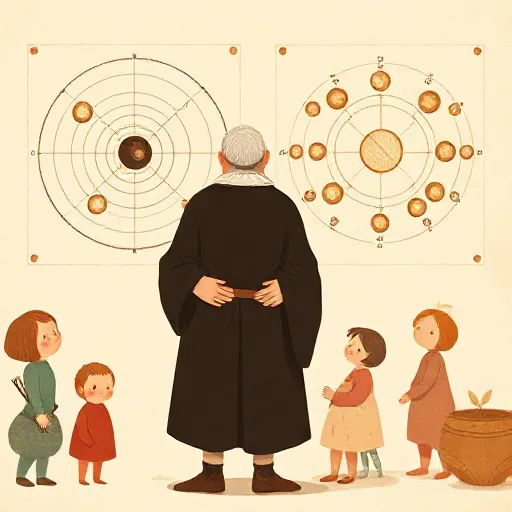
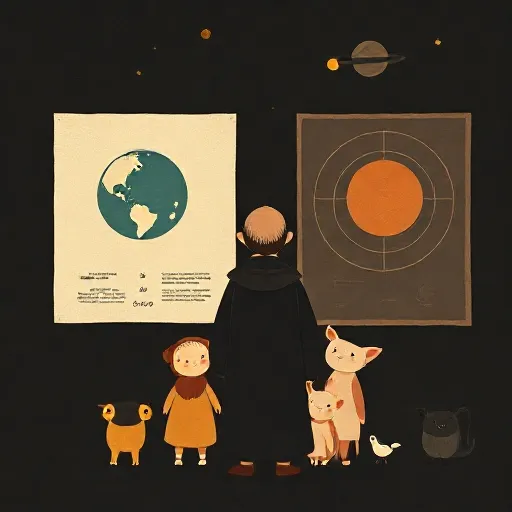
The switch from Ptolemy’s Earth‑centered astronomy to Copernicus’s sun‑centered system is a classic example. For over a thousand years, astronomers used Ptolemy’s paradigm, adding little tweaks (like extra circles on circles) to keep predictions accurate. By Copernicus’s time, the system had become a mess of ad‑hoc fixes. Copernicus’s new paradigm solved many puzzles cleanly, explaining, for instance, why the planets sometimes seem to loop backward in the sky. But the revolution wasn’t just a better theory. It changed what counted as a problem, what counted as a solution, and even what astronomers saw when they looked at the night sky.
Kuhn emphasized that a revolution is not forced by pure logic. There’s no rulebook that makes everyone switch. The old guard often resists for years, while younger scientists adopt the new paradigm. Revolutions also involve Kuhn‑loss: some explanations from the old paradigm are simply left behind. Newton’s gravity, for example, did not explain why planets move in ellipses the way the old crystalline‑sphere idea had attempted. Progress is real, but it’s not just “old knowledge plus new knowledge.”
Different Worlds: Incommensurability
This brings us to Kuhn’s most controversial idea: incommensurability. During a revolution, the old paradigm and the new one often can’t be fully compared using a shared yardstick—because the yardstick itself changes. This is methodological incommensurability. What counts as a good theory? One paradigm might prize simplicity, another precise numerical predictions. There’s no neutral ruler that stands outside both to settle the dispute.
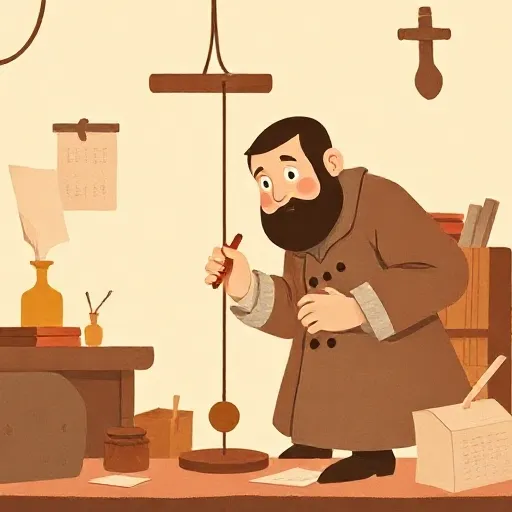
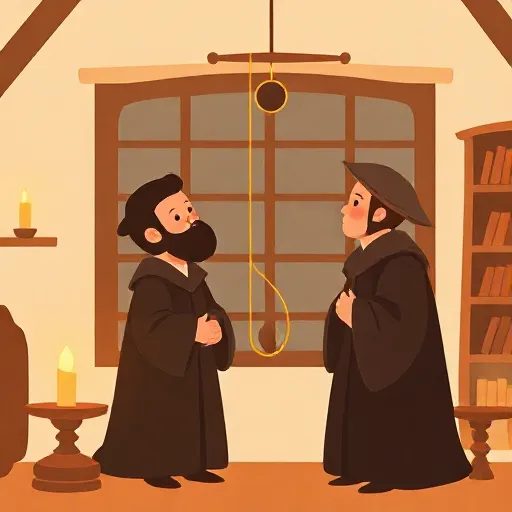
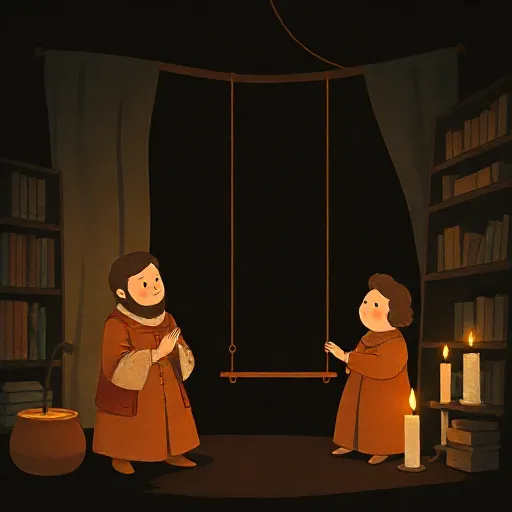
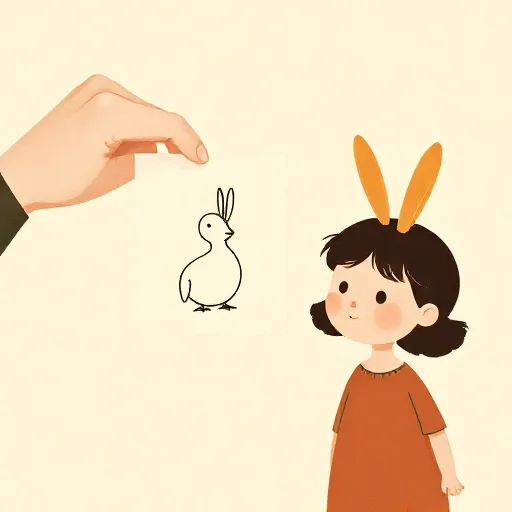
Even the observations scientists trust aren’t neutral. Kuhn argued for the theory‑dependence of observation. Take a swinging pendulum. An Aristotelian physicist sees a body struggling to reach its natural resting place, while a Galilean sees a weight repeating its motion back and forth. They look at the same object, but they see different things. In this sense, Kuhn famously wrote that after a revolution, scientists “practice their trades in different worlds.” He meant that the phenomenal world—the world as they experience it—undergoes a shift, like a Gestalt switch from seeing a duck to seeing a rabbit.
There’s also semantic incommensurability: the very meanings of key terms change. When Einstein used the word “mass,” he meant something different from Newton. Newtonian mass is conserved; Einsteinian mass is convertible with energy. So you can’t simply say Einstein’s theory is a closer approximation of the same Newtonian truth—the words don’t mean the same thing anymore. That’s why Kuhn rejected the idea that science inches ever closer to a final, true description of nature.
Progress Without a Goal: Science Evolves, Not Toward Truth

So, if science isn’t aiming at truth, what’s the point? Kuhn borrowed an idea from Darwin. In evolution, organisms become better adapted to their environments over time, growing more diverse and specialized—but they aren’t moving toward any “perfect” organism that nature had in mind. Science, Kuhn said, works the same way. A new paradigm must solve the anomalies that caused the crisis and preserve much of the previous paradigm’s puzzle‑solving power. So overall, science does get better at solving puzzles, and it becomes more sophisticated and specialized. But that doesn’t mean it is converging on one final, true picture of the world. Kuhn held an anti‑realist view: theories aren’t literal pictures of reality; they are powerful tools for problem‑solving.
This idea shocked philosophers. It seemed to suggest science isn’t the purely rational, objective machine they had believed in. But Kuhn wasn’t saying science is irrational. He was saying that choosing a paradigm involves judgment, instincts trained by exemplars, and shared values—not a mechanical algorithm. And that’s okay. It explains why scientists can reasonably disagree during a revolution and why the history of science looks so messy.
Kuhn’s work changed how we think about knowledge. It helped historians and sociologists see science as a human community, shaped by traditions, training, and shared examples—not just a logic engine. And it leaves us with a humbling question: if our current scientific paradigm could someday be replaced by a different one that sees the world differently, how confident can we be in what we think we know right now?
Have you ever struggled to understand a tricky idea—like negative numbers or the fact that Earth orbits the sun—and then suddenly it “clicked”? That’s a tiny personal paradigm shift. The facts didn’t change, but your whole mental framework reorganized. Science does that on a grand, historical scale.
Think about it
- If two scientists with different paradigms can’t agree on what counts as good evidence, how could anyone ever know which paradigm is truly better?
- Imagine you’ve worked for decades inside one paradigm. A new theory solves more puzzles but makes your life’s work seem outdated. What reasons—personal or scientific—might keep you from accepting it?
- Kuhn argued that science doesn’t aim at truth, only at solving puzzles better. Does that change how much you trust what scientists tell us about the world?