Is Science Really as Rational as They Say?
The Puzzle That Wouldn’t Fit
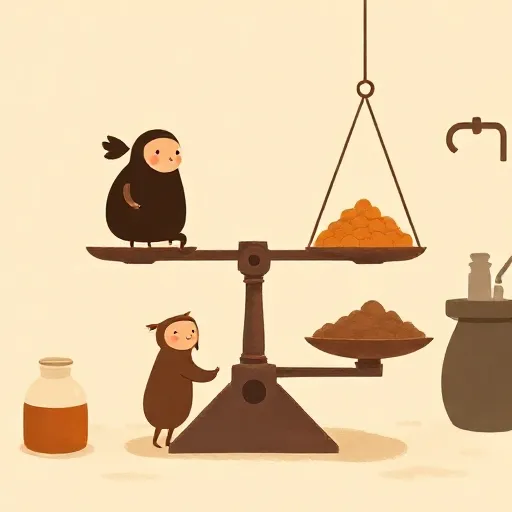
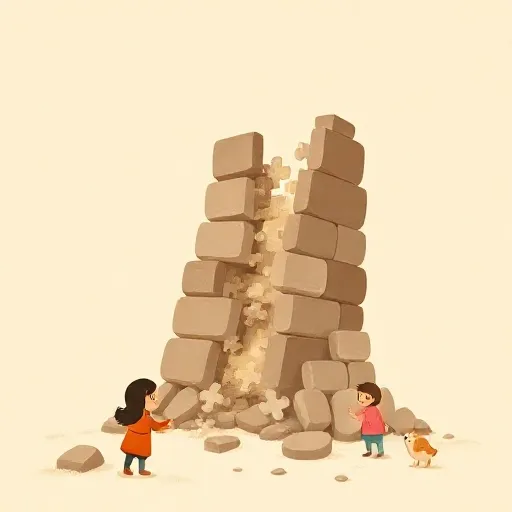
Picture a scientist in 1710. His theory explains heat, light, and the growth of plants beautifully. But there is one stubborn fact: a metal heated in air gains weight, not loses it. According to his theory, a hidden “heat substance” should flow out and make it lighter. Yet the scale disagrees.
The traditional view of science says he must drop his theory. Karl Popper (1902–1994), one of the loudest defenders of that view, argued that being rational means you test ideas severely and reject them if they fail. A single false prediction should finish a theory. But that’s not what real scientists do — and when historians of science started digging, they found that scientists almost never behave like that. So who is wrong: the scientists, or our idea of what it means to be rational?
That question launched a massive debate that changed how philosophers think about science. Four thinkers led the charge: Thomas Kuhn (1922–1996), Imre Lakatos (1922–1974), Paul Feyerabend (1924–1994), and Larry Laudan (born 1941). They all agreed that history shows us a very different picture of science — one where being rational is a lot more tangled than following a recipe.
Kuhn: Science Switches Lenses, Not Just Facts
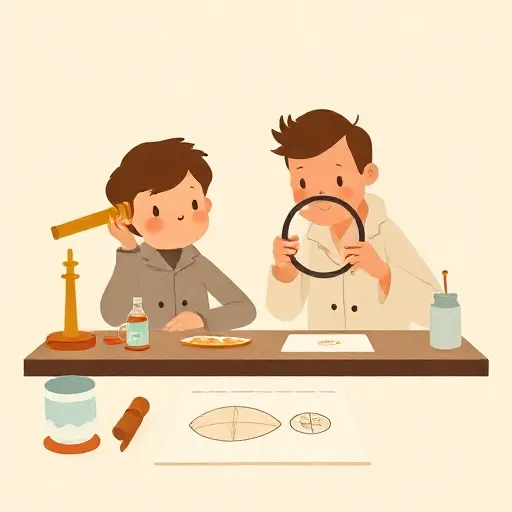
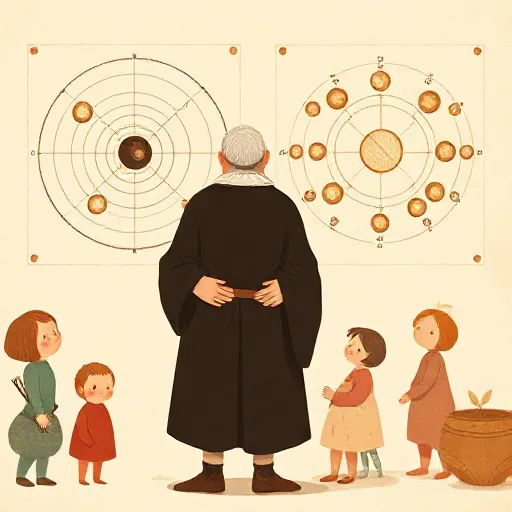
Thomas Kuhn’s book The Structure of Scientific Revolutions (1962) hit philosophy like an earthquake. He argued that science doesn’t grow smooth and steady, adding fact by fact. Instead, most of the time science is normal science: a community of researchers happily solving puzzles inside a shared set of rules, tools, and deep assumptions that he called a paradigm. A paradigm is like a pair of tinted glasses — it tells you what counts as a fact, what counts as a good question, and even what counts as a good answer.
During normal science, scientists don’t try to prove the paradigm wrong. They trust it completely, even when anomalies pop up. They patch the cracks and keep building. Kuhn said this is not irrational; it’s efficient. Specialized work gets done precisely because nobody questions the foundations every morning.
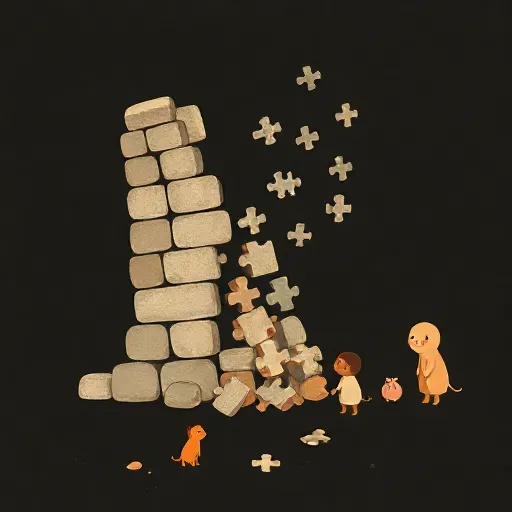
But eventually, too many anomalies pile up. A crisis hits. Some bold thinkers propose a new paradigm that reorganizes everything — what a “fact” is, what methods are acceptable, what the world is made of. Kuhn called this a scientific revolution. And here’s the truly unsettling part: switching paradigms is not like solving a math problem where both sides agree on the answer key. The old and new paradigms are incommensurable — they lack a common ruler. Scientists on different sides can barely understand each other, because words like “mass” or “species” shift meaning. One side might see a swinging weight; the other sees a proof of cosmic order.
Kuhn used a political metaphor: paradigm change resembles a revolution, not a polite argument. At the individual level, it can feel like a conversion. Critics were horrified. They shouted that Kuhn was saying scientists just follow the mob. Kuhn replied that he never thought science was irrational. He believed it was the best example of rationality we have — but that rationality cannot be squeezed into a simple logical formula. It involves judgment, skill, and a sense of where the interesting new problems lie.
Lakatos: Rationality Only Arrives Late

Imre Lakatos wanted to rescue a core idea from Popper — that science is rational because it makes bold predictions — while admitting that Kuhn had a point about history. His compromise was the methodology of scientific research programmes. A research programme is a family of theories that share a hard core of central ideas (like “the solar system is governed by universal gravitation”) and a protective belt of adjustable assumptions. When a prediction fails, scientists don’t abandon the hard core. They tweak the belt — adding a new planet, a hidden moon, or a measurement correction. That is not irrational; it’s how programmes grow.
Rationality, for Lakatos, can only be judged in hindsight. You can’t tell at the moment whether sticking to a programme is sensible. You measure a programme’s progressiveness over time by its track record of novel predictions — predictions that were surprising, that nobody had thought of before, and that turn out to be right. A programme that keeps producing confirmed novel predictions is progressive; one that just scrambles to explain old facts after the fact is degenerating. Rational scientists are allowed to stay with a degenerating programme if they have a plausible gamble, but the community as a whole should gradually shift its resources toward the progressive one.
Lakatos’s famous phrase was: “Philosophy of science without history of science is empty; history of science without philosophy of science is blind.” But many historians complained that Lakatos twisted the record to fit his model. He reconstructed past science as it “should have been done” rather than as it was. He then claimed his model made science look maximally rational. Critics asked: is that really testing the model against history, or just rewriting history to pass the test?
Feyerabend: No Method, No Master

If Kuhn rattled the cage, Paul Feyerabend kicked it apart. He started out as a friend of Popper’s ideas, but soon he broke with all of them. Feyerabend thought that any fixed rule of science — “avoid contradictions,” “reject theories with false predictions,” “demand lots of evidence” — had been fruitfully violated at some point in history. His position became known as methodological anarchism. The only principle he half-defended was, “Anything goes.”
He wasn’t saying that every wild guess is equally good. He was saying that there is no single, permanent, universal scientific method. Scientists succeed by being creative, using rhetoric, borrowing ideas from art or religion, and sometimes bamboozling their opponents. Galileo, Feyerabend argued, didn’t win because his arguments were airtight. He won because he changed the rules of the game — using mathematics to describe motion in a new way, making bold public demonstrations, and writing in lively Italian instead of scholarly Latin. History, not pure logic, decided who won.
For Feyerabend, science deserved no special throne above other human activities. He saw it as one style of thinking and doing among others, historically contingent and culturally shaped. He famously wrote that “scientific achievements can be judged only after the event.” But if success is the only measure, relativism creeps in: a different history might have led to a different science, and there would be no neutral yardstick to call one irrational. Most philosophers of science found that conclusion alarming, but Feyerabend welcomed it. He was less interested in writing a theory of rationality than in puncturing the arrogance of those who thought they already had one.
The Problem-Solvers Strike Back
Larry Laudan stepped in with a simpler, brasher move. Stop defining progress in terms of rationality, he said. Define rationality in terms of progress. A scientific tradition is rational when it solves more empirical and conceptual problems over time. We can’t know whether we’re approaching a final, unknowable truth about the universe. But we can count how many puzzles a research tradition can solve compared to its rivals, and we can see which ones are gaining steam.
That means goals, methods, and standards can all change — slowly, piece by piece — and that is not a crisis. Laudan’s “reticulated model” said that theories, methods, and goals constrain each other like threads in a net. No single element is the unshakeable foundation. A new technique might reveal that an old goal was unreachable; a surprising discovery might make scientists adopt a new rule. Rationality is an ongoing negotiation, not a fixed law.
Laudan also tackled the awkward problem of how to take norms from history. His normative naturalism argued that we can treat methodological rules as hypotheses that earn their keep by working in practice. If a rule consistently helps solve problems, keep it. If it leads to dead ends, drop it. Historicists liked that this took history seriously while still allowing that some rules are better than others. Critics worried that picking rules based on success is circular: you measure success using the very standards you’re testing. But Laudan replied that that’s how any learning from experience must work.
Why It Still Matters to You
You might think this is just a squabble among professors about dusty old science. But it touches how you decide what to believe. You trust scientists about vaccines, climate, and the age of the stars. Yet history shows that well-trained, honest, smart people once “knew” that the sun orbited the earth and that heat was a fluid. If scientific judgment depends on context — on which paradigm you were trained in, which problems look promising, which community you belong to — then being rational is never just about checking off logical steps.
The historicists left us with a deep challenge: there is no simple method that guarantees you’re right, and the best test sometimes arrives only in hindsight. That doesn’t mean all opinions are equal or that science is a sham. It means that rationality is harder than it looks. It means you should be curious about how you came to hold your beliefs, listen to people with different vantage points, and stay open to the possibility that even your most obvious certainties might one day be seen as the phlogiston of its age.
History is not a courtroom that hands down a final verdict. But it is a mirror that shows us how the smartest people in the world once believed things we now find laughable — including many things that were backed by “perfectly rational” arguments. That should make us humble. And it should make us pay attention not just to arguments, but to the whole story of how knowledge changes.
Think about it
- If you had a strong scientific theory that couldn’t explain a few small things, would you stick with it or search for something new? What would make you switch?
- Feyerabend thought Galileo partly won because he was a better storyteller, not just a better reasoner. Does being persuasive count as being rational?
- History shows that even widely accepted scientific ideas can be replaced. Should that make you more cautious about believing today’s science too strongly?