When Should You Give Up on a Theory?
When a Theory Won’t Die
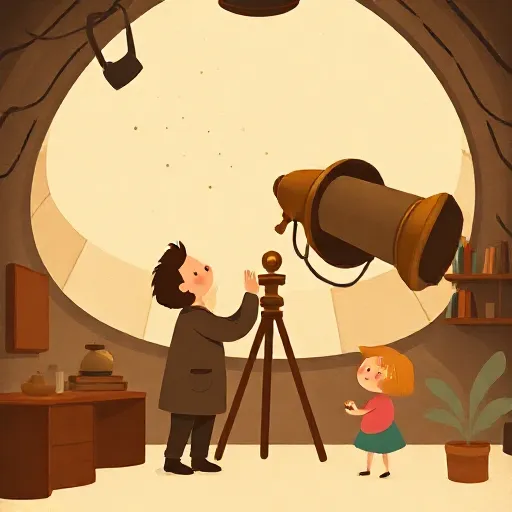
For decades, astronomers had a problem. The planet Mercury wasn’t moving quite the way Isaac Newton’s laws of mechanics said it should. Its orbit kept shifting a little — the “precession of Mercury.” If Newton’s theory was correct, there should be some invisible planet or mass pulling on Mercury. But no one could find it. Yet scientists didn’t throw Newton’s theory in the trash. They kept using it, trusting it, and building on it. They were right to wait: eventually, Einstein’s theory explained Mercury’s odd orbit, but in the meantime, sticking with Newton still made sense.
The same thing happened with the astronomer Copernicus. When he proposed that the Earth goes around the Sun, people objected that we should see the nearby stars shift position slightly as the Earth moves. No one could detect that shift for centuries, yet astronomers didn’t abandon the Sun-centered view. They tinkered, adjusted, and kept looking. Again, they were eventually vindicated.
Why were these scientists so stubborn? And was their stubbornness rational? Those are the questions the philosopher Imre Lakatos (1922–1974) set out to answer — and his answer changed how we think about science.
Popper’s Challenge: Try to Be Wrong

Before Lakatos, the philosopher Karl Popper (1902–1994) had a crisp answer about what makes science different from non-science. He called it falsifiability: a theory is scientific only if you can imagine an observation that would prove it false.
A fortune teller who says “something unexpected will happen to you this week” can’t be proven wrong — anything or nothing could count. That’s not science. But if I claim “all swans are white,” a single black swan would shatter my claim. That is scientific. For Popper, good scientists don’t protect their theories; they try to falsify them — they design risky tests. A theory that survives repeated attempts to knock it down earns our respect, not our belief.
But here’s the trouble. If Popper is right, then those astronomers who stuck with Newton in the face of Mercury’s weird orbit were acting unscientifically. They should have abandoned Newton the moment the observations didn’t match. Yet most of us feel they were doing exactly what good scientists do. That’s where Lakatos stepped in.
The Hard Core and the Protective Belt

Lakatos said Popper’s picture was too simple. Scientists don’t test a single, naked theory. Instead, what they work with is a whole family of ideas Lakatos called a research programme. At the center of this family is a hard core: a set of central beliefs that everyone in the programme agrees not to question. For Newton’s programme, the hard core included his three laws of motion and the law of universal gravitation.
But the hard core alone won’t tell you where a planet will be next week. To make a prediction, you need extra assumptions — auxiliary hypotheses — about things like the positions and speeds of all the bodies involved. These auxiliary ideas form a protective belt around the hard core.
When a prediction fails — when the theory says a planet should be here but we observe it there — the negative heuristic of the programme says: don’t blame the hard core. Blame something in the protective belt. Maybe we got a planet’s speed wrong. Maybe the instruments need recalibrating. Or maybe there’s an undiscovered object tugging on the planet. The hard core stays safe, and the protective belt gets adjusted.
Lakatos thought this wasn’t cheating; it was a rational strategy. The positive heuristic of a programme offers hints about how to modify the belt — telling scientists what kind of adjustments to try first.
Novel Facts: The Real Test

So if scientists aren’t supposed to drop a programme the moment a test fails, how can we tell good science from bad? Lakatos drew the line not at falsification, but at whether a research programme keeps predicting new and surprising things that turn out to be true. He called such a programme progressive.
A research programme is theoretically progressive if each new version of the protective belt makes more predictions than the old one. It’s empirically progressive if at least some of those novel predictions actually come true. A programme that stops producing new confirmed predictions — or whose novel predictions keep failing — is degenerating.
Take Einstein’s general theory of relativity. It wasn’t designed to explain Mercury’s odd orbit, but it turned out to do so automatically — a free gift. Even more spectacularly, Einstein’s programme predicted that starlight would bend noticeably around the Sun during an eclipse, something no one had ever observed. When astronomers saw exactly that in 1919, the programme scored a dazzling confirmation. Newton’s programme had been progressive for centuries; by the early 20th century, Einstein’s was pulling ahead with newer, bolder verified predictions.
In contrast, Lakatos pointed to Soviet Marxism as a degenerating programme. Early Marxists predicted the working class would get poorer, revolutions would erupt in wealthy industrial countries, and socialist states would live in harmony. None of this happened. Marxists then invented after-the-fact explanations for why poverty decreased, why revolution broke out in backward Russia, and why socialist countries fought each other. They were running to catch up with facts, not leading the way. The programme had degenerated.
Why Lakatos’s Idea Still Matters

Lakatos left us with a big insight: the unit of scientific judgment isn’t a single theory, but a whole series of theories that share a hard core. Because a programme’s track record unfolds over time, we can rarely announce that something is “unscientific” once and for all. A degenerating programme might stage a comeback; today’s winner might stall tomorrow.
This is a deeply fallibilist view. Even our best scientific judgments are provisional. Yet it doesn’t collapse into “anything goes.” It gives us a real measure: is a research programme keeping its promise to show us surprising new things about the world, or has it been running on empty for decades?
You can use Lakatos’s test yourself. When someone insists their theory is scientific, don’t just count how many facts it can explain after they’ve happened. Ask: what novel, risky, unexpected prediction does it make? And has that prediction come true? That’s a habit that protects you from bad science — and from the temptation to cling to an idea simply because you’ve invested your pride in it.
Think about it
- If a scientific idea makes all the same predictions as an older idea but no new ones, is it still good science? What if it’s simpler or more beautiful?
- Imagine a programme that once made many surprising correct predictions but hasn’t produced any new ones for thirty years. Should the people working on it keep going or switch? On what would your answer depend?
- Can you think of a belief in your own life — about a friend, a hobby, or a school subject — that you protected with excuses even when the facts didn’t match? What finally made you change your mind?