
What Makes a Theory Scientific? Karl Popper’s Falsification Game
An Eclipse That Changed Everything
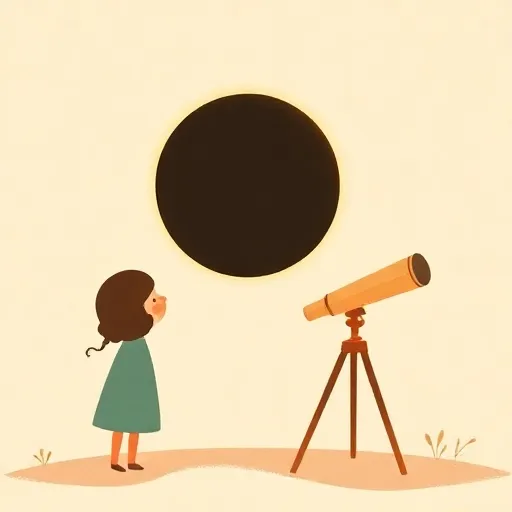
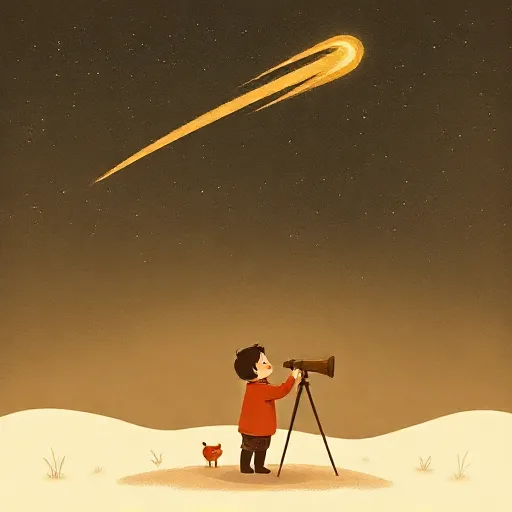
In 1919, a seventeen-year-old in Vienna opened a newspaper and felt the world shift. Astronomers had just photographed a total solar eclipse, and the stars near the darkened sun appeared exactly where Albert Einstein (1879–1955) had predicted they would be. If the starlight had not bent by that precise amount, Einstein’s whole theory of relativity would have been refuted. The idea thrilled the young Karl Popper (1902–1994). It showed him that a truly scientific theory must stick its neck out — it must be possible, at least in principle, to prove it wrong.
Popper had already grown suspicious of other theories he had encountered. He briefly admired Marxism, which claimed to predict the inevitable collapse of capitalism. He also studied the psychoanalytic ideas of Sigmund Freud (1856–1939) and Alfred Adler (1870–1937). Popper noticed something troubling: no matter what a person did, Freudians or Adlerians could always find a way to explain it using their theory. A man who saves a drowning child could be acting from repressed guilt; a man who lets a child drown could be acting from repressed hostility. The theory could absorb any behavior, so nothing could ever disprove it. Marxism, too, had started out as a predictive science, but when its predictions failed, its supporters kept adding extra assumptions to avoid admitting the theory was wrong. Popper saw that Einstein’s risky prediction was entirely different. That difference, he decided, was the key to telling real science from what looked like science but wasn’t.
The Rule: Risk Being Wrong
Popper called his solution the demarcation criterion — a way to draw a line between science and non-science. A statement is scientific, he argued, if it is falsifiable. That means we can imagine an observation that, if it actually happened, would show the statement is false. For example, “All swans are white” is a universal claim that would be falsified by seeing a single black swan. The law of conservation of energy says “No perpetual motion machine can exist.” That is falsifiable: if anyone built a machine that kept moving forever without an energy supply, the law would be shattered.
Popper insisted that science doesn’t try to prove theories true — that’s logically impossible anyway. Instead, it tries to test them by attempting to show they are false. Every genuine test is an attempt at refutation. A theory that survives many serious tests earns a high degree of corroboration, but it is never finally proven. Even one stubborn counterexample can, in principle, topple it. The more improbable and informative a theory is, the more it risks being wrong — and the more scientific it is.
The Messy Reality: When Does a Test Count?
Popper knew that in real laboratories, a single weird observation rarely kills a theory. Instruments can be faulty, measurements can be biased, and every observation is shaped by the theory you already hold. So how do scientists decide when a theory is actually falsified?
Popper introduced the concept of basic statements — simple, singular statements like “At location X, at time Y, a perpetual motion machine was observed.” These are potential falsifiers. But basic statements are not raw facts handed to us by experience. They are always interpreted through some theoretical lens, and scientists must agree to accept a basic statement as true for the purposes of testing. Popper compared this to a jury trial. The jury’s verdict is a decision, based on evidence and rules, but it can later be overturned if new evidence comes to light. In the same way, accepting a basic statement is a convention among researchers. Science does not rest on an unshakable foundation. It is more like a building on swampy ground, supported by piles driven down until they hold enough — for now.
How Knowledge Grows: Problems and Guesses
If science never reaches final certainty, how does it make progress? Popper’s answer: it starts not with observations but with problems. A scientist spots a puzzle, then dreams up a tentative theory — a bold, imaginative guess. Next comes error elimination: the theory is tested by trying to refute it. Every solved problem leads to new problems. Popper drew the process like this:
P₁ → TT → EE → P₂
A problem (P₁) inspires a tentative theory (TT), which gets tested and purged of errors (EE), producing a new, sharper problem (P₂). There is no machine-like method for inventing theories; they come from creative leaps. That is why Popper valued the critical attitude above everything. We must constantly question our ideas, because any of them could be wrong. All knowledge is provisional and fallible — and that’s what drives it forward.
The Open Society: Small Steps, Not Big Plans
Popper applied the same fallible, critical spirit to politics. He was horrified by governments that claimed to have a scientific blueprint for history. He called this historicism — the belief that history follows inevitable laws and that we can predict the future of society. Popper attacked it by showing that predicting history is nothing like predicting eclipses. Eclipses happen in a stable, isolated solar system. But human society is constantly changed by the growth of knowledge. And we cannot predict what new knowledge we will discover. If we can’t predict future discoveries, we can’t predict the future of society. Grand utopian plans are therefore doomed.
Instead, Popper defended the open society, where citizens freely criticize policies and governments make small, reversible changes — what he called piecemeal social engineering. The goal should be to reduce suffering rather than to impose a perfect vision of happiness (a view known as negative utilitarianism). This is like science: we test a policy on a small scale, learn from our mistakes, and adjust. Criticism, not a grand design, is what keeps a society free and improving.
Is Popper Right? The Debate Today

Popper’s picture of science is powerful, but many philosophers have pushed back. Thomas Kuhn (1922–1996) argued that scientists usually work within a shared paradigm that resists falsification. They don’t abandon a theory just because of a few anomalies. Imre Lakatos (1922–1974) gave the example of the planet Neptune. In the 19th century, the orbit of Uranus didn’t match Newton’s predictions. Instead of throwing out Newton, scientists guessed there was an unseen planet. When they found Neptune, Newton was strengthened. If they hadn’t found it, they would have blamed other factors — nobody would have accepted that Newton was falsified. So a single critical test is never clean.
Popper later admitted that theories can’t be falsified without many auxiliary assumptions and that modifying those assumptions is normal practice. He then said the difference between science and pseudoscience is whether the modifications are ad hoc — made only to save the theory from refutation — or whether they lead to new testable predictions. Some critics think this shift makes falsificationism no better than the verificationism Popper rejected. Meanwhile, defenders of Freud have argued that psychoanalysis does make testable claims, so Popper may have been unfair. The debate is still wide open.
Why It Still Matters
Popper’s most lasting challenge is a simple question: what would it take to prove you wrong? That question is the engine of science, and it’s also the heart of a free society. When you hold a belief — about a friend, a video game strategy, or a rule at school — asking yourself what kind of evidence would make you change your mind is the most honest thing you can do. It doesn’t make you weak. It makes you the kind of thinker who gets closer to the truth.
Think about it
- If a friend says “All cats hate water,” and you find a cat that loves swimming, would that disprove the claim? What if your friend replies, “But that cat is an exception”? Is that a fair move?
- Imagine you are in charge of improving your school. Would you rather make one giant change all at once, or many small changes, testing each one? Why?
- Popper thought that being able to be wrong is a strength. Can you think of a time when admitting you were wrong made you smarter or better?