Is Right and Wrong Just a Feeling? David Hume’s Shocking Idea
What Would You Do If No One Was Watching?

Imagine you find a wallet on the sidewalk. No one is around. Inside, there is cash and an ID. How do you decide what to do? According to the Scottish philosopher David Hume (1711–1776), you don’t reach your answer by solving a math problem in your head. Instead, you feel a pull—an inner uneasiness about keeping what isn’t yours, or a warm approval of the idea of returning it. For Hume, that feeling is the real heart of morality.
In Hume’s time, many thinkers argued that right and wrong are discovered by reason—the same power you use to solve equations or spot a contradiction. Some, like Samuel Clarke, said reason alone shows what we must do. Others, like the divine voluntarists, said God’s commands create moral rules. Hume sided with a different camp: the moral sense theorists, such as Francis Hutcheson (1694–1746). They believed we gain moral knowledge through an emotional response—a sentiment of approval or disapproval, much like we taste something sweet or bitter. Hume’s big move was to show that reason, however clever, cannot be the engine of morality.
Reason Alone Cannot Move You: The Slave of the Passions
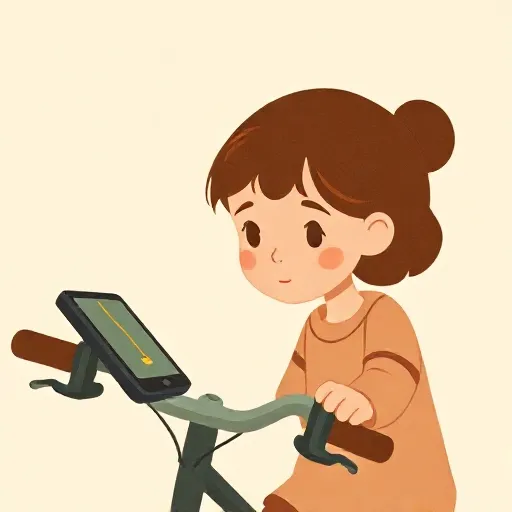
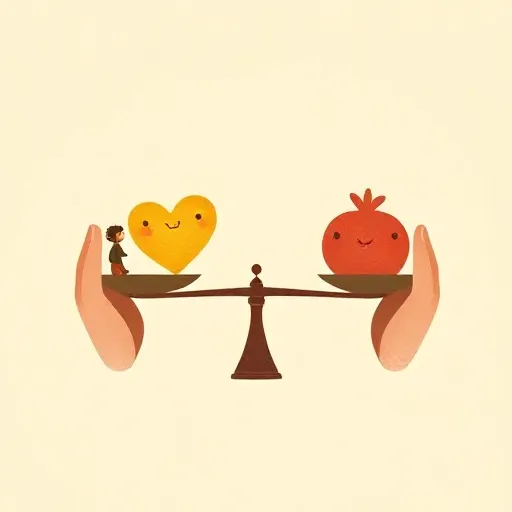
Hume laid down a bold claim: Reason alone can never be a motive for any action. He meant that pure thinking, by itself, never produces an impulse to act. Imagine you are hungry and you plan to go to the kitchen. Your desire for food (a passion, as Hume called emotions and desires) is what pushes you; your reasoning just figures out the quickest route. Reason is, in Hume’s famous phrase, “the slave of the passions.”
To prove this, Hume offered several arguments. First, he looked at what reason does. Demonstrative reasoning (like doing geometry) deals only in relations between ideas, not in the real world—it won’t move a muscle unless you already care about the result. Probable reasoning (cause and effect) helps you see that something will cause pain or pleasure, but you only care if you already fear pain or desire pleasure. In short, reason finds the means; the impulse to act comes from feeling.
Second, Hume argued that if reason alone can’t create an impulse, it also can’t fight one. To resist a passion, you need a contrary impulse, which must come from another passion, not from cold reason. When you hold back from eating a third cookie, what stops you might be a calm desire to stay healthy—something so quiet it feels like thought, but is actually feeling.
Third, and more abstractly, Hume claimed that passions cannot be reasonable or unreasonable. Why? Because reason judges things by checking ideas against reality—seeing if a mental picture matches the world. But a passion (like anger or hope) doesn’t picture anything; it’s just an inner jolt. You can’t call anger “false,” only the belief that caused it. This meant that actions, too, aren’t rational or irrational in themselves. Hume famously wrote that it isn’t against reason to prefer the destruction of the whole world to scratching your finger. That sounds extreme, but his point was clear: reason alone cannot label a deep feeling “wrong”; only another feeling can do that.
The Is–Ought Gap: You Can’t Jump from Facts to Values
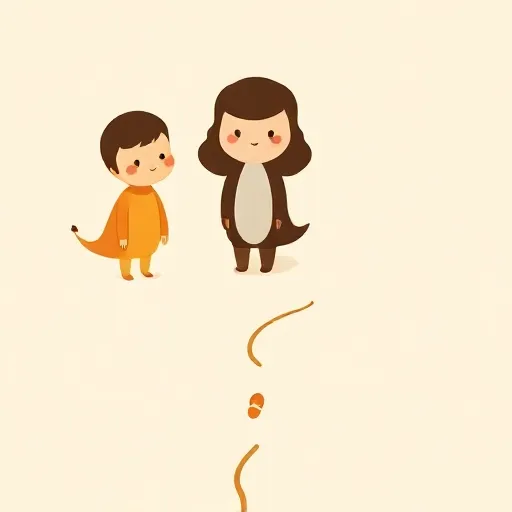
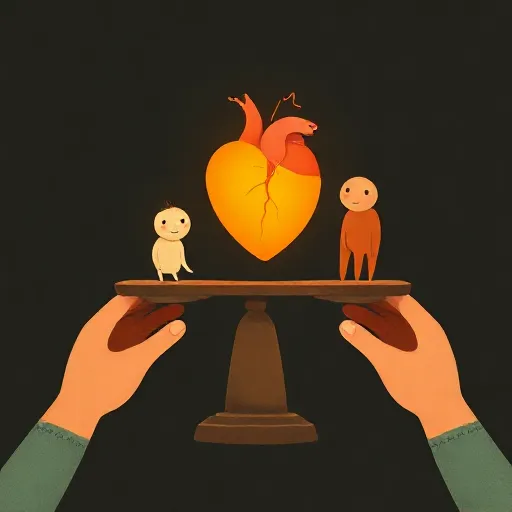
Toward the end of his argument against moral rationalism, Hume made a famous observation. Many writers, he said, start by describing facts—how people behave, what causes happiness—and then suddenly slide into sentences about what people ought to do. They use words like “should” and “duty” without showing how they got there. Hume pointed out that there is a gap between is and ought, and crossing it requires a feeling or a sentiment, not just more logic.
For example, you might list all the harms caused by lying. That’s a collection of facts linked by “is.” But the conclusion “you ought not to lie” doesn’t follow from those facts alone. You need something else: a feeling that harm is bad. Hume’s point wasn’t that moral statements are meaningless, but that reason alone cannot close the gap. Sentiment must enter the picture.
This tiny paragraph has sparked endless debate. Some philosophers think Hume meant you can never logically deduce an evaluative claim from factual premises. Others read him more gently: he was simply saying that our very discovery of virtue and vice originally requires feeling, even if reasoning with known moral concepts can occur later. However you slice it, the is–ought gap forces us to ask: where do our basic values come from? For Hume, they come from the shared machinery of human feeling.
When We Invent Morality: Justice, Promises, and Government
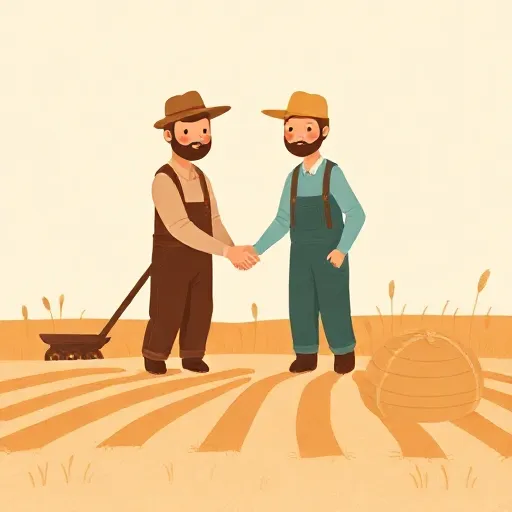
If morality rests on feeling, you might think all virtues are just natural impulses that make us feel approval. But Hume drew a sharp line. Some virtues, like kindness and gratitude, are natural virtues—we approve of them without any need for a social invention. Other virtues, however, are artificial virtues—they exist only because humans create conventions for them. The two biggest examples are honesty about property and keeping promises.
Hume noticed a puzzle about justice as honesty with possessions. If justice were natural, there would have to be a non-moral motive—like self-interest or love—that makes us restrain ourselves from grabbing others’ stuff, and that we approve of. But when we look at honest actions, the only reliable motive turns out to be a sense of duty itself: the thought that it would be wrong to steal. That creates a circle: we can’t explain why stealing is wrong by pointing to the very sense of duty that the wrongness is supposed to ground. So, Hume concluded, justice must be an artificial convention.
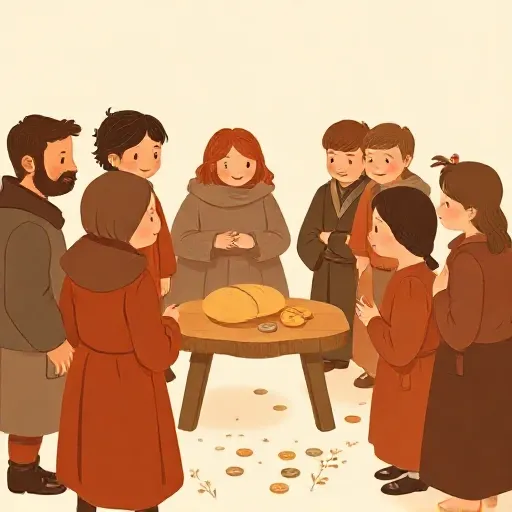
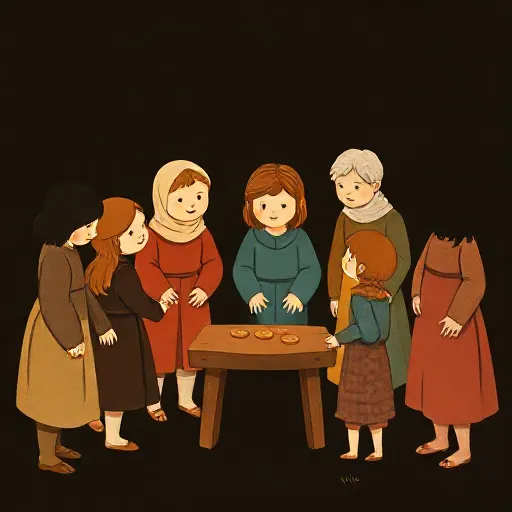
How does the convention start? Hume imagined small bands of people who see that possessive greed leads to endless fights. Without making a formal promise (which itself is an artificial thing), they begin to signal: “I’ll leave your things alone if you leave mine alone.” Over time, this mutual forbearance becomes a regular practice, a set of rules about ownership. No king, no contract—just a silent, useful agreement. Once the rules exist, we feel approval toward anyone who follows them, because sympathy lets us share the pleasure of the whole group.
Promises work much the same way. The words “I promise” would mean nothing without a shared background convention. Hume argued that you can’t, by a mere act of will inside your own mind, create a new moral obligation. What actually happens is that society invents a form of words that signals, “I authorize you to distrust me forever if I don’t do this.” The fear of losing future cooperation creates a self-interested motive to keep the promise. Later, sympathy with everyone who benefits makes promise-keeping a virtue.
Government, too, gets this artificial treatment. As societies grow larger and richer, the temptation to cheat becomes stronger, and our natural concern for far-off strangers is weak. So people appoint magistrates—judges or rulers—who are placed in a position where their own immediate interest is to enforce the rules of property and promise. Over time, we come to feel a moral duty to obey these governors, not because we promised anything, but because their rule keeps the peace. That duty exists only as long as the government actually serves the common good; a cruel tyranny may be rightly overthrown.
Sympathy and the Common Point of View
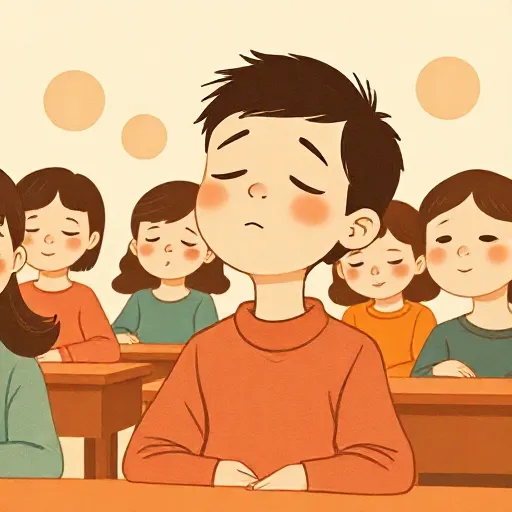
How do we actually feel moral approval? Hume’s answer is sympathy, which today we might call empathy. Sympathy isn’t a single emotion but a psychological mechanism: when you see someone’s smile or hear their tone of voice, an idea of their feeling springs into your mind. Because of a basic feature of the mind—the tendency to transfer liveliness from one idea to another—that idea becomes so vivid that you actually feel the emotion yourself, in a milder form.
Sympathy makes you wince when someone stubs their toe, or feel glad when a friend succeeds. In moral evaluation, it works like this: when you reflect on a character trait—say, a person’s generosity—you sympathize with the happiness of the people around her. That borrowed pleasure is the feeling of moral approval.
But there’s a problem. Sympathy is naturally biased: you feel much more for your family and neighbors than for a stranger in another century. Yet we don’t think a person’s virtue changes depending on how far away they are. To fix this, Hume said, we adopt a common point of view. We imagine ourselves into the circle of people who interact directly with the person we are judging, and we correct our initial reactions. We also set aside small accidents that prevent a good trait from succeeding, and judge the trait as it would work in typical conditions. So we can call a prisoner generous even if he has no one to give to. This shared perspective is what makes moral judgments fairly stable across time and place.
Why This Still Matters
Hume’s ideas can seem like relics of powdered-wig debates, but they are remarkably alive today. Whenever people argue about whether human rights are discovered truths or human inventions, they are replaying Hume’s questions. When we discuss whether artificial intelligence could ever be moral, we quickly hit the is–ought gap: can logic alone produce values? And in your own life, the inner tug-of-war between “what I think” and “what I feel” when facing a tough choice is exactly the terrain Hume mapped.
His picture also gives a down-to-earth, hopeful view of moral life. If morality is rooted in shared feeling, then we can understand it as something we build together, not something handed down from on high. It explains why we care about fictional characters, why we admire heroes from far-off times, and why we can change our minds about what counts as fair. Hume didn’t try to prove that one set of values was the only right one; instead, he tried to show how moral life works for creatures like us—feeling, partial, but also able to step into a common point of view and agree on a rough, useful map of right and wrong.
Think about it
- Suppose a scientist could scan your brain and predict every choice you will make. Would that mean your choices aren’t really free, or would they still feel like yours? If reason is the slave of the passions, who—or what—is finally in charge?
- Can you think of a rule at your school or in your family that feels completely invented, like the rules of a board game? Does that make the rule any less important to follow?
- Hume said you can’t get an “ought” just from an “is.” Think of a heated debate you’ve had (like about chores or fairness). Did the facts settle it, or did someone’s feelings have to step in?