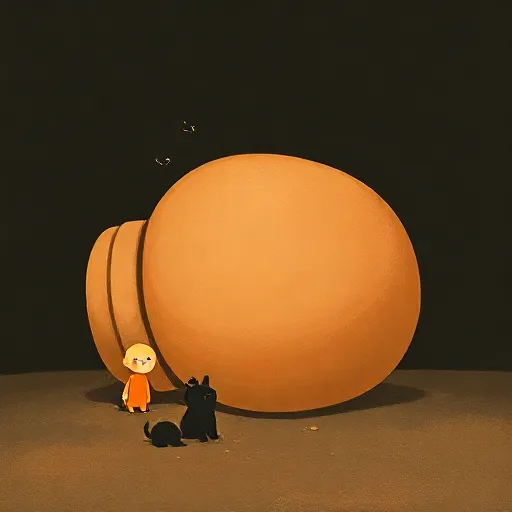
What Makes Hope Different From a Wish? The Surprising Answer
The Ancient Puzzle: Is Hope a Gift or a Trap?
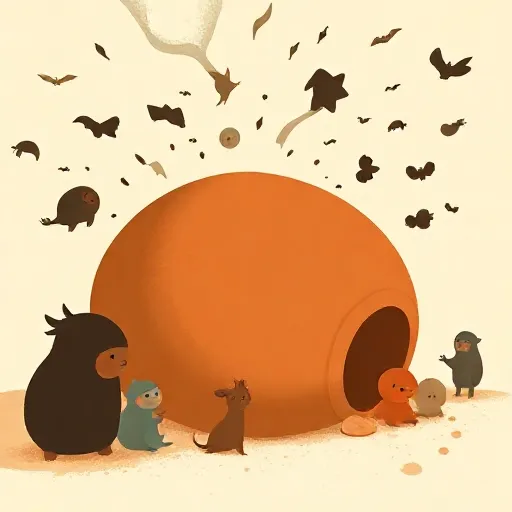
It’s a scene from a story told by the ancient Greek poet Hesiod (c. 700 BCE). Curiosity got the better of Pandora, and all the evils of the world—sickness, sorrow, pain—flew out of a jar. When the lid was slammed shut, only one thing remained inside: hope. Was it left there as a comfort for humans, or as one last cruel trick? The story is deliberately unclear, and for centuries philosophers have argued whether hope is a blessing or a curse.
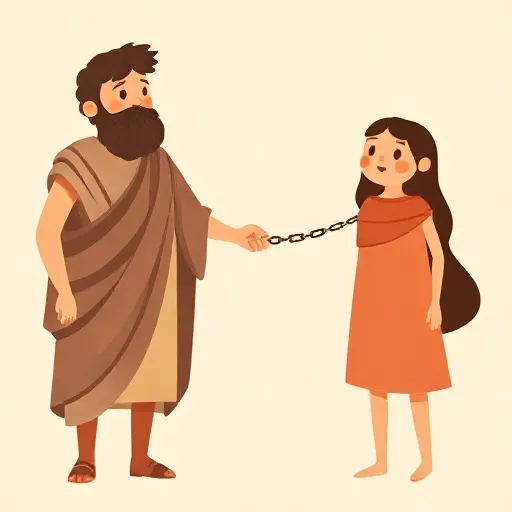
Plato (c. 428–348 BCE) saw both sides. In one dialogue he calls hope “gullible,” a mindless adviser that leads us astray. In another he suggests that hope can be rational, especially when it concerns the afterlife. The Roman Stoic Seneca (c. 4 BCE–65 CE) was much harsher. He believed that hope and fear always travel together, chained to each other. When you hope for something, you also fear not getting it. For Seneca, the wise person tries to escape both and focus on the present moment. This ancient tension—is hope a source of strength or a dangerous illusion?—has never gone away.
The Simple Modern View: Hope as Wish Plus Belief in Possibility

Many philosophers today begin with a straightforward recipe for hope. R.S. Downie (20th century) and J.P. Day (20th century) captured it in what is now called the standard account: to hope that something will happen, you need (1) a desire for it—you want it—and (2) a belief that it is possible, though not certain. That’s it. You can hope for things that are wildly improbable, like winning the lottery with a single ticket. You just can’t hope for what you know to be impossible (like turning into a dragon) or what is already guaranteed (like the sun rising tomorrow).
This analysis feels right in many everyday cases. When you hope for a bicycle for your birthday, you want it and you think it’s possible—maybe likely, maybe not. And notice that a wish is different: you can wish for something impossible (“I wish I could fly”), but hope seems to require that you take the outcome to be a real option. So far, so good. But cracks soon appear.
Why the Simple Recipe Fails: Despair and Deep Hope

Ariel Meirav (20th century) pointed out a troubling problem. Imagine two friends who both desperately want to become astronauts. Both know it’s possible—the space agency exists, people are selected every year—but the competition is fierce and the odds are tiny. One is filled with hope. The other is in despair. If hope were just desire plus a possibility-belief, the two should feel exactly the same. Yet they don’t. This is the despair objection: the standard account cannot explain why one person hopes while another despairs when their desires and beliefs are identical.
There is also a second problem, raised by Philip Pettit (20th century) and Cheshire Calhoun (21st century). Sometimes hope unleashes a special energy. A person fighting a serious illness might keep struggling even after doctors say the chance of recovery is minimal. That drive isn’t just the raw desire to live—it’s a hopeful way of seeing the future that gives them a push. The standard account, with its dry combination of want and maybe, seems too thin to capture this substantial hope that keeps people going against the odds.
What If Hope Is Like Seeing the World Differently?
If the simple recipe isn’t enough, what else belongs in hope? Answers pour in from many directions. Luc Bovens (20th century) suggests that hope includes mental imaging—actively picturing the good outcome in your mind. That mental picture can make the hope feel real. But critics note that even a despairing person can form the same images; the difference must be something more.
Andrew Chignell (contemporary) focuses on attention. A hopeful person keeps their mind on the possibility of success, while a despairing person stares at the improbability. Two people can look at the same set of facts, but where their attention goes changes whether they hope or not.
Ariel Meirav adds an external factor. According to him, whether you hope depends on whether you see the forces that control the outcome—fate, luck, other people, God—as good and on your side. If you believe the universe is basically against you, you despair. If you trust it to help, you hope.
Calhoun herself proposes that hope provides a phenomenological idea of the future, a vivid, felt sense that success is already being lived. That feeling can pull you forward even when your conscious reasoning might tell you to quit. And Adrienne Martin (21st century) argues that hoping means you license yourself to act: you treat your belief in possibility as a green light to plan, to fantasize, and to invest effort. When you hope, you give yourself permission to chase the dream.
None of these proposals has won universal agreement. Philosophers are still arguing about whether hope is made of beliefs, feelings, habits, or something irreducibly its own.
Is It Ever Smart to Hope for a Miracle?

So far we’ve asked what hope is. But a second big question has always been lurking: when is it rational to hope? This question splits into two parts.
The theoretical side asks whether your hope fits the facts. At minimum, you must have good reason to believe the outcome is possible. Some philosophers think hope also requires that the outcome be more likely than not. Others disagree. They note that people can rationally hope for extremely unlikely things—a miraculous medical cure, a last‑minute victory—as long as they don’t have proof that it’s impossible. Hope seems to survive even when optimism would be foolish.
The practical side asks whether hope helps you live well. Here hope often shines. If hoping keeps you trying to pass an exam when you’d otherwise give up, it serves your goals. That’s instrumental value. But even when you can’t lift a finger to change the outcome, hope can still be worthwhile. Bovens points out that mentally picturing a happy future can be genuinely enjoyable—hope provides little pleasures of anticipation. And hoping for someone else’s good is a way of loving them: spending your mental energy on their well‑being is part of what it means to care. So hope can be rational simply because it enriches your life and deepens your relationships.
Immanuel Kant (1724–1804) pushed this idea further. He thought that we need hope to stay committed to acting morally. Without hope that doing the right thing will somehow make the world better, we might lose heart. Reasonable hope, in his view, supports the very practice of trying to be a good person.
Of course, hope can also go wrong. If hope makes you ignore clear evidence and walk into a disaster, it isn’t serving you well. The art of hoping wisely—combining clear‑eyed awareness with the courage to reach for the unlikely—remains a live philosophical puzzle.
Hope for a Future You Can’t Imagine: Radical Hope

Jonathan Lear (born 20th century) tells the story of the Crow people. After the U.S. government forced them onto reservations and banned their traditional way of life, the vocabulary they had used to describe a good life fell apart. They couldn’t even picture what it would mean to flourish. Yet they held onto a hope that a new form of goodness would emerge in the future. Lear calls this radical hope—a hope without a clear object, a trust that something worthwhile lies ahead even when you lack the words to describe it.
This idea reaches beyond a single community. Political philosophers argue that hope plays a similar role in large-scale struggles. When people fight for climate action or social justice, they often cannot point to a guaranteed outcome. Their hope is not for a specific event on a specific date; it is a broader hopefulness—an openness to the possibility that a better world can take shape. In that sense, hope can be a virtue that sustains shared action, even when the road ahead is dark.
Why This Puzzle Matters to You

You face moments of uncertainty every week. Maybe you’re working toward a tough goal—a science fair project, a spot on a team, a friendship that feels fragile. Understanding hope isn’t just a school assignment; it’s a tool for deciding how to spend your energy. When is hope a wise companion that pulls you forward, and when is it a fog that hides real dangers?
Philosophers have no single answer, but they’ve given you something better: a sharper set of questions. Hope is more than a wish. It’s a way of picturing the future, of focusing on what could go right, of giving yourself permission to try. It can keep you company even when the odds are terrible. But it also deserves a healthy dose of honesty. The ancient argument over Pandora’s jar—comfort or trap?—is one you’ll be replaying in your own head for the rest of your life.
Think about it
- Imagine you’re trying out for a sports team and the odds are against you. Would it be better to hope strongly or to be realistic and expect failure? Why?
- If you had a friend who was always hopeful, even when things looked hopeless, would you think they were being foolish or brave? Can you think of a situation where hope actually hurt someone?
- Is it possible to have hope for something you can’t describe or imagine? What would that feel like?