Is Probability Just in Your Head? The Big Debate Over Chance
What Does “Probably” Even Mean?

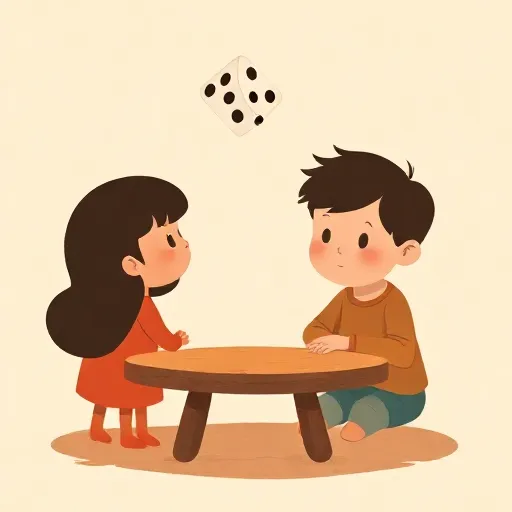
You flip a coin. You say the chance of heads is 50 percent. But what does that really mean? Is heads built into the coin itself, like its weight? Or is that number just a measure of how sure you feel, knowing nothing special about this particular toss? Philosophers have been wrestling with such questions for centuries. They have come up with four big answers—and none of them is completely safe from attack.
Mathematicians can tell you how to calculate with probabilities. A probability is a number between 0 (impossible) and 1 (certain). The numbers for all the possible outcomes always add up to 1—so the probability you roll an even number on a fair die is 3/6. That math is not the puzzle. The puzzle is: what in the world do those numbers stand for?
The fight over that puzzle has real consequences. When a weather forecast says 70 percent chance of rain, should you bring an umbrella? If a judge says a defendant was probably guilty, what kind of fact is that? Before you trust your life to a probability, it pays to know what sort of thing it is.
The Gambler’s Dream: Equal Chances for Every Possibility
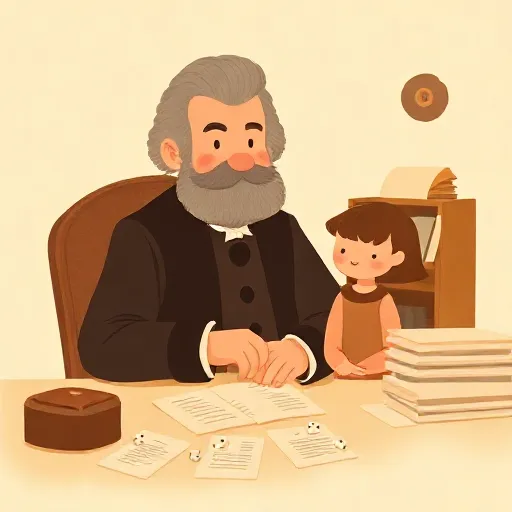
The oldest systematic answer came from the French mathematician Pierre-Simon Laplace (1749–1827). He said: imagine you had no evidence that favors one outcome over another. Then every possible outcome is equally possible, and the probability of an event is simply the fraction of those possibilities that give you that event.
For a fair six-sided die, there are six equally possible faces, and three of them are even. So the classical probability of an even number is 3/6. This classical interpretation feels natural—it is why we all agree that a randomly chosen door out of three gives you a 1/3 chance of winning a prize.
The trouble begins when you try to decide which possibilities should count as equally likely. Suppose a factory makes cubes whose side‑lengths range from 0 to 1 foot. What is the probability a cube has a side‑length less than 0.5 feet? The classical approach says 1/2, because there are two equal‑sized intervals. But you could redescribe the same cube in terms of its volume. The volume ranges from 0 to 1 cubic foot. Now the volume‑less‑than‑0.125 corresponds to side‑length‑less‑than‑0.5, and the naive counting gives probability 1/8. We have described the same event in two ways and gotten two different probabilities. This is called Bertrand’s paradox, and it plagues any attempt to say “all possibilities are equal” without a rule for picking the right description.
Philosophers later tried to fix this with the principle of indifference: if you have no reason to prefer one possibility over another, give them equal weight. But critics point out that this seems to pull information out of pure ignorance—as if your blank mind could magically decide the odds. And in many real situations we do have partial evidence. So the classical answer, while elegant, often lacks a clear recipe for which cases to count.
Counting What Actually Happens: The Frequency View
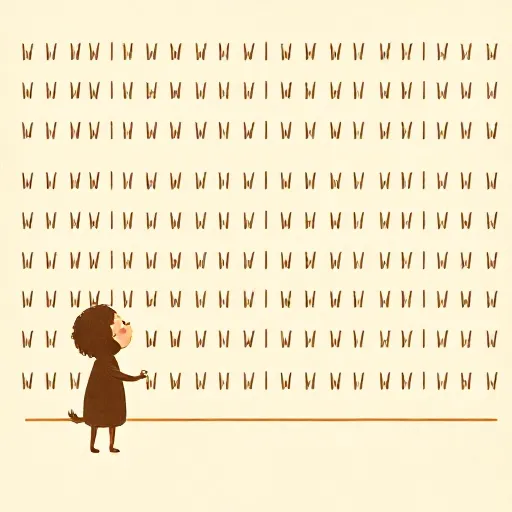
Maybe probability doesn’t live in our heads or in a list of possibilities. Maybe it lives in the real world of facts. The frequency interpretation says the probability of an outcome is nothing more than how often it actually occurs in a large set of similar trials.
John Venn (1834–1923) put it bluntly: probability is relative frequency. If you toss a coin 1,000 times and get heads 512 times, the probability of heads is 0.512. No guesswork, no hidden chances—just counting. This view appeals to scientists because it sounds measurable and objective.
But a problem appears immediately: what about events that happen only once? The 2020 presidential election cannot be rerun a thousand times under identical conditions. A frequentist who sticks to actual frequency would say the probability of a single event is either 0 or 1 after the fact—which feels wrong when we talk about the chance before the vote. Some frequentists, such as Hans Reichenbach (1891–1953), turned to hypothetical infinite sequences: probability is what the relative frequency would be if you could repeat the experiment forever. But now you have left behind what you can actually observe.
Even when you can repeat an experiment, you must choose a reference class—the group of trials you count. A coin can be tossed many times, but which sequence matters? The tosses this morning? All tosses ever? If you reorder the same sequence of results, the relative frequency can converge to almost any number you like. Without a rule for the “right” ordering, the frequency approach begins to look as arbitrary as the classical one.
It’s All in Your Head: The Subjective View
What if probability doesn’t describe the world at all, but rather the strength of your own beliefs? This is the subjective interpretation, championed by Frank Ramsey (1903–1930) and the Italian mathematician Bruno de Finetti (1906–1985). They argued that when you say “I think it will probably rain tomorrow,” you are reporting a degree of confidence—your credence.
De Finetti defined this credence in terms of betting. Suppose I offer you a ticket that pays $1 if it rains, and $0 if not. The highest price you would pay for that ticket reveals your fair betting odds, and those odds mirror your credence. If you’d pay 70 cents, your credence is 0.7.
Ramsey pushed the idea further. He showed that if your degrees of belief violate the rules of probability, someone could set up a series of bets that would make you lose money no matter what happens—a Dutch book. Conversely, obeying the probability axioms makes you immune to such sure losses. So rationality itself seems to demand that your beliefs line up with the mathematics of probability.
This view makes probability personal. Your credence about rain may differ from mine, and that’s fine as long as each of us is internally consistent. But many philosophers feel that probability should answer to something outside our heads. After all, a weather app that says 70 percent is not just guessing what you believe—it is trying to say something about tomorrow’s sky. So subjective Bayesians add constraints linking your credence to the evidence you have, and some even argue that evidence forces a single rational credence. At that extreme, subjective probability starts to look like an objective fact again.
A Real Tendency in Things: Propensities
Perhaps probability is neither a tally nor a belief, but a real physical property—a propensity or disposition. The American philosopher Charles Sanders Peirce (1839–1914) compared a die’s probability of rolling a three to a person’s habit. A heavy smoker has a tendency to light a cigarette, and a biased coin has a tendency to land heads. This tendency exists even if the coin is never tossed.
Karl Popper (1902–1994) developed the idea to make sense of single‑case probabilities in quantum mechanics: a specific radium atom has a certain propensity to decay within 1,600 years. You don’t need a long sequence of atoms—the propensity is right there in the atom’s makeup.
But propensities quickly run into trouble. If a propensity is a causal tendency, it seems to point in one direction. A sick patient has a tendency to produce a positive test result, but a positive test result does not have a propensity to produce a sick patient. Yet the rules of probability let you flip conditional probabilities around using Bayes’ theorem. That suggests propensities don’t follow the usual probability math—a serious problem known as Humphreys’ paradox.
Moreover, we can never directly see a propensity; we only ever see outcomes. Critics say that calling something a “tendency” of a certain strength is just dressing up the mystery in a new name, without telling us what the property actually is. The propensity interpretation still has defenders, but it remains one of the more contested views.
Why This Argument Still Matters
So which view is right? Philosophers have not settled the fight. Many suspect we need more than one notion of probability. A physicist studying dice might need a physical chance, a statistician might work with frequencies, and a careful reasoner might update personal credences—each in its own domain. The trick is to understand how these different faces of probability relate to one another.
The debate touches your life more than you might think. When a doctor says a treatment has a 90 percent chance of success, is she reporting a frequency from past trials, a physical propensity of the medicine, or her own degree of belief based on studies? How you answer changes what questions you ask next. If you care about fairness in games, randomness in nature, or the difference between a good guess and a sure thing, you are already doing the philosophy of probability. You are just not calling it that yet.
Think about it
- If a weather app says “70% chance of rain,” do you think that means rain will fall on 7 out of 10 days with similar conditions, or that the forecaster is 70% confident? Does the difference matter for whether you carry an umbrella?
- A die has never been rolled. Does it still have a probability of landing on each face? Why or why not?
- Suppose you could know the exact position and speed of every particle in a coin right now. Would probability still exist, or would the outcome of a toss be fully determined?