Why Did a Revolutionary Philosopher Insist Women Should Vote?
A Revolutionary Accuses the Revolutionaries
In the summer of 1790, just a year after the French Revolution had promised liberty and equality for all, a famous mathematician and philosopher sat down to write a furious little essay. His name was Marie-Jean-Antoine-Nicolas de Caritat, Marquis de Condorcet (1743–1794), and he was about to accuse his fellow revolutionaries of a gigantic lie. They had just published the Declaration of the Rights of Man and of the Citizen. They spoke of natural rights that belong to every human being. Yet when they wrote the new rules for voting and holding office, they quietly locked out half the human race. Condorcet’s essay, On the Admission of Women to the Rights of Citizenship, was a direct challenge: if you really believe in rights that come from being human, how can you deny them to all women?
Condorcet had already spent years fighting for enslaved Africans, for religious minorities, and for fair courts. He believed that natural rights—the basic freedoms no government may justly take away—belong to any being who can reason and feel moral ideas. That included women. To him, leaving them out was not a small oversight. It was a tyranny, the same kind of injustice as slavery or religious persecution.
The Man Who Fought for All Humans
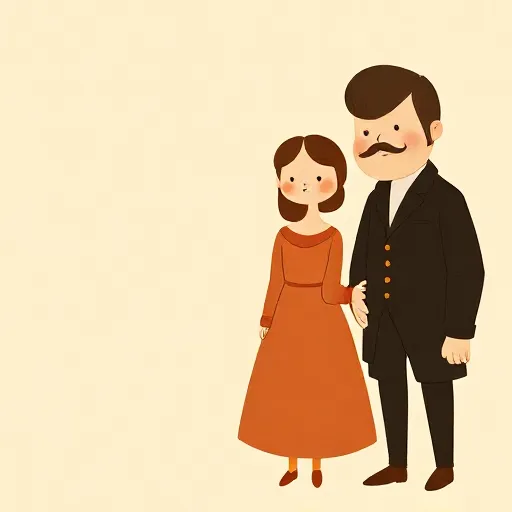
Condorcet was not a typical nobleman. By his early thirties he was already one of Europe’s top mathematicians and the permanent secretary of the Royal Academy of Sciences. But he used his influence for causes that made him enemies. He helped lead the French abolitionist movement against slavery in the colonies, arguing that Africans had the same human dignity as any European. He called for the end of censorship, for the rights of Protestants and Jews, and for a justice system that did not treat suicide or same‑sex attraction as crimes—because, he wrote, they “do not violate the rights of any other man.”
His own life shaped his thinking about equality. His father died when he was an infant, and his deeply religious mother raised him in isolation, even dressing him in white dresses until he was eight. He grew up painfully shy but fiercely dedicated to reason. Later he married a brilliant writer and translator, Sophie de Grouchy (1764–1822), who shared his passion for reform. Together they ran a lively salon where revolutionaries, foreigners, and feminists debated the future. Sophie translated Adam Smith and Thomas Paine, wrote her own work on sympathy and happiness, and encouraged her husband to put women’s rights in writing. The partnership convinced Condorcet that women’s minds were every bit as powerful as men’s when given the same chances.
What Are Natural Rights and Who Gets Them?
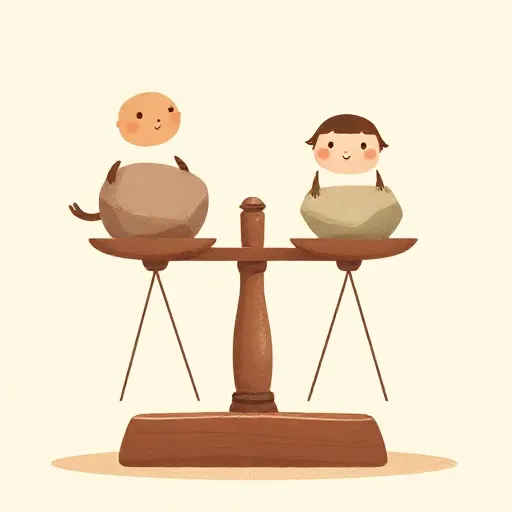
Condorcet’s starting point was the very idea the revolutionaries used to justify their rebellion: natural rights. These are not gifts from a king or a parliament. They come from what you are—a sentient being who can feel pleasure and pain, who can form moral ideas about right and wrong, and who can reason about them. If that is the source of rights, he argued, then women possess the same rights as men. Either nobody has true natural rights, or we all do.
He pushed the logic further. In his 1787 Letters from a Freeman of New Haven, he wrote that in a genuinely free constitution, every person whose interests are affected by the laws must have a voice in making them. That meant not only men who owned property, but also women. If women pay taxes, why can’t they vote? If a queen could rule France, why could a woman in Paris not even become a dressmaker without her husband’s permission? The double standard, he said, was simply habit dressed up as reason.
He also linked women’s exclusion to other injustices. The men who denied rights to women used the same kind of excuses that pro‑slavery advocates used to deny rights to Africans, or that an old aristocracy used to keep power for itself. If you allow one group to exclude another because “they are different” or “they haven’t shown enough genius,” you open the door to endless oppression.
But Aren’t Women Different? His Answers
The objections he faced were loud and familiar. “Women’s bodies are weaker.” “Pregnancy and nursing keep them tied to home.” “They haven’t produced great philosophers or scientists.” “If they get rights, they’ll abandon their families.” Condorcet answered each one calmly, often with a sharp twist.
Physical differences, he said, were real but irrelevant. Some women’s monthly indispositions are no more disqualifying than a bout of gout or a cold. Heavy labor might be harder for some women, but that doesn’t mean they can’t think or vote. As for genius, he pointed to Queen Elizabeth I of England, Empress Maria Theresa, and the scientists and writers of his own time. Even if the very highest summits of science had mostly been climbed by men—something he wasn’t yet ready to fully dismiss—that would not justify denying rights to all women any more than it would justify denying rights to the vast majority of men who are also not geniuses. “We would hardly attempt to limit citizenship rights only to men of genius,” he wrote.
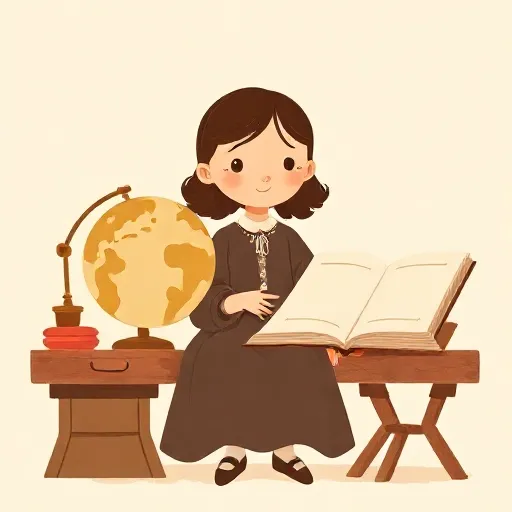
The real driver of inequality, he insisted, was education. Girls were taught to care only about their looks and to please others, while boys learned to reason and to speak in public. Give girls the same schools and the same chance to develop their minds, and the supposed differences between the sexes would shrink dramatically. If women sometimes behaved in petty or superstitious ways, that was the fault of their upbringing, not their nature. Condorcet even proposed a system of free, co‑educational public schools where boys and girls would study the same subjects, including science and civic law.
He did make one notable concession. He told men not to worry: giving women political rights would not cause them to abandon their children and needlework overnight. Most women, like most working men, would still spend much of their day on family and home. But that was a reason to respect their vote, not a reason to legally exclude them. Domestic life, he believed, would become gentler and fairer when women were no longer dependent on their husbands for protection.
The Revolution’s Broken Promise
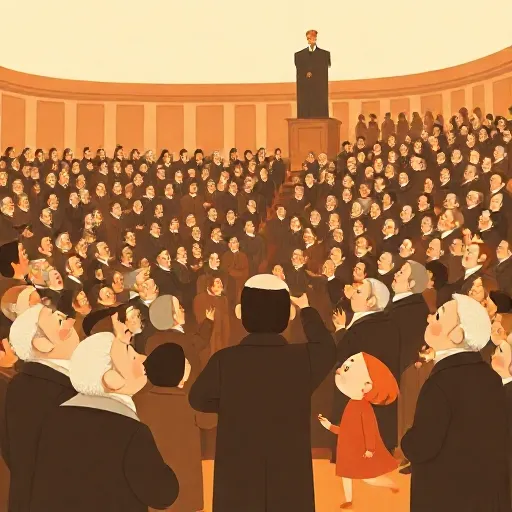
Condorcet’s arguments were bold, and for a short time they fell on some sympathetic ears. In 1791 the new French constitution divided citizens into active and passive categories based on wealth, leaving out most men as well. But even when the most radical republicans later dropped the wealth requirement and gave all adult men the vote, they kept every woman—regardless of her wealth or work—in the passive category. The new government claimed to abolish aristocracy, but Condorcet saw that it had simply created a new one: an aristocracy of males.
He served on the committee that drafted a republican constitution in 1793, and by then he was a firm supporter of universal suffrage for both sexes. Yet his proposal, known as the “Girondin” constitution, was never adopted. The dominant Jacobin faction pushed through its own version that kept women out. When Condorcet publicly attacked the new plan and protested the arrests of his political allies, he was ordered to be arrested himself. He hid for eight months, writing his most hopeful book, the Sketch for a Historical Picture of the Progress of the Human Mind, in which he still insisted that the full equality of the sexes was a necessary step toward a just world. He was captured in March 1794 and died in his cell two days later, under circumstances that remain a mystery.
Women in France would not win the right to vote until 1944. In the early years of the Revolution, some women and a handful of male deputies continued to demand full citizenship, but the official answer was always that women lacked enough education or were naturally suited only to domestic life. The same “masculine aristocracy” Condorcet had named lived on.
Why Condorcet’s Question Still Echoes

You may have heard someone say that girls are just naturally better at some things and boys at others, or that certain jobs aren’t right for a person because of their sex. Those claims seem modern, but they are almost exactly the ones Condorcet faced in the 1780s. His reply was that unless you can prove a difference that truly stops someone from reasoning, feeling morally, and contributing to society, you have no business treating them as less than a full citizen.
He also left a lesson about courage and optimism. At the darkest moment of his life, hunted and in hiding, he still wrote that human beings could build a world where no prejudice denies anyone’s rights. He urged his infant daughter to prepare for a career so she would never be forced to depend on anyone else—advice that was rare from an aristocrat in the 1700s. His belief in education, public debate, and the power of sympathy to break down barriers remains a practical hope.
Condorcet didn’t live to see his dreams fulfilled. But his question is still on the table: if rights come from being able to reason and to care about others, what possible argument can justify leaving out an entire group just because of the bodies they are born in?
Think about it
- If a country allowed only left-handed people to vote because “right-handers are more emotional,” how would you show that this rule is unfair? What would Condorcet say?
- Many revolutionaries genuinely believed in freedom and equality but still opposed giving women the vote. How can a person hold such a big contradiction without noticing it? Have you ever seen something similar today?
- Condorcet thought that equal education would eventually fix most inequalities. Do you agree, or are there other kinds of unfairness that schooling alone can’t touch?