Who Really Wrote *On Liberty*? The Harriet Taylor Mill Puzzle
A Book Dedicated to a Ghost

In 1859, a year after his wife died, John Stuart Mill (1806–1873) published On Liberty, one of the most famous defences of personal freedom ever written. The book’s opening page held a bombshell. Not in the argument, but in the dedication: Mill insisted the work belonged as much to Harriet Taylor Mill (1807–1858) as to himself. He called it their “joint production” — a book they had written together, sentence by sentence.
That claim set off a puzzle that still isn’t solved. Mill said that for decades, nearly everything he published had been shaped by Harriet’s mind. Yet hardly any works carry her name. She died leaving no finished book of her own. Were her ideas the real engine behind Mill’s philosophy, or was he exaggerating out of love and grief? The fight over Harriet Taylor Mill’s place in philosophy is a story about genius, collaboration, and how hard it is to see the fingerprints a thinker leaves behind.
“The Enfranchisement of Women” — The One Work Everyone Argues About
If any published essay is clearly Harriet’s, it is “The Enfranchisement of Women” (1851). The article appeared in a London review under her name (though Mill later added it to a collection of his own writings). It calls for women to have equal political, civil, and social rights with men. It goes further than Mill’s later book The Subjection of Women (1869) in one striking way: it argues that married women should work outside the home and earn their own money. That, Harriet wrote, is the best defence against being treated as a dependent.
The essay’s voice is bold, practical, and radical. Mill himself said in a private letter that “all the best of that one” was hers. Most scholars today agree she was the primary author. Still, the evidence is tangled. In letters to the journal’s editor, Mill sometimes talked as if he were writing it. At other moments, he described his role as little more than that of an amanuensis — a scribe who takes dictation. Even in this one clear case, sorting out whose pen was moving is harder than it looks.
Two Masterpieces, Endless Questions
The real storm surrounds two larger works: Principles of Political Economy (1848) and On Liberty (1859).
For the Principles, Mill says Harriet insisted on a whole chapter about the future of the working classes. In his autobiography, he wrote that she “was the cause of my writing it” and that the chapter expressed her thoughts, often in words taken from her own lips. He also noted that she helped revise later editions, pushing the book toward a friendlier view of socialism. Yet the title page lists only J. S. Mill, and the dedication calls him the author. Was she a co-author in everything but name? Even Mill’s own annotated bibliography calls the book a “joint production with my wife,” but other statements downplay her role.
On Liberty is even more disputed. Mill’s dedication says the whole mode of thinking was “emphatically hers.” He describes the two of them going over every sentence together. But his letters to others show him planning the book alone, and his personal bibliography doesn’t call it a joint product. Recently, scholars have tried a new tool: stylometry, which uses computer algorithms to detect an author’s statistical “fingerprint” in word patterns. One 2022 study suggested some passages were written by Harriet or by both together. The problem is that the method depends on knowing for sure who wrote the comparison texts — and we don’t have a rock-solid sample of Harriet’s unaided writing. So the machine can only guess.
The Fight Over Her Influence

Because the paper trail is so thin, experts have split into camps. One side, the minimalists, doubts Harriet made much difference to Mill’s published ideas. A friend of Mill’s, Alexander Bain (1818–1903), thought Mill was under “an extraordinary hallucination” about her genius. Historian H. O. Pappe argued that Mill without Harriet “would still have been Mill” — meaning his philosophy would have developed the same way. The minimalist hunch is that Mill, trained from childhood to need a dominant intellectual partner, simply inflated her role after her death.
The other side, the maximalists, takes Mill at his word. Philosopher Jo Ellen Jacobs, who edited Harriet’s surviving fragments, argues that Mill actually understated her contribution in some cases. For example, Jacobs finds in Harriet’s unpublished notes a distinction between the logic of sciences and the logic of arts that appears later in Mill’s System of Logic. To a maximalist, Harriet wasn’t just a sounding board; she was an originator of key ideas that Mill then systematised.
Between these poles lies a middle ground. Bain himself conceded that Mill wouldn’t have been captivated merely by someone who echoed him. More likely, Harriet pushed Mill to focus on progressive causes — socialism, women’s rights, individual liberty — and gave him a utopian vision of human improvement. Feminist scholars add that her lived experience of the limits placed on women gave Mill a kind of knowledge he could never have gained from books. She may not have written the famous sentences, but she might have made them possible.
Why a Victorian Mystery Still Echoes Today

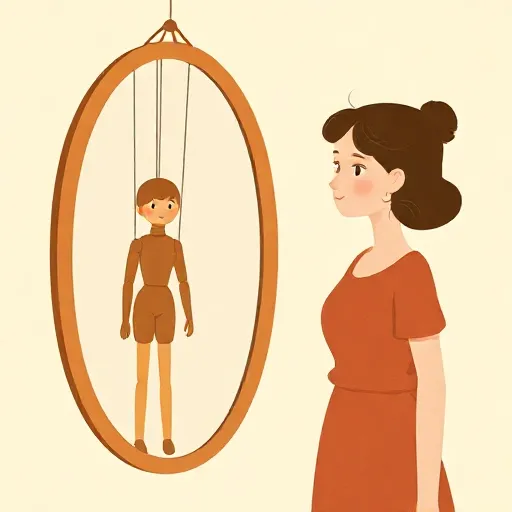
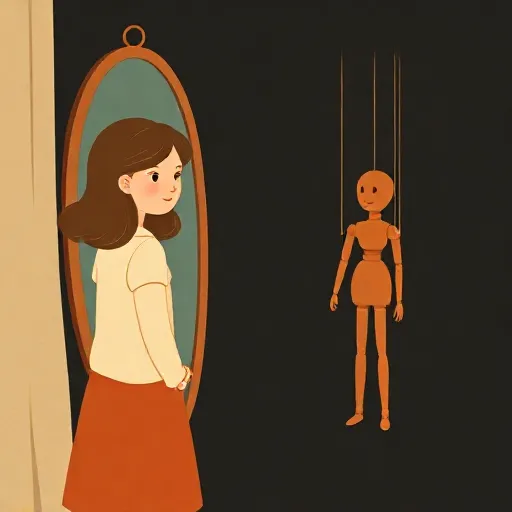
Harriet Taylor Mill’s story is more than a who-did-what puzzle. It forces us to ask what it means to be the author of an idea. Can a thinker change philosophy forever without leaving a full book behind? If two minds grow so close that they can’t tell where one thought ends and the next begins, does it even make sense to split the credit?
These questions are not just about the past. They surface whenever a group project leaves someone’s name off the title, or when a historical figure’s wife is dismissed as a mere “muse.” Harriet’s case is extreme because Mill destroyed her letters after her death and wrote so passionately about her genius — yet his own society would have greeted a woman’s name on a political treatise with scepticism. Deciding how much to believe him means weighing love, loss, and the habits of an age that rarely let women hold the pen in public. The evidence may never settle the argument. But keeping the argument alive reminds us that philosophy is often a conversation, not a solo performance.
Think about it
- If two people work so closely that they can’t separate their ideas, should we try to assign credit anyway, or should we just care that the ideas exist?
- Imagine a friend tells you that your best suggestion in a group project was actually their idea first. What kind of evidence would you need to change your mind?
- Harriet’s letters were destroyed by her husband. If you could read one lost letter today, what question would you hope it answered — and could a single letter ever really settle a dispute like this?