Did Your Rights Come from Kings — or from Reason?
A Girl, a Library, and a Burning Question
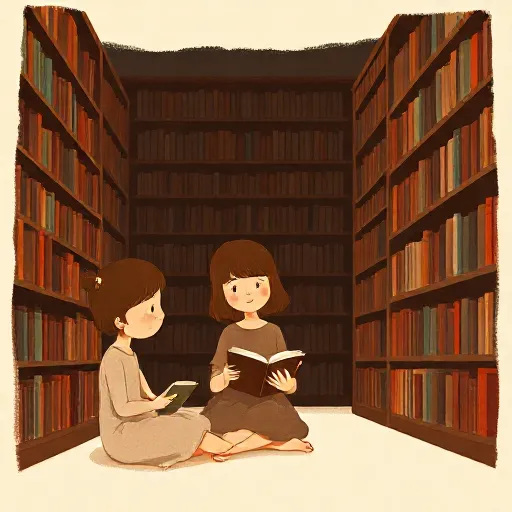
Catharine Sawbridge was born in 1731 in England. By the time she was a teenager, her mother had died and her father was often away. Left to wander the house, she found her father’s library. There she discovered the histories of ancient Greece and Rome. She later wrote, “From my early youth I have read with delight those histories which exhibit Liberty in its most exalted state, the annals of the Roman and the Greek republics.” The stories of free republics thrilled her. They made her ask: What does it mean for a whole country to be free? And where do our rights actually come from?
These questions never left her. She married a Scottish doctor, George Macaulay, and took his name. Encouraged by him and a neighbor, she began writing a massive history of England. But her real purpose was to show how the struggle for liberty had played out in her own country, and to argue that kings and aristocrats had stolen the people’s freedom. Her name would become Catharine Macaulay (1731–1791), and she would become one of the most radical political thinkers of the 1700s.
Freedom: Just No Chains, or Something Deeper?

Most people think freedom means nobody stopping you from doing what you want. The philosopher Thomas Hobbes (1588–1679) had defined freedom this way: you are free whenever you can act as you decide, and nothing external blocks you. Macaulay thought this was far too thin. She adopted an older idea, often called republican liberty, that the first free republics had cherished. To be truly free, a person must not be under the arbitrary power of a master. You could be perfectly unblocked, but if a king can at any moment change the rules or take your property on a whim, you are not free — you are a subject living in fear.
For Macaulay, freedom required being governed by a law that is itself rational and unchanging, not made up by a ruler. This law, she believed, is part of the structure of reality, what she called immutable moral truth — the built‑in “fitness” of things, a kind of moral maths that exists whether anyone likes it or not. If a law is arbitrary, it is a leash, not a protection. So a free people would be ruled by a law that their reason can grasp and approve. That meant monarchy was dangerous unless the monarch was tightly bound by a constitution and the people’s representatives.
The Leviathan vs. the People’s Contract
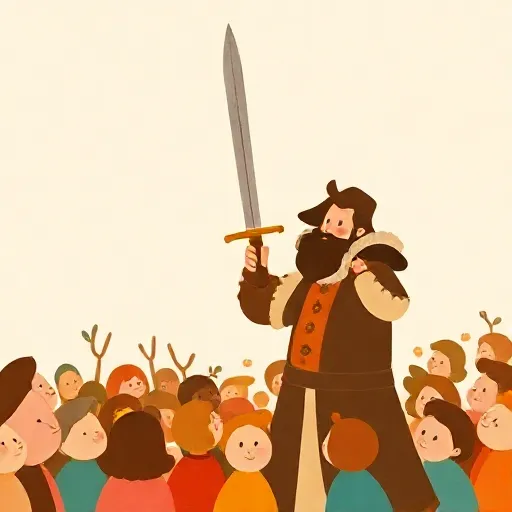
Hobbes had argued that people are naturally selfish and fearful, so they must hand over all their power to a single absolute ruler — a Leviathan — in a one‑way contract. Once they do, they cannot take it back. Macaulay found this absurd. A contract, she said, requires at least two parties. If one side (the people) disappears as a unified actor, as Hobbes suggested, the contract is void. A real social contract must be between the people and the government, and the people retain the right to judge whether the ruler upholds their end. If the ruler becomes a tyrant, the people can end the contract — exactly as the English Parliament had done when it executed King Charles I in 1649, which Macaulay defended.
She sketched her own design for a democratical republic in a letter to a Corsican independence leader. The government would have two houses: a small senate to propose laws, and a large house of representatives, elected by the people, to accept or reject them. Terms would be short, rotation strict, and wealth would be balanced by dividing estates equally — she even proposed rules to prevent huge fortunes from corrupting the system. Macaulay was convinced that inequality poisons virtue; both the poor who depend on the rich and the rich who grow arrogant lose the habits needed for a free state.
Custom Is Not a God: The Battle with Hume and Burke
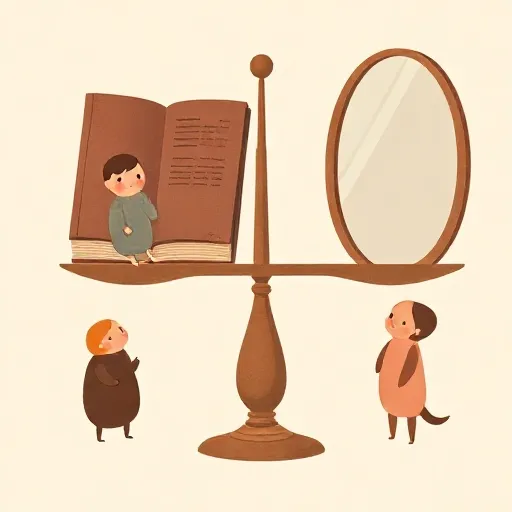
Not everyone agreed that justice was rooted in eternal truths. David Hume (1711–1776), a hugely influential Scottish philosopher, argued that justice and government are human conventions — useful rules we invent to get along, like the rules of a game. If a constitution works and is long established, then rebelling against it is foolish and dangerous. Hume even called the execution of Charles I a tragic mistake made by fanatics.
Macaulay saw a huge problem. If all governments established by custom are legitimate, then any reform is automatically guilty — because changing an old custom means opposing “authority.” She wrote to Hume that his position “involves all reformers in unavoidable guilt, since opposition to established error must needs be opposition to authority.” For her, the slave who resists an ancient custom of slavery is not a troublemaker but a defender of real justice.
Later, Edmund Burke (1729–1797) made a similar argument using tradition. He claimed that English rights were an inheritance from forefathers, not abstract principles. Macaulay shot back: if our rights are just the “alms of our princes,” a future king could just as easily revoke them. Real rights must stand on something firmer — the universal rights of man, which every person possesses by nature. In her last book, she drove the point home: either some person has an inherent right to rule, or the authority rests entirely in the will of the people. Since the old doctrine of divine kings was dead, the only option left was the people.
Equality in the Classroom and the World
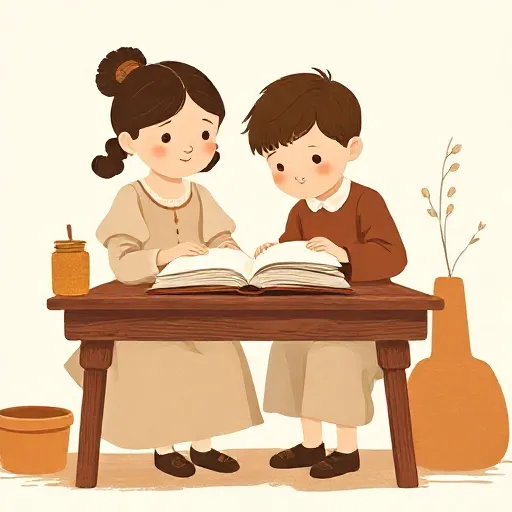
Macaulay did not stop at politics. She believed that if morality is knowable by reason, then every human being capable of reason — male or female — can be virtuous. So she recommended that boys and girls be educated together and follow the same demanding curriculum: Latin, Greek, philosophy, and history. She ridiculed the idea, popularized by Jean‑Jacques Rousseau (1712–1778), that girls should be trained only to please men. Against his claim that men and women are fundamentally different in character, she insisted that differences we see are mostly the result of education. She even flipped a line by the poet Alexander Pope: “A perfect man is a woman formed after a courser mold.”
While her early political writings said little directly about women, her philosophical treatises made clear that subjecting women to the arbitrary power of men was a violation of justice. She argued that it could not be the design of a wise Creator to create two intelligent beings and then hand one over as property to the other. Her ideas directly inspired Mary Wollstonecraft (1759–1797), whose famous book A Vindication of the Rights of Woman extended Macaulay’s critique of inequality in education and marriage. Macaulay’s choice to use gender‑neutral language when demanding “a fair and equal representation of the whole people” was no accident.
Why This Still Matters (or: Do You Have Rights Without Reason?)

Catharine Macaulay visited America in the 1780s and met George Washington. She corresponded with John Adams and other founders, sharing her conviction that the new republic must guard against the return of aristocratic wealth and corruption. She was thrilled by the French Revolution but worried that the American Constitution did not do enough to prevent inequality from swallowing liberty. In many ways, the tensions she pointed to are still with us.
Do your rights depend on what your community has always done, or are there principles of fairness that stand above any tradition? If a custom is old but unjust, does its age make it respectable? Macaulay’s entire life was a bet that reason, not habit, is the real foundation of freedom. She was a living challenge to the idea that things must stay as they are because they have been so. And her insistence that women are just as capable of reason as men helped open doors that we are still widening today.
Think about it
- If a country’s oldest traditions say that only men can hold political power, does that make the rule fair? Why or why not?
- Macaulay thought education could teach people to be virtuous enough to govern themselves. Do you think goodness can be taught, or is it just part of who you are?
- If every government is just a set of customs we invented, how can we ever say that a law is morally wrong?