Who Gets to Tell You What to Do? John Stuart Mill’s Answer
The Boy Who Learned Everything — and Still Felt Empty

Imagine knowing Greek at three, Latin at eight, and most of the world’s great books by the time you’re twelve. That was the childhood of John Stuart Mill (1806–1873). His father, James Mill, a close friend of the philosopher Jeremy Bentham, designed an education meant to create a perfect reasoning machine. No fairy tales, no rough‑and‑tumble play — just logic, history, science, and endless memorization.
The plan worked. Mill became a brilliant thinker. But when he turned twenty, something inside him snapped. He asked himself: “Suppose that all your objects in life were realized; that all the changes in institutions and opinions which you are looking forward to, could be completely effected at this very instant: would this be a great joy and happiness to you?” And an honest voice inside answered “No!” He couldn’t find a reason to go on. This mental crisis shook him deeply. He had been trained to analyse facts, but he hadn’t been taught how to feel.
He recovered only when he discovered the poetry of William Wordsworth and other Romantic writers. They showed him that a good life isn’t just about cold logic — it’s about emotion, beauty, and personal growth. Later, Mill fell in love with Harriet Taylor, a remarkable thinker who became his closest collaborator. Together they worked on ideas that would shape the modern world. Out of his breakdown came a burning question: what kind of society actually helps human beings flourish?
Happiness Is the Only Thing That Matters — But What Kind?
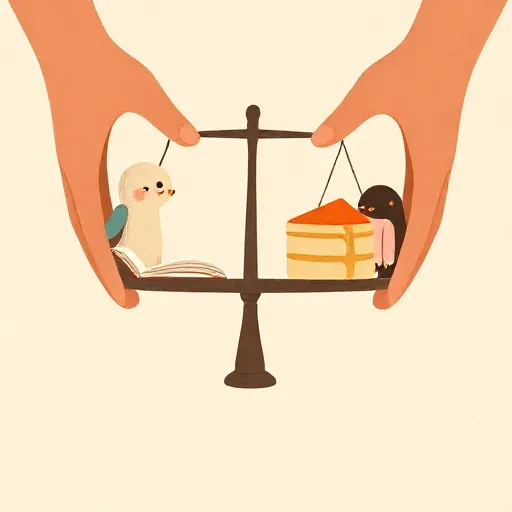
Mill’s answer started with a claim about what is ultimately good. He called it the principle of utility: actions are right if they tend to promote happiness, wrong if they tend to produce the reverse. By happiness he meant pleasure and the absence of pain. That sounds simple, but he gave it a twist.
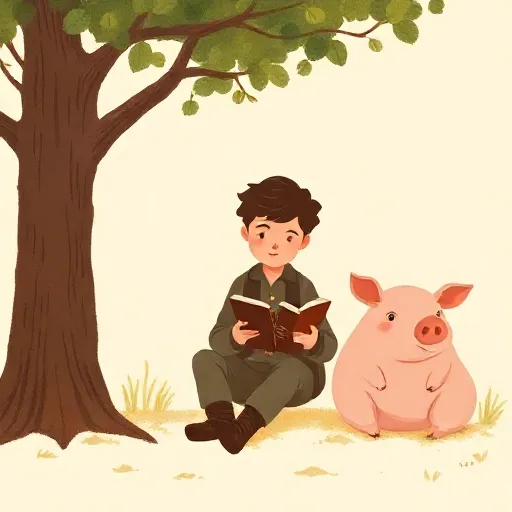
Earlier utilitarians, like Bentham, treated all pleasures as equal — a push‑pin game was as good as poetry if it gave you the same amount of enjoyment. Mill disagreed fiercely. He argued that some pleasures are higher in quality than others. Pleasures of the mind — reading, thinking, creating, loving — are more valuable than mere physical pleasures, even if the bodily ones feel stronger in the moment. If you’ve experienced both, Mill said, you almost always prefer the higher one. A satisfied pig might have plenty of pleasure, but a human being who reads Shakespeare, even if frustrated, is living a richer life.
This matters because if happiness is the ultimate goal, liberty isn’t just about letting people do what pleases them in the moment. It’s about giving them space to grow into the kind of person who can enjoy the higher pleasures. That takes freedom.
The Very Simple Principle: Your Freedom Ends Where Harm Begins
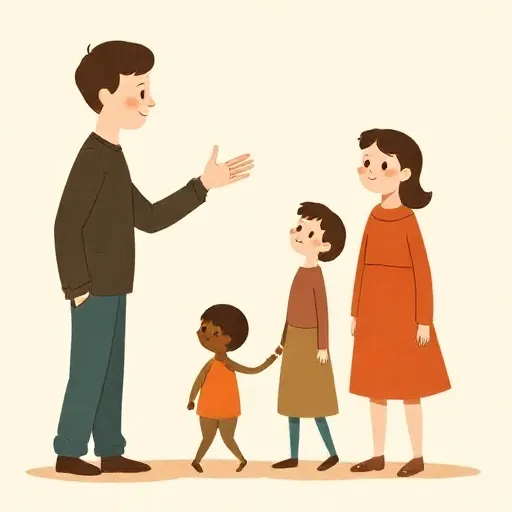
Mill’s most famous idea is the harm principle, laid out in his book On Liberty (1859). He put it like this: the only reason you can rightfully force someone to do something — or stop them from doing it — is to prevent harm to others. You can’t interfere just because you think their choice is foolish, immoral, or unhealthy. Not even if you’re convinced you know what’s best for them.
Notice the crucial word: harm. This doesn’t mean “offend” or “annoy.” Mill meant real damage to another person’s interests — violating a distinct obligation you owe them. So if a person drinks so much that they can’t support their family, that’s harm. But if they drink in private and upset their neighbours without breaking any specific duty, that’s their own business.
This principle sounds neat, but it leads to some hot debates. Should you be allowed to refuse a life‑saving vaccine? Can you shout an insult in a crowded theatre? Mill’s answer depends on whether your action truly endangers others — and that question isn’t always clear.
Why You Can Never Shut Someone Up — Even If They’re Clearly Wrong
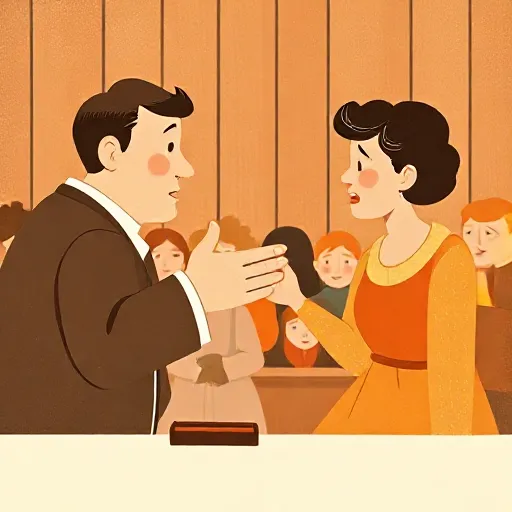
One area where Mill was absolutely uncompromising was freedom of thought and speech. He gave a powerful argument that has echoed ever since. Suppose someone wants to express an opinion, P. That opinion must be either true, false, or partly true. In every single case, suppressing it damages the search for truth.
If P is true, silencing it stops you from discovering something important. And to assume you know it’s false is to pretend you’re infallible — something Mill, as an empiricist, refused. He believed all knowledge comes from observation and experience, not from a built‑in inner light. So we always have to stay open to being corrected.
If P is false, letting it be spoken still helps. When a false view clashes with a true one, the clash forces people to think, re‑examine their reasons, and hold the truth as a “living” belief rather than a dead slogan. Without this challenge, even true ideas become hollow words we repeat without understanding.
If P is partly true — which Mill thought was the most common case — then both sides hold pieces of a larger puzzle. Only by freely combining conflicting viewpoints can we get closer to the whole picture. For complex topics like politics and morality, the truth is almost never owned by just one person. Silencing an opponent cuts off a bit of that truth.
Be a Tree, Not a Machine
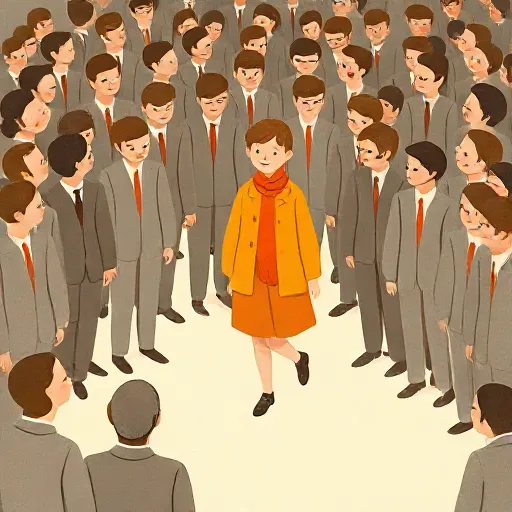
Freedom of speech wasn’t enough for Mill. He also demanded individuality — the freedom to develop your own character and choose your own way of living. He feared that in modern democratic societies, the pressure to fit in would crush human originality. A mass of people thinking alike is a quiet tyrant, he warned, more dangerous than any king.
Mill didn’t just want eccentricity for its own sake. He argued that when individuals are free to try out different “experiments of living,” everyone benefits. A society full of varied, interesting people is more inventive and more resilient. It adapts. Without this diversity, a country can fall into what he called “Chinese stationariness” — stuck in a rigid custom that smothers progress.
Notice the deep shift here: happiness isn’t just having pleasant feelings. It’s becoming a certain kind of person — someone who is active, curious, self‑directed. Mill thought this Greek ideal of self‑development had been pushed aside by rules that told people to obey rather than grow. The point of liberty is not to do whatever impulse strikes, but to give you the space to become fully yourself.
When Your Freedom Runs Into Mine
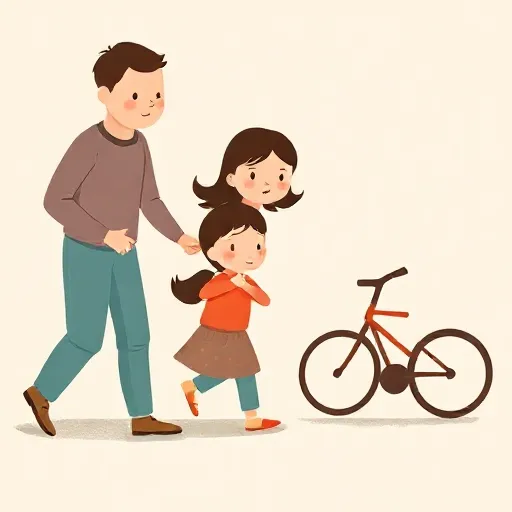
Mill’s harm principle sounds absolute, but he knew real life is messy. Hardly any act affects only the doer. So he drew a sharp line: you can step in only when someone violates “a distinct and assignable obligation” to a specific person. Gossiping about a neighbour is unkind, maybe, but unless it breaks a promise or a legal duty, it shouldn’t be silenced by force. Social pressure, though — refusing to invite someone to dinner, express a poor opinion of their character — is perfectly allowed. Mill just said you shouldn’t parade your avoidance to humiliate them.
This logic drove Mill’s personal crusades. He saw that the law of his time treated married women like property, denying them the vote, education, and even the right to their own earnings. That, he argued, was a massive harm — not only to women but to everyone, because it warped the character of both men and women. Along with Harriet Taylor, he fought for women’s equality as an urgent part of the liberty project. No one, he insisted, is born to obey.
Why Mill’s Fight Is Still Yours
So why does a Victorian philosopher matter to you today? Every time you scroll past a banned account, argue about a school dress code, or wonder whether the government should tell you what to eat, you’re stepping into a debate Mill helped define. Should a platform remove hate speech, or does even offensive talk make truth stronger? Is it okay to require helmets, or does that treat you like a child who can’t decide for yourself?
Mill wouldn’t give a one‑word answer. He would ask: does the speech directly threaten someone’s safety? Does the rule protect you, or does it just force you to live someone else’s idea of a good life? He’d nudge you to be suspicious of anyone who — out of pure certainty — tries to shut down a conversation. The world is complicated, he’d say, and your own mind is your most precious tool. Protect the freedom to use it.
Think about it
- If a classmate holds an opinion you know is harmful and wrong, should you argue with them in public, or would it be better to shut down the discussion? Why?
- Imagine a law that bans eating junk food to keep everyone healthy. Would Mill support it? What questions would help you decide?
- When you change a habit because friends mock you, are you still making a free choice, or is that social pressure a form of control?