
Can You Make Politicians Care About the People? James Mill's Wild Idea
The Bet That Backfired

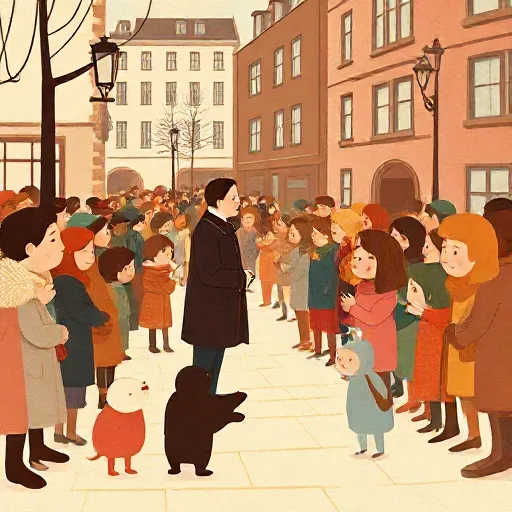
In 1806, just after his son John was born, James Mill (1773–1836) made a daring bet. He challenged a rich Scottish baronet to a “fair race” to see who could raise the most “accomplished & virtuous young man.” Mill promised that by the time John turned twenty, his strict training in languages, history, and philosophy would beat any upbringing money could buy. But the race came at a terrible cost. John later remembered that he “grew up in the absence of love and in the presence of fear.” By his early twenties, he crashed into a deep depression, questioning everything his father had taught him.
Yet James Mill wasn’t just a harsh father. He was a radical political thinker who believed that all human beings—from kings to common voters—are driven by one thing: self-interest. And if that was true, he thought, the whole business of government needed a complete redesign. His ideas sparked a furious debate that still echoes in politics and psychology today.
Self-Interest: The Engine of Government

Mill teamed up with Jeremy Bentham (1748–1832), the founder of utilitarianism—the view that the right action is whatever produces the most pleasure and the least pain for everyone. Bentham coined the words “maximize” and “minimize” to describe this. Mill agreed, but with a colder twist. He argued that every person, by nature, tries to get as much happiness as they can with the least possible work. And because labor is unpleasant, people will happily live off the labor of others if they can get away with it.
So the central problem of politics, Mill said, is this: how do you stop some people from stealing the fruits of other people’s effort? Government exists to protect everyone’s happiness by preventing that exploitation. But the government itself is made of people, who are just as self-interested as anyone else. If you give a king all the power, he’ll exploit his subjects. If you hand power to a small group of aristocrats, they’ll squeeze the common people. Even a direct democracy—where everybody votes on every decision—would fail, because citizens would spend so much time governing that they’d have no time for productive work.
Mill’s solution was representative democracy: citizens elect a few people to make laws on their behalf. But that just raises a new problem. How can you make sure those representatives don’t just serve themselves once they’re in office?
Who Should Hold the Map? The Middle Rank and a Fatal Flaw

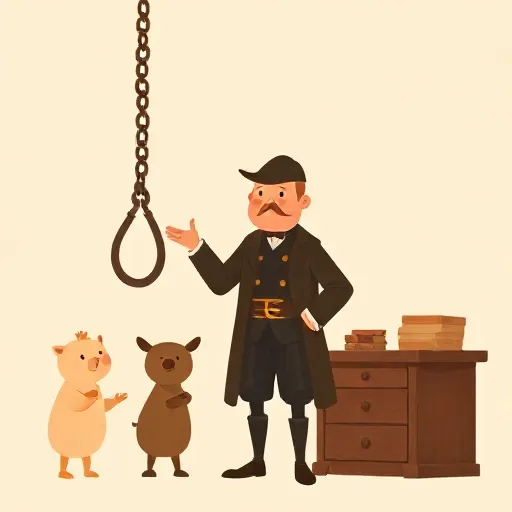
Mill’s answer was elegant and mechanical. If elections happen frequently and terms are short, representatives know they’ll soon return to being ordinary citizens. If they’ve made life worse for the voters, they’ll suffer the consequences themselves. This creates an identity of interests: what’s good for the voters becomes good for the representatives. The system runs on self-interest, not on hope that politicians are angels.
But not everyone was equally capable of judging their own interests, Mill thought. He placed his faith in what he called the middle rank—people from all walks of life who had educated themselves, who were public-spirited, and who weren’t born into aristocratic power. This group, he believed, would guide society wisely. It was an early version of a meritocracy: rule by those with talent and virtue, not birth.
Then Mill made a move that even his son later called “the worst paragraph he ever wrote.” He argued that women and young men under forty didn’t need the vote, because their interests were already represented by their fathers or husbands. The critic William Thompson pounced: if every person is the best judge of their own interests, how can you exclude half the human race? By Mill’s own logic, leaving women voiceless gave men unchecked power over them—exactly the kind of exploitation his system was meant to prevent. The contradiction was glaring, and Mill never fully resolved it.
Macaulay’s Challenge: Can You Prove Self-Interest Rules Everything?
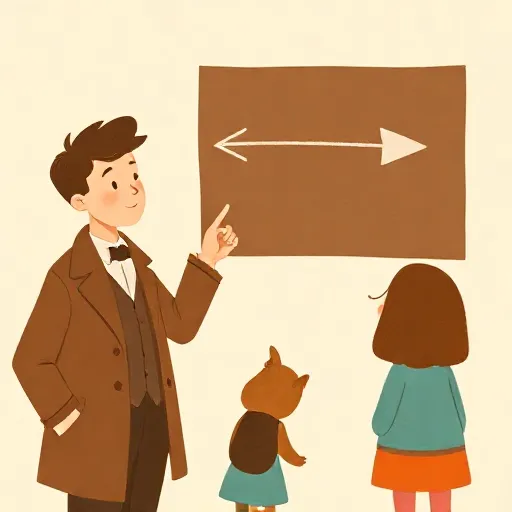
Mill’s biggest intellectual rival was the young historian and politician Thomas Babington Macaulay (1800–1859). Macaulay attacked Mill’s entire method. Mill claimed that all political reasoning must start from a simple, undeniable truth: that humans always act out of self-interest. From that one axiom, he deduced that representative democracy is the only good government.
Macaulay retorted that this “law” is either trivially true (if you define “self-interest” as whatever someone wants, the claim is circular) or plainly false (people act out of love, habit, spite, or a sense of duty all the time). Instead of spinning theories from a single thin thread, Macaulay insisted, we should study actual history and experience—an inductive method, gathering facts before building a theory. Mill’s deductive shortcut, he said, was just a “sophism” dressed up as science.
The quarrel wasn’t just about representation; it was a battle over how we can ever know anything about politics. Mill thought that simplifying was the whole point of theory. Macaulay shot back that there is a huge difference between simplifying and oversimplifying. That argument never went away.
Why James Mill Still Matters

In many ways, Mill’s ghost haunts modern political science. When economists and political theorists assume that voters, politicians, and bureaucrats all act out of self-interest, they are following in Mill’s footsteps. The idea of designing institutions so that selfish behavior accidentally produces public good is at the heart of everything from anti-corruption rules to school honor codes.
But Mill was never satisfied with just explaining the world; he wanted to change it. He believed that education could reshape people’s characters, training them to associate the happiness of others with their own. Yet the story of his own son suggests how tricky that project can be. John Stuart Mill broke free of his father’s emotional rigidity, while still arguing for many of the same political principles—but with a much bigger space for liberty, poetry, and feeling.
James Mill leaves us with a tough question: can you build a decent society out of self-interested people, or do you also need to cultivate genuine care for others? Next time you design a class election system, or think about how a school should be run, you’re still walking the same tightrope he walked two centuries ago.
Think about it
- If everyone in a school club is only looking out for themselves, can you create rules that make the club fair for everyone? Or does fairness always require at least some people to think about the group first?
- Mill believed that women’s interests were “included in” those of their fathers or husbands. Can you think of a situation today where someone’s interests are still assumed to match someone else’s—and what harm might that do?
- If a smart psychologist could prove that every single decision you make is driven by self-interest, would that change how you think about right and wrong? Why or why not?