Are You the Author of Your Own Life? F. H. Bradley’s Surprising Answer
The Life of an Oyster? Why Bradley Rejected Simple Pleasure
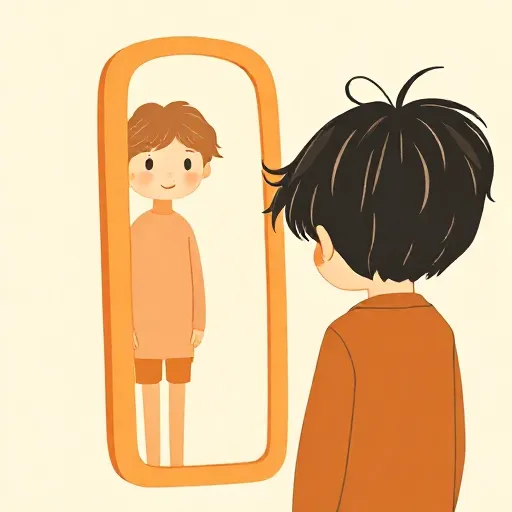
Imagine staring into a bathroom mirror. On one side, the usual Wednesday‑morning you: messy hair, tired eyes. On the other, a daydream flickers — a future self who is confident, kind, maybe a scientist or a musician. Which “you” is the real one? F. H. Bradley (1846–1924), a British philosopher writing in the 1870s, believed this tug‑of‑war between who you are and who you could become sits at the very center of morality.
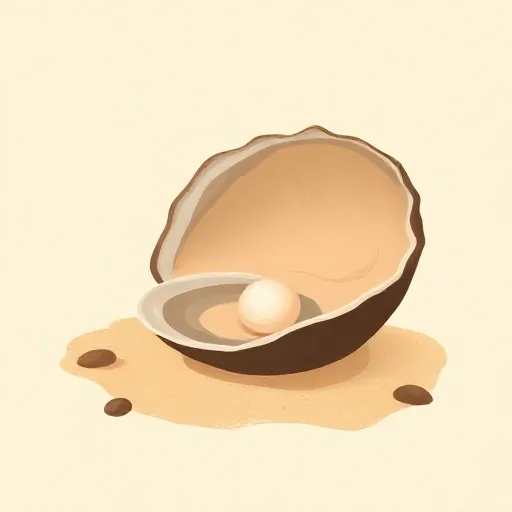
Bradley rejected the idea that being good is just about feeling happy. He famously said you should not lead “the life of an oyster” — floating through life, soaking up pleasant sensations, but never building anything of larger worth. At the time, the most popular moral theory was utilitarianism, championed by John Stuart Mill (1806–1873). It claimed the right action is the one that produces the most pleasure and the least pain. Bradley attacked this view head‑on. He argued that pleasures are like a “perishing series” — each fades as soon as it’s over, so you cannot meaningfully add them up into a best life. And if you try to rank pleasures as “higher” and “lower”, you need a measuring stick that is not itself pleasure — which, Bradley insisted, shows you have already given up on pleasure being the final goal. Something else must drive moral life, something more solid than passing feelings.
You Chose That? The Free Will Tangle
To find that something, Bradley turned to an everyday puzzle about choice. Most people, he noticed, feel sure they can freely initiate actions — you decide to raise your hand, and up it goes. This ordinary view also assumes that a person’s character allows others to predict what they might do: a reliable friend can be counted on to keep a promise. But two big philosophical theories, determinism and indeterminism, contradict this common‑sense picture, and Bradley showed that neither can make sense of moral life.
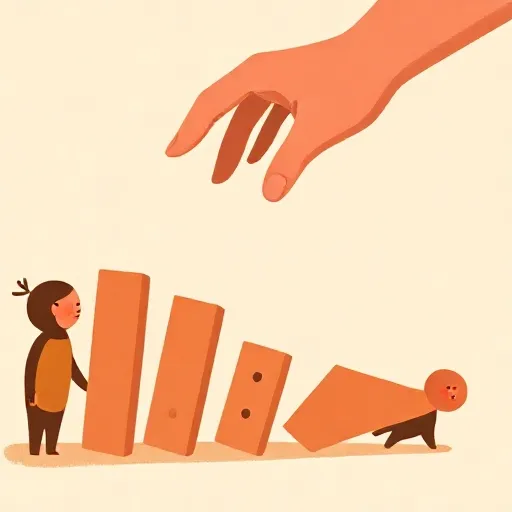
Determinism says every event, including your choices, has a prior cause pushing it along like falling dominoes. If your decision to help a friend was already fixed by events before you were born, then you aren’t really the author of your actions. Indeterminism tries to rescue freedom by claiming that nothing fully determines your choices — they are, in some sense, random. But randomness destroys the connection between your character and your actions: a person who acts purely by chance can’t be trusted to be kind tomorrow just because they were kind today. Both views, Bradley argued, make moral responsibility impossible because they cannot account for the moral self — a self that acts for reasons, has a settled character, and can genuinely own its deeds. Without that self, blame, praise, and even the idea of trying to be a better person fall apart.
Your Life as a Work in Progress

If morality depends on a self that is both free and stable, what kind of self should we try to become? Bradley’s answer is captured in one word: self‑realization. He didn’t mean simply “be yourself” in any casual way. He meant that your moral task, from the day you start reflecting on your life, is to shape yourself into a coherent, whole person — a project. You are not a random pile of desires and actions; you are, or can become, a unified story.
This idea shows up in the way Bradley thought about desire. A standing desire is a long‑term commitment to something you value — say, learning to play the piano or being a trustworthy friend. An occurring desire, by contrast, pops up when an object is right in front of you, like wanting a cookie when you see one. Standing desires give your life shape. They turn scattered moments into a consistent plot. Bradley said that when you act on such lasting commitments, you “realize” yourself; you make yourself more fully the person you are trying to be.
But there is a catch. You can develop standing desires for good things, but you can just as easily harden into bad habits. A bully, after all, may have an extremely stable character. So what makes a desire worth building your life around?
Who You Are Is What You Desire
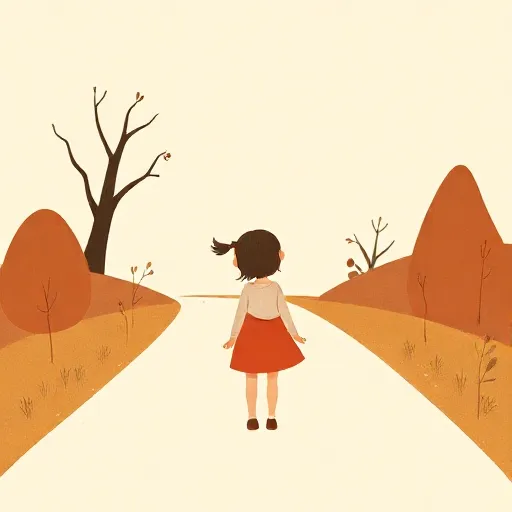
Bradley gave desire a starring role. He did not see desire as a blind push or a mere craving for pleasure. Instead, he described it as a kind of inner story. When you desire to become a more patient person, you picture a future self who is patient, and you feel a painful gap — a “felt contradiction” — between that image and the person you currently are. The tension hurts, and it moves you to act. In that sense, every genuine desire is really a desire for a particular future state of yourself. Even when you want something for someone else — your sibling’s happiness, for example — you are picturing yourself as the kind of person who has a thriving, joyful sibling. Your desires show what you identify with, what you are willing to make part of your own life story.
This is why Bradley made the startling claim that you can only ever aim at yourself. He didn’t mean you are selfish. He meant that your entire structure of wanting, choosing, and acting cannot help but build a self. Every choice you make is a brushstroke on the portrait of who you are becoming. The question isn’t whether you will realize a self — you will, whether you notice it or not — but whether you will take active control of which self that is.
Why Your Social Role Isn’t Enough: Ideal Morality

Many readers thought Bradley’s answer was simply “Do your social duty” — what he called my station and its duties. A student should study, a citizen should obey the law, and that’s it. But Bradley explicitly rejected this idea. He argued that a person cannot take their morality straight from whatever their community happens to value. A society can be “confused or rotten”; slave‑holding societies and corrupt states prove that what is legally or socially expected is not automatically right. You need a standard that stands outside any particular time and place.
That standard is the Moral Ideal. Unlike a printed rulebook, the Moral Ideal is a concrete‑universal. That means it isn’t a fuzzy, empty slogan floating above real life; it only exists inside the specific commitments, relationships, and aspirations of a particular person. Bradley grouped worthy commitments into three big piles: duties to other people through the social roles we really do have (your role as a daughter, a teammate, a friend); duties to humanity simply because other people are human; and non‑social goods — the pursuit of truth and beauty, such as science or art. Your own Moral Ideal is the particular shape those commitments take in your life. It acts like a compass, telling you not “Do this exact action,” but “Be the kind of person who genuinely cares about these things.”
The process never ends. Because the gap between your real self and your ideal self can never fully close within a single life, morality is an ongoing, genuine struggle. Bradley put this vividly: when you fight your own bad tendencies, “it is at my own breast that I lay my lance in rest.” You are always becoming, never finished.
What This Means for You

Bradley’s ideas can sound abstract, but they touch a question every twelve‑year‑old already asks: “What do I want to be when I grow up?” He would say the real question is deeper — not just a job title, but what kind of person you aim to become. The answer isn’t written down in society’s expectations, and it can’t be found by chasing one pleasure after another. It takes shape slowly, as you figure out which commitments are worth building your life around, and then do the daily work of aligning your choices with those commitments.
Bradley also drew a line between morality and other parts of life. He thought that morality itself aims at its own end: if the ideal self were ever completely real, there would be no more moral struggle. Religion, for him, steps in where morality stops — it is about believing that the ideal is already somehow real in a larger whole. But right here, in the thick of ordinary Monday mornings and tough decisions, morality is the steady, quiet effort to become more coherent, more whole, and more your best self. That project is yours alone to design.
Think about it
- If you could choose any version of yourself to become in ten years, what would that person be like? How would you decide?
- Is it possible to be a genuinely good person while ignoring what your community expects of you?
- Bradley thought you can never fully become your ideal self — the gap never closes. Does that make the effort more meaningful, or just frustrating?