Is It Really Your Choice? When Oppression Sneaks Inside Your Head
The Wife Who Always Said Yes: Is That a Choice?
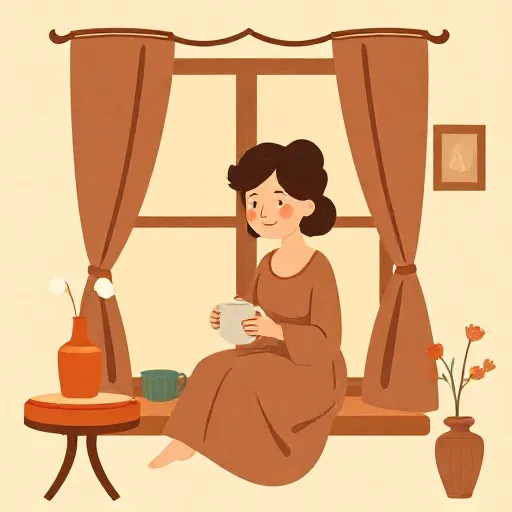
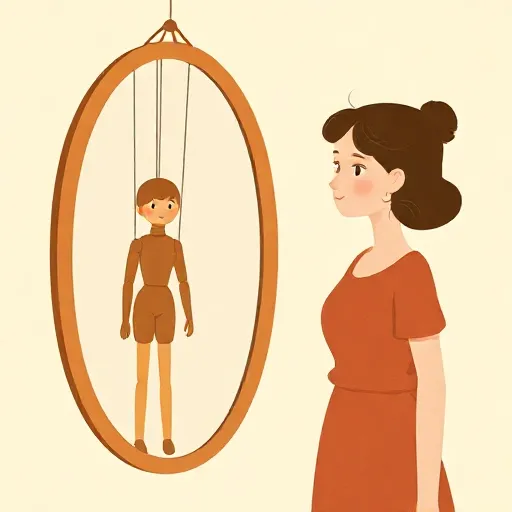
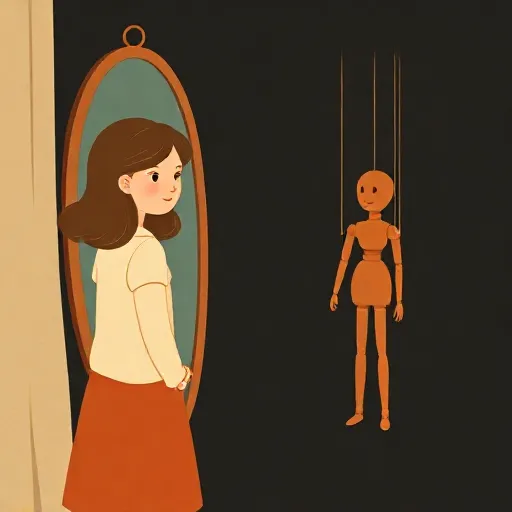
In 1942, the writer Virginia Woolf described a woman so devoted to others that she “sacrificed herself daily. If there was chicken, she took the leg; if there was a draught, she sat in it.” Woolf called her the Angel in the House. Later, the philosopher Thomas Hill gave us the Deferential Wife: she wears the clothes her husband prefers, moves cities for his job, and puts his wishes before her own so completely that she hardly forms her own desires. Many people would say she isn’t making free choices — she’s just following a script written by a society that expects women to serve. But what if she genuinely wants to live that way? Can a person freely choose to be less free?
The great thinker Immanuel Kant (1724–1804) claimed that true freedom — autonomy — means making your own moral law. To be autonomous, you must act on principles you give yourself, not on wishes that just pop up from your situation. For Kant, an autonomous will is a pure, self-ruling will, untouched by personal desires. In the 20th century, John Rawls (1921–2002) took a similar line: he imagined free and equal people designing a fair society from behind a veil of ignorance, where nobody knows their own talents or place. The idea was that if you don’t know who you’ll be, you’ll make rules that are fair — and those rules will really be your own.
Many feminist philosophers pushed back. They argued that this picture of the autonomous person as a fully independent, self-sufficient individual — the “self-made man” — ignores something crucial. Human beings are not atoms floating in empty space. We grow up in families, depend on friends, and are shaped by cultures. If autonomy means cutting yourself off from those ties, it seems to leave women out, because caring for others and being connected have often been central to women’s lives. So feminists set out to rebuild the idea of autonomy in a relational way. Relational autonomy says that your ability to govern your own life is deeply tied to the people and society around you. To see why this matters, let’s examine three hard cases where domination seems to have slipped inside someone’s own mind.
The Fox and the Sour Grapes: When Your Mind Rewrites Your Desires

Imagine a fox that desperately wants some juicy grapes, only to find them hanging just out of reach. Eventually, the fox decides the grapes are probably sour anyway and walks away. The philosopher Jon Elster (born 1940) used this old fable to name a powerful process: adaptive preference formation. Without realizing it, you change what you want to fit what seems possible, just to avoid the pain of wanting something you can’t have. Elster called it a blind mental trick that works “behind the back” of the person.
Now think about what happens when this trick is running in an unjust society. Martha Nussbaum (born 1947) tells the story of Vasanti, a poor working woman in India whose husband beats her. Vasanti doesn’t see the abuse as a reason to leave; she says it’s just “part of women’s lot in life.” She has adapted her preferences to a world where she has little power. In a different example, Paul Benson describes an eighteen-year-old student who spends hours trying to straighten her hair, perfect her makeup, and reshape her body. She feels terrible about herself because she doesn’t have “the right look.” She has taken in society’s harsh beauty standards so deeply that they now feel like her own goals. These are often called deformed desires — desires that point you toward things that actually hurt you, because you’ve swallowed an oppressive ideology.
Are such preferences really your own? Many philosophers say no: adaptive preferences seem “paradigmatically nonautonomous.” But others urge caution. Marilyn Friedman, for instance, points out that a woman who stays in an abusive relationship might, after careful reflection, rank other values — religious commitment, family loyalty — above her own safety. On Friedman’s view, if she critically reflects and endorses her choice, it could still count as autonomous. That doesn’t mean the choice is good or wise — only that it can be genuinely hers. So the same case can divide thoughtful feminists.
Choosing the Veil, Cutting the Body: Freedom or Pressure?

Sometimes women actively choose practices that limit their own freedom or even cause physical harm. Uma Narayan describes the Sufi Pirzadi, a community of Muslim women in India who live in purdah — seclusion inside the home and veiling in public. These women know that purdah restricts their education and makes them dependent on men. But they also see it as a sign of “womanly modesty” and a mark of high status among other Muslim women. They are not passive victims; they are proud defenders of their way of life.
An even sharper debate surrounds female genital cutting, a practice that some cultures require for girls. Diana Meyers argues that we cannot simply declare that all women who comply are brainwashed dupes of patriarchy. Some women, she says, conclude that cultural tradition or marriage and motherhood matter more to them than bodily integrity. Before we rush to call such choices automatically nonautonomous, Meyers thinks we would need far more evidence than we usually have. Yet other philosophers disagree. Marina Oshana insists that when external conditions are so tight that you have no real power over your own life, autonomy is already crushed — regardless of what you say you want. This sets the stage for a deeper philosophical fight: is autonomy mainly about what happens in your head, or is it also about what is happening in the world around you?
The Inner Work: Reflection, Self‑Trust, and Answering to Others

Many relational thinkers try to solve the puzzle by looking closely at how a choice comes about. The most widely used approach is called procedural or content‑neutral. On this view, a desire is autonomous if you go through a process of critical reflection and then wholeheartedly endorse it — no matter what the desire is. Marilyn Friedman and Diana Meyers each develop such a view. Meyers describes an “autonomy competency” made up of skills like self‑discovery, self‑definition and self‑direction. Autonomous people, she says, are always working to become their authentic selves through reflection, imagination, and action.
The appeal for feminists is that procedural accounts are content‑neutral: they don’t force you to want the “right” things. A woman who chooses a life of care and dependency can be just as autonomous as one who prizes independence. But critics spot a trouble. If oppressive norms are baked into a person’s thinking from childhood, she might reflect deeply and still wholeheartedly embrace subservience. Her very sense of who she is may have been shaped by those norms. So some philosophers argue that a process of reflection isn’t enough — certain feelings about yourself are also required.
Trudy Govier and Carolyn McLeod argue that you cannot be autonomous without self‑trust. If you have been told over and over that your thoughts don’t count, you may stop trusting your own judgment. Govier points to victims of sexual assault who blame themselves and lose their sense of competence. McLeod describes women whose grief after a miscarriage is dismissed by others, chipping away at their confidence in their own emotions. In such a state, even careful reflection can be twisted by a broken sense of worth.
A third family of views, called dialogical accounts, shifts the focus again. Andrea Westlund says that autonomy is not just about what goes on inside you; it’s about being willing to answer for your commitments when others question them. An autonomous person treats herself as someone who can be challenged and must give reasons. The Deferential Wife, Westlund suggests, might fail this test: she may simply absorb her husband’s reasons and never genuinely hold herself answerable to an outside perspective. Notice that all three of these approaches — procedural, self‑trust, and dialogical — are still relational. Each one sees your freedom as built through your connections with other people.
When the Outside World Takes Away Your Control
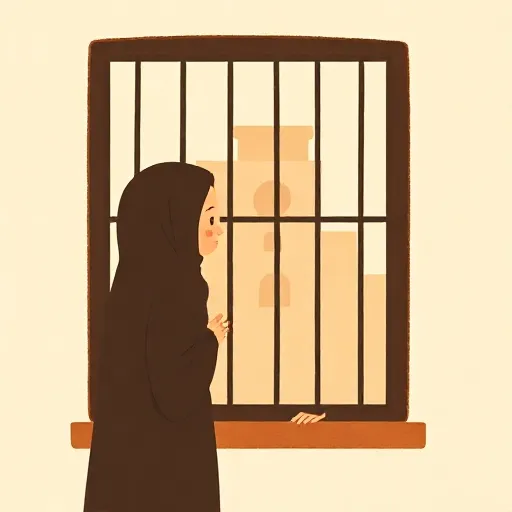
Marina Oshana pushes the relational idea much further. On her social‑relational theory, autonomy is not first and foremost a psychological state at all. It is a matter of having de facto power — actual, real‑world control — over the big choices that shape your life. Oshana asks us to imagine “Taliban Woman,” who cannot work, has no legal custody of her children, cannot travel without a male relative, and must wear a burqa. Even if she were to endorse all these rules with total conviction, Oshana argues, she would still lack autonomy. Why? Because she lacks practical control. Her life is steered by the will of others, not her own.
On this view, the Deferential Wife is not autonomous because she is subservient, not because of what she wants. A prisoner who has just been freed, by contrast, becomes autonomous the moment he steps into a world where he can direct his own life — even if he secretly wishes he were back in his cell. That is a strong and controversial claim. Critics worry that such a view could be used to dismiss the voices of women who see themselves as making meaningful choices under hard conditions. Oshana’s reply is that real respect requires us to face the difference between genuinely free lives and ones that have been tightly fenced in from the outside.
The disagreement among these thinkers is not settled. Each theory captures something important, but none covers every hard case. What the debate makes clear is that oppression can work in sneaky ways — not just by locking doors, but by coloring your thoughts about who you are and what you are worth. The next time you find yourself wanting something — a certain look, a certain role — you might pause and ask: where did that wanting come from? Did you freely choose it, or did a hidden hand nudge you along? The feminist conversation about autonomy reminds us that real freedom is not just about feeling as though you choose; it is about whether your choice is really yours, in a world that is always whispering what you should become.
Think about it
- If someone grows up being told they are less valuable because of their gender, and they truly believe it, can we ever say they are choosing freely? Why or why not?
- Your friend insists she wants to give up her career to obey her partner. You suspect it is because her family always told her that is a woman’s role. Should you respect her choice or question it?
- Can a person who has very few real options still be considered autonomous? For example, imagine someone living in a strict community where every major decision is made for them.