Could a Law Be Natural? Hugo Grotius
The Prisoner in the Trunk

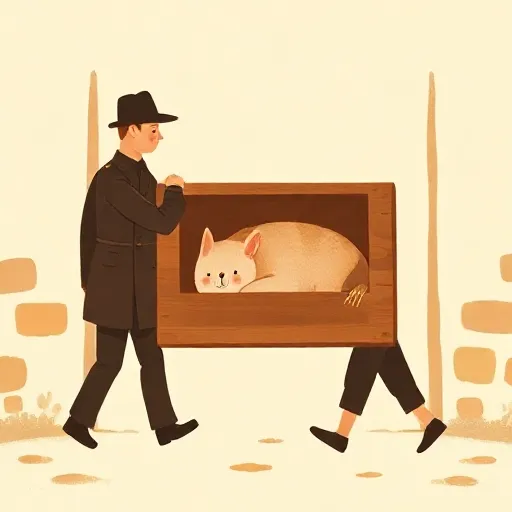
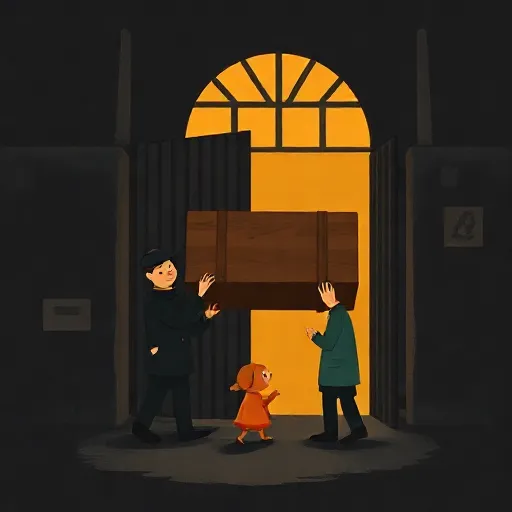
In the spring of 1621, two guards carried a heavy wooden trunk out of a fortress prison in the Netherlands. They believed it was full of books. Inside, curled up and barely breathing, was a man named Hugo Grotius (1583–1645). He was escaping a life sentence.
Grotius had not always been a prisoner. As a boy, he wrote poetry in Latin at age eight and entered university at eleven. By fifteen, he was impressing the king of France, who called him “the miracle of Holland.” Later he became a lawyer, a governor, and a diplomat. But a political and religious storm threw him into a cold, damp cell. The same man who once dined with princes now depended on a trunk and a clever wife to smuggle him to freedom.
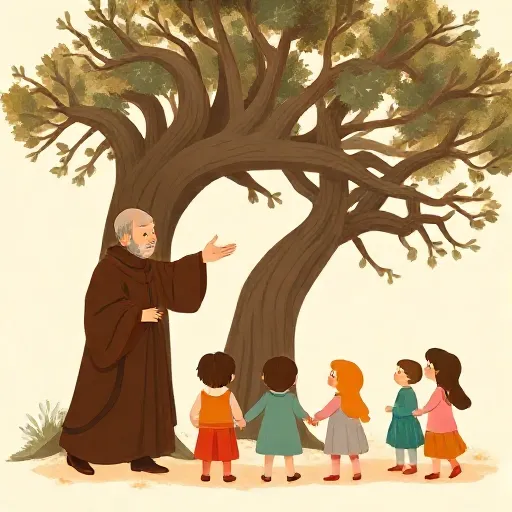
During his imprisonment, Grotius did not stop thinking. He composed huge works on law, rights, and war — books like Commentary on the Law of Prize and Booty and the even more famous On the Law of War and Peace. When he wrote, he filled the margins with citations from ancient poets, historians, and philosophers. To us, that might look like showing off. But Grotius had a reason: he wanted to prove that a certain set of rules had been recognized by wise people across centuries and continents. He thought that if everyone from Greek poets to Roman lawyers agreed about something, that agreement pointed to a natural law — a law nobody wrote down but everyone could discover.
Not everyone was impressed. The powerful French cardinal Richelieu once told him, “the weakest are always wrong in matters of state.” For Richelieu, laws between nations were just pretty words that lost to power. Grotius set out to prove otherwise.
A Law Written into Your Bones

What if some rules are not invented by governments or written in holy books, but are simply built into what it means to be human? That is the core idea of natural law, and Grotius spent his life developing it.
At first, he gave a familiar answer: law comes from God’s will. In an early work, he wrote, “What God has shown to be His Will, that is law.” But later, he changed his mind. In the introduction to On the Law of War and Peace, he made a daring move. He said that the basic rules of right and wrong would still hold “even if we should concede that which cannot be conceded without the utmost wickedness, that there is no God, or that the affairs of men are of no concern to him.” In other words, natural law does not depend on a divine lawgiver. Its source is closer to home.
Grotius looked at human beings and saw two deep drives in everyone: a desire to stay alive and a need to live with others. Those two drives — self-preservation and sociability — shape what natural law demands. We need other people, so we must not steal their belongings. We want to survive, so we have a right to pursue what genuinely serves our interests. Because we are rational creatures, we can figure out this balance by using our minds. As Grotius put it, “the mother of right — that is, of natural law — is human nature.”
From that root, Grotius derived a whole list of specific laws, such as: evil deeds must be corrected and good deeds must be recompensed. He believed these laws bind every person, no matter what religion they follow or what culture they belong to. A ruler in Paris and a farmer in a distant land are both bound by the same natural law, simply because they are human and can reason.
Rights You Can Trade Away
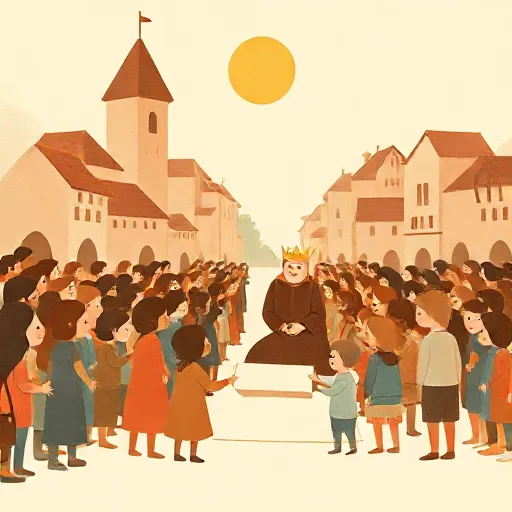
Grotius did not just talk about laws; he talked about rights. Before him, many thinkers used the word ius (the Latin term for right) to describe a situation that was just or correct — an objective state of affairs. Grotius turned the focus toward the person who holds a right. For him, a right is a “moral quality of a person, making it possible to have or to do something correctly.” It’s a power you possess, like a tool you own.
That shift had enormous consequences. If rights are like possessions, then maybe they can be given away or traded. Grotius thought so. He argued that a whole people could hand over their rights to a ruler. In exchange for safety and order, they might transfer the right to govern them entirely, keeping nothing for themselves. This became his explanation for how states get their authority: not directly from God and not simply from force, but from the countless small decisions of individuals pooling their powers together.
But can people really give away all their rights? Grotius said yes — and that unsettled later thinkers. He wrote that just as a person can sell themselves into private slavery, a people could surrender their liberty to a sovereign. Jean-Jacques Rousseau later accused Grotius of robbing the people of all their rights and handing them to kings. Other readers pointed to a tension in his thought: even though he recognized rights like self-defense, he seemed willing to let them be erased by a contract. And his views on slavery, which he thought could be justified if someone sold their liberty, strike many people today as deeply troubling. Grotius’s political legacy is genuine but uneven. He gave modern liberalism the idea of individual rights, yet he also opened the door to arguments for absolute rule.
War with a Rulebook
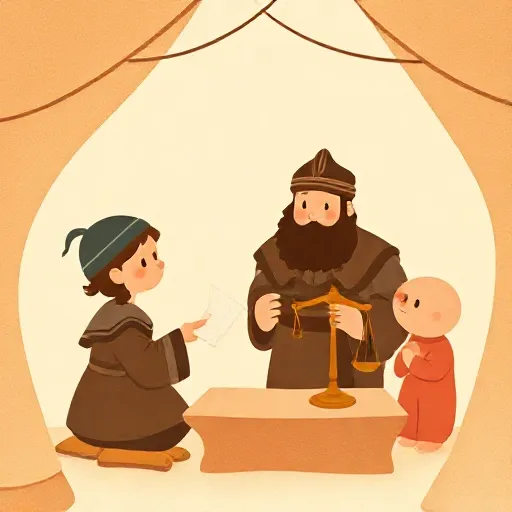
If natural law applies to everyone, it must apply even when nations fight. Grotius did not think war was a lawless free-for-all. He called war an instrument of right: it starts where courts fail. Some wars, he argued, are just — for example, wars of self-defense, wars to punish wrongdoers, or wars to recover stolen property. At the same time, he set limits. You do not have the right to defend yourself against an assailant who is “useful to many” — a principle that applies to both individuals and whole countries.
Once a war begins, the way you fight matters just as much as why you fight. This is the side of just war theory called ius in bello — right conduct during war. Grotius laid down rules: only actions truly necessary to win are permitted, and you must never target those who pose no threat. Then he sorted out a maze of trickier cases. For example, he carefully distinguished between lies, ruses, and falsehoods, splitting them into types and subtypes. Deceit by doing nothing is different from deceit by doing something, and even that second kind can be divided further. The idea sounds pedantic, but the goal was practical: to give soldiers and rulers clear guidelines in the chaos of battle.
The whole project rested on a conviction that force and right are not enemies. A war fought for the wrong reasons, or fought in the wrong way, was simply unjust — no matter how powerful the winner.
The Trunk Opens Wide
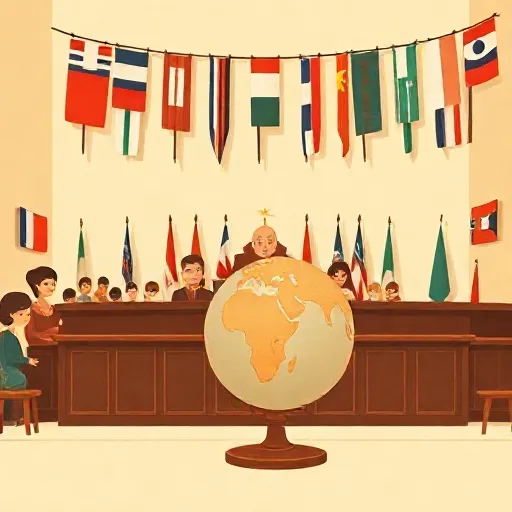
When Grotius died in 1645 after a shipwreck and a final exhausting journey, his reputation was still growing. The Swedish king Gustavus Adolphus supposedly kept a copy of On the Law of War and Peace under his pillow, next to the Bible. Thinkers like Leibniz, John Locke, and David Hume all wrestled with his ideas. Not everyone admired him — Voltaire found him boring, and some natural law theorists thought he was unoriginal — but his influence is beyond dispute. There is even a name for his approach to international relations: the Grotian tradition, which holds that states live in a society governed by norms, not just by naked power.
Why does that matter to you? When countries argue today about whether a war is legal, or who owns the fishing rights in a contested sea, they are stepping onto ground Grotius mapped. The rules that try to limit cruelty in conflict — the Geneva Conventions, for instance — are distant descendants of his careful lists of what is permissible in battle. And the idea that even the most powerful nation is not above the law? That is pure Grotius.
The man who escaped in a book trunk never got back to his home country. But his arguments did. They traveled farther than he ever could, and they are still being argued about in courtrooms today.
Think about it
- If you could trade away your freedom in exchange for perfect safety and a full stomach, would that be a fair deal? Who gets to decide?
- If every side in a war believes they are fighting for justice, how could we ever tell who is actually in the right?
- Grotius thought human reason could uncover one set of natural laws for everyone. But people disagree fiercely about right and wrong. Does that mean natural law does not exist, or just that we are not reasoning well enough?