Are the Rules of Right and Wrong Built Into Nature?
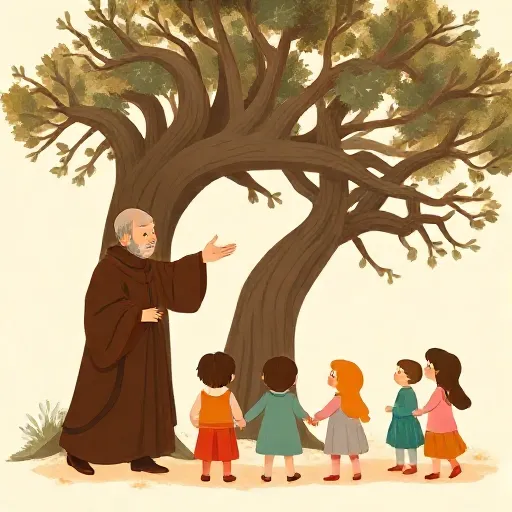
It’s 1265, and a monk is writing rules he doesn’t need a king for
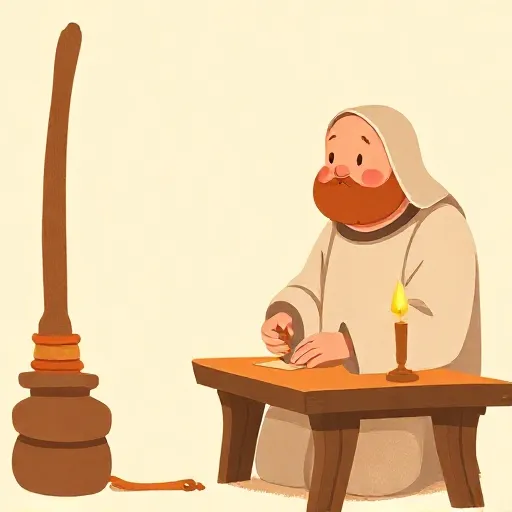
Thomas Aquinas (1225–1274) was working on a huge book called the Summa Theologiae. He wanted to explain everything, from angels to ethics. And right in the middle, he asked: where do the rules of right and wrong come from? Most people around him said rules come from kings, parents, or the Bible. But Aquinas had a stranger idea. He thought that human beings have a natural law — a set of moral instructions sewn into what it means to be human. You don’t need a king to announce it. You don’t even need to read it in a book. You just need to be alive, with a mind, and you can find it.
That claim has kept philosophers talking for over 700 years. If Aquinas is right, then everyone, everywhere, shares the same moral bottom line. If he’s wrong, maybe morality is just a human invention after all.
God’s plan or your own reason? Both, said Aquinas
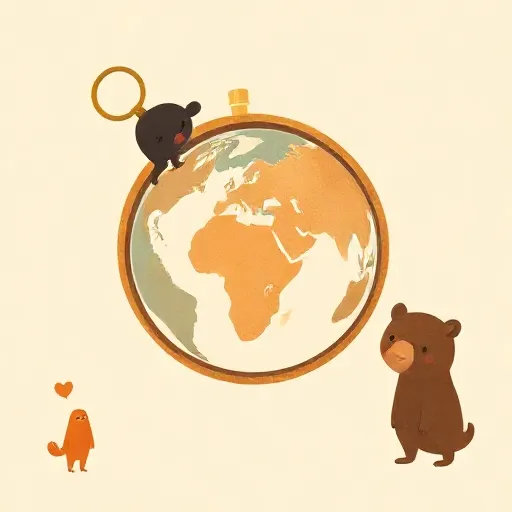
Aquinas gave the natural law two jobs. When you look up, he said, the natural law is part of God’s providence — the divine plan that keeps the whole universe in order. He called it a “participation” in the eternal law, the mind of God arranging creation from the very beginning. In this view, God didn’t just make the sun rise and the rivers run; God also built a moral current into human life.
But when you look sideways, at the person walking down the street, the natural law looks different. It’s the principles of practical rationality — the basic guidelines every person uses to figure out what to do. Just as your mind comes wired to hear patterns in sounds or to recognize faces, Aquinas thought it comes wired to recognize some actions as reasonable and others as unreasonable. Because these principles are part of human nature, they bind every human being, no matter what country or century. And Aquinas insisted they are knowable by all — even a child can grasp them, once she starts thinking about her own choices.
So Aquinas’ natural law is a bridge: it connects a God’s-eye-view of the cosmos with the everyday reasoning you use when you decide whether to share your lunch or tell a lie.
The five things every human wants — according to Aquinas
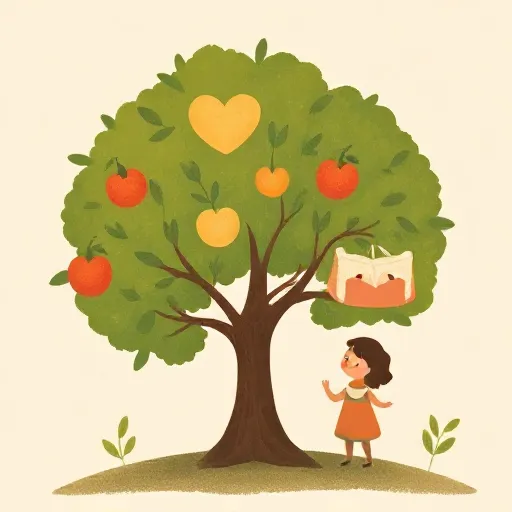
If the natural law is built into us, what does it actually tell us to do? Aquinas’ answer starts with a simple rule: good is to be done and evil avoided. That sounds obvious, but it gets interesting fast. You can’t just “do good” in the abstract — you have to chase particular things that are good. And Aquinas thought that humans are naturally tilted toward at least five big ones.
He mentioned life (staying alive and healthy), procreation (having and raising children), knowledge (especially deep understanding), society (friendship and living together peacefully), and reasonable conduct (acting in a way that makes sense, not just following impulses). These aren’t items on a checklist that you have to write down. Aquinas believed you feel their pull without being taught. A human who wants to stay alive, who gets curious about how things work, who craves friendship — that person is already aimed at these goods, even if she can’t name them.
Notice the order: for Aquinas, the good comes first, and the right comes second. An action is right when it respects and responds to these basic goods properly. That might sound like what a utilitarian would say — someone who thinks morality is about producing the most good. But Aquinas disagreed with the idea that you should just maximize good at any cost. That’s where his idea of “defective” actions comes in.
When good intentions go wrong
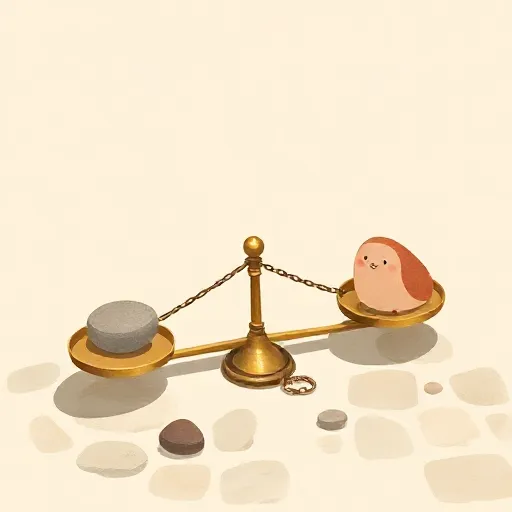
Not every way of chasing a good is reasonable. Aquinas thought that an act could be defective — broken in its moral logic — even if it seems to aim at something good. Imagine someone who steals money to pay for college, which is a good thing (knowledge). The problem isn’t that knowledge isn’t valuable. The problem, Aquinas would say, is that the act’s object — taking someone else’s property — doesn’t fit the good it’s after. It’s like using a crooked ruler to draw a straight line.
He looked for defects in several places. An act might fail because its immediate aim (the “object”) clashes with its deeper purpose (the “end”), like seeking friendship with God merely to stay physically safe. It might fail because of the circumstances — saying something true but cruel at the wrong time. Most importantly, an act can be defective just because of its intention. Aquinas thought that directing yourself against a basic good is never rational. That’s why he held that certain kinds of actions are always wrong, no matter the consequences: murder (attacking life), lying (attacking knowledge), adultery, blasphemy. He didn’t say these rules cover every choice — we still need practical wisdom, the virtue of sizing up messy situations. But he did claim some moral lines are absolute.
So Aquinas stands in a strange middle ground. He agrees with utilitarians that good is the foundation of right. But he sides with Kantians in saying that some acts are simply forbidden, even if they seem to bring about good results.
Is this law really stamped into everyone’s mind?
That’s where the trouble starts. If the basic goods are obvious, why have thinkers disagreed so much about what belongs on the list? Aquinas mentioned life, family, knowledge, friendship, and reasonable conduct. Modern natural law defenders like John Finnis (born 1940) have proposed longer lists — adding play, aesthetic experience, and religion, for example. Others wonder why pleasure didn’t make the cut, or whether life is really a basic good in itself or just something we need to enjoy the others.
Even deeper, how do we know these goods in the first place? One answer is derivationism: you could study human nature scientifically, figure out what humans need to flourish, and then derive the natural law from those facts. But many philosophers, following David Hume (1711–1776), object that you can’t simply jump from “humans tend to seek X” to “humans ought to seek X.” That’s called the is-ought problem. Natural law thinkers reply that we need “bridge” principles — but spelling those out is tricky.
Aquinas himself favored something like inclinationism: we aren’t born knowing the list in words, but we are born with a directedness. A baby doesn’t recite “life is good,” but she struggles to keep breathing. A child doesn’t craft a theory of friendship, but she clings to her caregiver and cries when held back. When we reflect on our own deepest leanings — the ones that make our lives make sense — we can grasp the goods those leanings point toward. Still, critics say that humans are also inclined toward power, prestige, or revenge — so why aren’t those on the list? Natural law theorists must show that some inclinations reveal real goods while others are just distortions.
What if you don’t believe in a lawgiver?
Aquinas’ view squarely ties natural law to God. The eternal law is God’s plan; we “participate” in it. So if you’re an atheist, can you still talk about natural law? Some modern thinkers like Philippa Foot (1920–2010) and Michael Thompson say yes — you can drop the divine part and still talk about what is good for a human, just as a biologist talks about what is good for a dolphin. In that version, the natural law is grounded only in human nature, not in a divine mind.
But that raises a fresh problem about moral obligation. If there is no God holding you accountable, why must you obey the natural law? It’s one thing to say “that action is unhealthy for human flourishing.” It’s another thing to say “you are morally bound not to do it.” Some philosophers argue that moral obligation requires a social relationship — someone who has the standing to demand something of you. For believers, God can be that someone. For others, it might be your fellow humans, as members of a moral community that expects things from each other. How exactly communities gain that standing is still a live question.
What’s clear is that natural law has always stretched beyond theism. Thomas Hobbes (1588–1679), for example, built a full natural law system on just one good: self-preservation. He thought every human, by nature, wants to avoid a violent death, and all the rules of morality grow from that. Hobbes, too, called his principles “divine law,” but his starting point was human desire, not a thick picture of flourishing. That’s why scholars call his view paradigmatic in its own way — though it leads down a very different path.
Why this still matters when you have a hard choice to make

You probably aren’t a medieval monk or a 17th-century English philosopher. But you’ve faced moments when you didn’t know what the right thing to do was. Maybe you were tempted to copy someone’s homework, or to exclude a friend from a group chat, or to tell a lie to spare someone’s feelings. In those moments, you feel the pull of different goods: fairness, loyalty, truth, belonging. The natural law tradition says that feeling isn’t random noise — it’s a signal from your own nature.
If Aquinas is right, those inner promptings aren’t just cultural habits or what your parents drilled into you. They’re the beginning of real moral knowledge, the kind that every human alive can access if they think clearly. But as we’ve seen, even the experts don’t agree on what’s on the list, how we know it, or whether we need God to make the whole thing work. So when you wrestle with a hard choice, you aren’t just making up your mind. You’re stepping into a 700-year conversation about whether being human comes with a rulebook — and what it costs if we ignore it.
Think about it
- If you discovered a remote island where people thought lying was always good, would that prove there’s no natural law? Why or why not?
- Aquinas claimed killing the innocent is always wrong. Can you imagine a situation where it might be the right thing to do? How would a natural law thinker respond?
- Can a person live a morally good life without believing in God, according to natural law? What might Aquinas say, and what might a modern natural law thinker say?