Why Do We Understand Things Differently? Gadamer’s Answer
The Poem That Split the Class
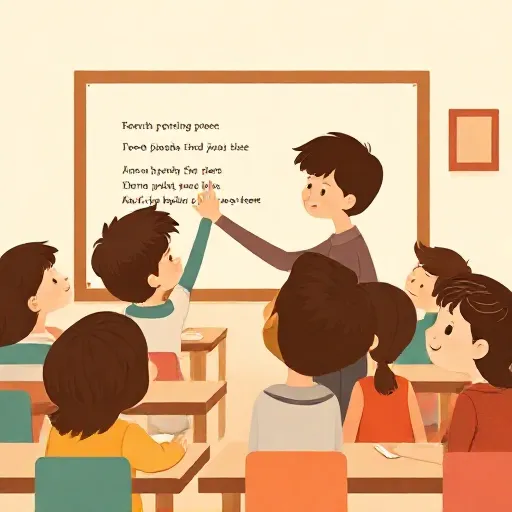
Ms. Alvarez held up a short poem about a sparrow perched on a crumbling stone wall. After reading it aloud, she asked the class what it meant. Leila saw a sad message about time passing. Marcus thought it was about hope — the little bird rebuilding after a storm. A few rows back, Sophia insisted the poem wasn’t about feelings at all; it was just a careful observation of nature. The room buzzed. Everyone had their own answer.
Which interpretation was right? Maybe you could ask the poet. But what if the poet died centuries ago? And what if even the poet didn’t have a single fixed meaning in mind? A German philosopher named Hans-Georg Gadamer (1900–2002) spent his long life thinking about exactly this puzzle. He believed that understanding things — poems, paintings, history, even other people — is never a matter of cracking a code or uncovering one secret truth. It’s a conversation. And like any real conversation, it changes both sides.
The Old Dream of Perfect Interpretation
For a long time, philosophers who studied hermeneutics — the art and theory of understanding, especially texts — dreamed of a foolproof method. Friedrich Schleiermacher (1768–1834) and Wilhelm Dilthey (1833–1911) wanted interpretation to be as solid as science. Their idea was simple: you should set aside your own feelings, your own place in history, and any opinions you already have. Then you could step into the author’s shoes, reconstruct exactly what they intended, and grasp the one true meaning.
Gadamer thought this dream was impossible — and not because human beings are sloppy. His teacher Martin Heidegger (1889–1976) had shown that understanding always comes from somewhere. You are never a blank slate. You already live in a world, carry a language, and hold countless assumptions before you even open a book. That “already” isn’t an obstacle; it’s what makes understanding possible at all. Gadamer took this insight and built it into a new way of thinking.
Your Prejudices Are Not Your Enemy
When Gadamer talked about prejudice, he didn’t mean the ugly kind that makes someone treat another person unfairly. The German word he used — Vorurteil — literally means pre-judgment: a judgment you already hold before you encounter something new. If you’ve ever started a video game and immediately guessed which buttons jump and attack because you’ve played similar games before, you’ve used a pre-judgment. Those guesses might be wrong, but they give you a starting point. Without them, you couldn’t even begin.
This is the hermeneutic circle: you understand a sentence partly because you already have a rough sense of the whole paragraph; you refine that whole by working through its parts. Each time you circle around, your understanding deepens. Gadamer wasn’t the first to notice the circle, but he insisted it isn’t a trap — it’s the very structure of understanding.
Because your pre-judgments come from your personal history and your culture, all understanding carries the mark of the past. Gadamer called this historically-effected consciousness — being aware that your thinking is shaped by history even as you try to understand history itself. You stand inside a horizon, the limit of what you can see from where you are right now. When you seriously engage with a text from another time or a person from another place, their horizon bumps up against yours. A genuine encounter doesn’t leave either horizon untouched. What happens, Gadamer said, is a fusion of horizons. A new, shared space of meaning opens up that neither of you owned before.
A critic like Jürgen Habermas once worried that all this talk of tradition and prejudice might make harmful ideas impossible to challenge — after all, if we always start from what we already believe, how can we ever throw out a bad belief? Gadamer’s answer was that the conversation itself can expose our prejudices. When you really listen, you may find that something you assumed no longer holds up. The fusion of horizons isn’t a comfortable hug; it can be unsettling. It can change you.
Language: The Conversation We Live In
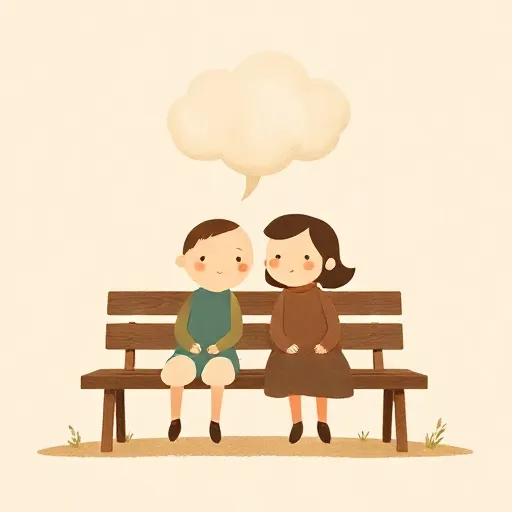
So how does this fusion actually happen? Through language. Gadamer titled his most famous book Truth and Method (1960), but what he really argued is that there is no method. There is only conversation. To understand a text, a painting, or another person is to enter a back-and-forth where the subject matter — the thing you are trying to understand — leads the way.
That sounds strange: How can a topic “lead”? Think about a good discussion where you and a friend are puzzling out why a character in a story made a surprising choice. You both propose ideas, challenge each other, and slowly something clicks that neither of you would have reached alone. The subject itself — the character’s motives — seems to demand certain answers and rule out others. You didn’t control the process; the dialogue took on a life of its own.
Gadamer borrowed an ancient Greek idea here: phronesis, or practical wisdom. Unlike a formula you can memorize, practical wisdom is the knack for knowing what a situation calls for — the same kind of judgment a surgeon uses in a tricky operation or a musician uses when improvising. Understanding, for Gadamer, is a form of practical wisdom. It can’t be reduced to a checklist. It’s something you exercise, and it grows each time you enter a genuine dialogue.
Because language is the medium of this dialogue, we never understand anything outside of it. But Gadamer wasn’t saying that words trap us in a box. Instead, language is like water for a fish: it’s the element we move in, and it connects us to others and to the world. Every act of understanding is also an act of translation — not just between languages like Spanish and English, but between one person’s horizon and another’s. That translation never finishes perfectly. There is always more to say.
Art: Where Truth Happens, Not Where It Sits
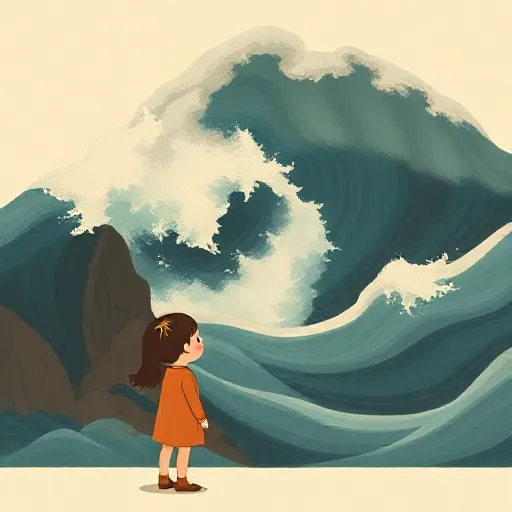
All of this might sound a little abstract until you think about a powerful piece of art. Gadamer believed that art reveals something essential about understanding. A painting of a fierce storm doesn’t just give you a weather report. It pulls you into an experience. Suddenly you feel the weight of the sky, the spray of salt, the terror and thrill. The artwork creates a world, and you are invited inside.
This is truth, but not in the sense of a correct statement (“the storm had 50-mph winds”). Gadamer followed Heidegger in thinking of truth as an event of unconcealment — something that comes out of hiding. A great work of art uncovers a way of seeing things that wasn’t available to you before. At the same time, it hides other things. That’s why you can return to a song, a book, or a painting year after year and find something new each time. Understanding is never complete; it’s a continuous play.
The word play matters here. When Gadamer talked about play, he didn’t mean goofing around. He meant the way a game or a piece of music “plays” with you. You enter its flow, and the rules of the game — or the rhythm of the melody — take over. Understanding works the same way. You don’t just observe meaning from a distance. You get caught up in it, and you and the thing you’re understanding move together.
Why It Still Matters: Understanding Other People

Back in Ms. Alvarez’s classroom, Leila, Marcus, and Sophia weren’t fighting over a single, locked-up meaning. They were starting a conversation — with the poem, with each other, and with the histories they each carried into the room. That conversation didn’t end when the bell rang. It might continue in the hallway, or years later when one of them remembers the sparrow on the stone wall.
Gadamer’s philosophy matters because we spend so much of our lives trying to understand: a parent’s strange rule, a friend’s upsetting text, a political slogan from another country, even ourselves. The old dream said you had to scrub your mind clean to understand correctly. Gadamer’s reply is that you don’t need to erase who you are. Your history, your language, and even your half-formed guesses are gifts you bring to the table. The job is to offer them up, listen carefully, and be willing to change.
There is no final page where the perfect interpretation is written down forever. But that’s not a failure. It’s the very thing that keeps understanding alive.
Think about it
- Can you think of a time when a conversation with a friend totally changed your mind about a book, a movie, or a person? What new “horizon” did you share?
- If understanding always starts from your own prejudices, how can you ever be sure you’re not just seeing what you already want to see?
- Imagine you could meet the poet from the opening story. Would it be more important to ask what they meant, or to explain what the poem means to you? Why?