
Can You Understand a Person Like You Understand a Rock?
The Two Kinds of Knowing: Why a Rock Isn’t a Person

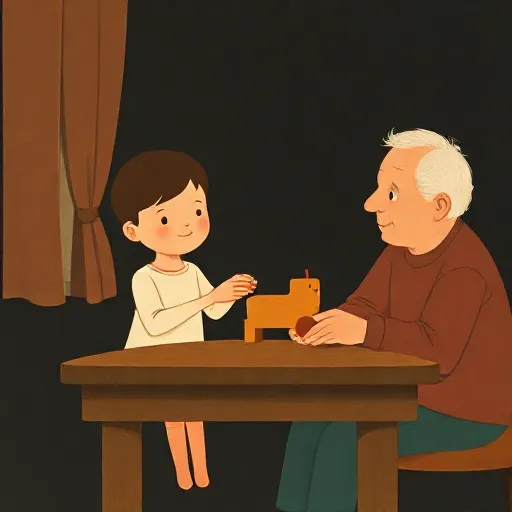
Imagine you want to know why a stone falls if you drop it. You can measure its weight, watch it drop a hundred times, and write down a law: everything falls toward the Earth at the same rate. That is explanation. Now imagine you want to know why your closest friend didn’t speak to anyone at lunch. You might ask what happened, but you also try to feel what they feel — the knot in their stomach, the humiliation, the loneliness. That is understanding.
The German thinker Wilhelm Dilthey (1833–1911) spent his life arguing that these two ways of knowing are not the same. He saw that the sciences that study rocks, stars, and chemicals use one method, and the sciences that study human beings need another. He called the first group natural sciences (Naturwissenschaften) — physics, chemistry, biology. The second group he called human sciences (Geisteswissenschaften) — history, literature, law, economics, psychology. The natural sciences explain by finding general laws. The human sciences understand (Verstehen) by getting inside human life.
Dilthey didn’t invent the idea that history feels different from physics. But he was the first to try to build a whole philosophy that showed why this difference is real and how we can still be rigorous when we understand people.
Who Was Wilhelm Dilthey?

Dilthey grew up in a Germany full of echoes of Immanuel Kant (1724–1804) and Georg Wilhelm Friedrich Hegel (1770–1831). Kant had shown how the natural sciences can give us objective knowledge: our minds shape raw experience into a lawful world. Hegel had insisted that human history has a meaning that unfolds like a giant story. Dilthey admired both, but he thought each missed something essential. He wanted to do for the human sciences what Kant had done for physics — to ask: What makes reliable knowledge of human life possible?
He trained as a theologian, studied the writings of the early Christians, and was fascinated by the preacher‑philosopher Friedrich Schleiermacher (1768–1834). Over time he moved from theology to philosophy and produced a series of bold works. In 1883 he published his Introduction to the Human Sciences, calling it a Critique of Historical Reason. Late in life he held the same chair at the University of Berlin that Hegel had once occupied.
Dilthey’s thinking didn’t stay in one place. Early on he tried to write psychological laws for how poets change our feelings, much like a chemist writes rules. But he gradually realized that live, flowing human experience can never be pinned down by laws the way a falling rock can. That shift led him to the heart of his philosophy: we understand people from the inside, not just by standing outside and linking causes.
Lived Experience: The Flow You Feel Inside
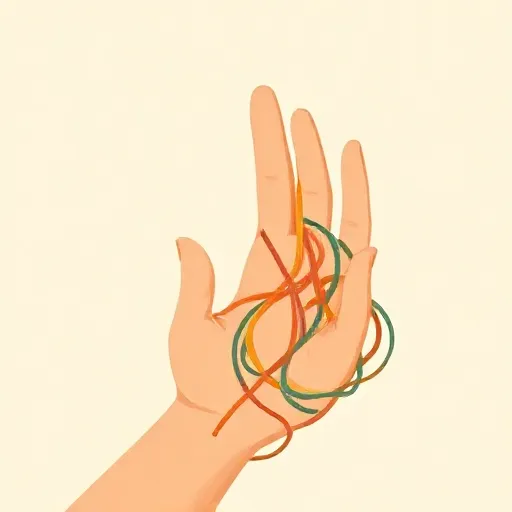
Dilthey believed that the starting point for all human sciences is something he called lived experience (Erlebnis). Close your eyes for a moment. You don’t experience separate images, sounds, and feelings like a stack of snapshots. You experience a continuous, streaming whole. Right now you see these words, but you also feel a chair under you, a tiny bit of hunger, a memory of yesterday, a flicker of hope for the weekend — all woven together.
This streaming whole is not a cold camera recording. You value things with feelings: the unfair comment made you angry, the smile of a friend felt warm. And you reach toward things with willing: you want to finish this article, you want a snack. Lived experience always mixes representing, feeling, and willing. Dilthey called this a psychic nexus — a connected, living network that is present to you directly, from the inside.
Why does that matter? Because atoms and forces are things we observe from the outside. But your own lived experience is something you are. When you try to understand another person, you try to touch that same kind of flowing, feeling inside them. You can’t do it by only listing external causes like a physicist. You have to use your own capacity to feel and value as a bridge.
From Inside Out: Why We Need to Interpret Expressions
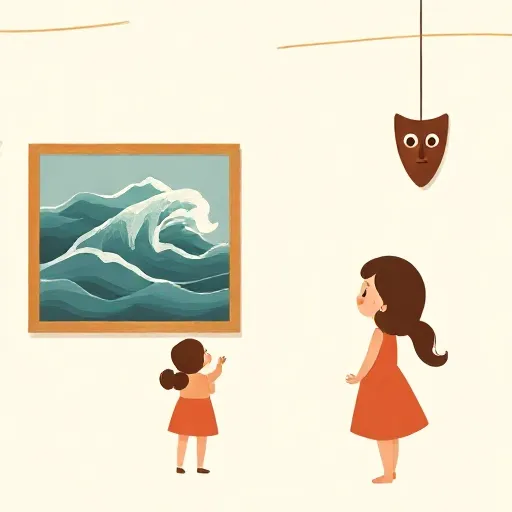
At first Dilthey thought that looking inward — introspection — would be enough to know ourselves. But around the year 1900 he changed his mind. He wrote that inner experience by itself can never show us our own individuality. To really know yourself, you need to see your own actions and words as if you were a stranger watching them. And to know another person you have to start from the outside — from their speech, their art, their gestures — and work inward.
This is where hermeneutics comes in. Hermeneutics is the theory of interpretation, a set of rules and practices for moving from outer signs to inner life. It was first used for interpreting the Bible, but Dilthey widened it to mean interpreting any expression of human life — not only books, but also paintings, laws, political speeches, even a sigh.
He distinguished three kinds of life‑manifestations. The first is simple statements of fact, like “seven times eight is fifty‑six.” They tell you nothing about the speaker’s soul. The second is actions. If you see someone pick up a hammer, you can guess they intend to build something, but you still don’t know much about their deeper feelings. The third kind is what Dilthey called expressions of lived experience — a poem, an outburst of tears, a long letter to a friend. These can reveal more than the person intended to show. A work of art, he said, can let you touch a whole view of life, even if the artist never meant to spell it out.
So understanding another person is not a magical leap. It is a careful process: you gather the signs, you call on your own life and on the shared world you both belong to, and you build an interpretation. And that interpretation can be improved, checked, and gradually made more reliable.
History as a Tapestry: Meaning, Value, Purpose
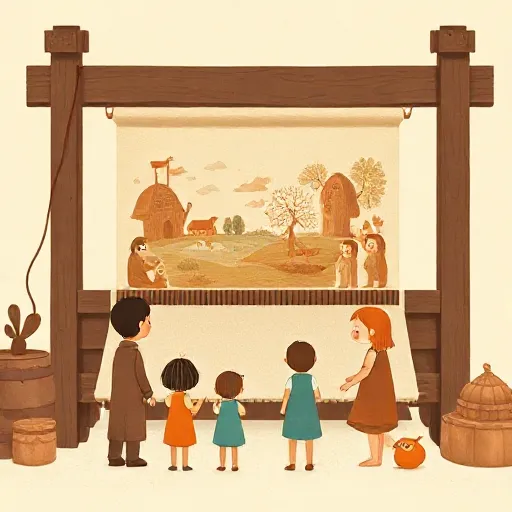
If understanding a friend requires this kind of work, what about understanding an entire century? Dilthey argued that history is not a chain of causes like dominoes falling. Instead, history is a productive nexus (Wirkungszusammenhang) — a living system where individuals, groups, and whole cultures produce values, purposes, and meanings.
To grasp this, Dilthey borrowed Hegel’s idea of objective spirit. That sounds grand, but it’s really the shared, everyday world you are born into: the language you speak, the way your neighborhood arranges its streets, the rules about holding doors open, the stories your grandparents tell. This common background lets you understand others without having to solve a puzzle each time. It’s why a thousand years from now a historian can learn a dead language and still feel a thread of connection to people who lived long ago.
Dilthey said that when we understand a historical event, we are working with three major categories: meaning, value, and purpose. Meaning ties the past to the present — the way your memory of your first day at school still colors who you are now. Value is felt in the immediate moment — the flash of joy or disappointment as something happens. Purpose reaches into the future — what you intend to do next. History, in Dilthey’s view, is like a vast autobiography that humanity writes as it goes. The best historian is like a good biographer who weaves together action, feeling, and intention into a whole that makes sense — not just a list of dates and battles.
Crucially, this kind of knowledge is still knowledge. It can be argued about, supported with evidence, and sharpened by returning to the expressions people left behind. But it never becomes a neat equation. And that, Dilthey insisted, is not a weakness — it’s what the human world actually is.
Why It Still Matters: Understanding Friends, History, and Yourself

Every time you try to figure out why a friend acted the way they did — not just “what made them do it” but “what it felt like for them” — you are doing what Dilthey described. You gather the evidence (their words, their body language, their silences), you draw on what you know about them and about people in general, and you piece together a story that feels true. You are interpreting a living person, not predicting a planet’s orbit.
Dilthey’s big thought still echoes through how we think about history, psychology, and even artificial intelligence. Some parts of human life can be captured by statistics and experiments. But other parts — the ones that matter most to us — require a different kind of thinking, one that takes seriously the flowing, feeling, purpose‑filled nature of lived experience. He helped make it legitimate for the human sciences to be different from the natural sciences without being “just opinions.”
So the next time you write in a diary about a hard day, remember: you are selecting moments, finding patterns, and giving your past a shape. That is exactly the kind of understanding Dilthey placed at the center of all real knowledge about human beings. We never stop interpreting ourselves and others — and that, he thought, is the deepest way we touch the world.
Think about it
- If you want to understand why a character in a book does something hurtful, would you rather know the causes (like a hard childhood) or try to feel what the character feels? Which kind of understanding helps you decide whether to forgive them?
- A scientist can predict where a comet will be in a hundred years. Could the same kind of prediction ever work for what your best friend will do this afternoon? Why or why not?
- When you look back at a difficult moment in your life and make sense of it, you shape your own personal history. Is the meaning you find always true, or could it be just a story you tell yourself? Does that matter?