
Why Is It So Hard to Really Understand Someone?
A Text Message Misunderstanding

Imagine you get a text from a friend that just says “fine.” You think everything is okay. Later you find out they were actually upset and only pretended to be fine. In that moment, you completely misunderstood them. Why is it so tricky to know what another person really means, even when you speak the same language? This everyday puzzle obsessed a German thinker named Friedrich Schleiermacher (1768–1834). Two hundred years ago, he developed powerful ideas about how we understand one another. He argued that because our language shapes our thinking, and no two people’s mental worlds are exactly alike, getting someone perfectly is a goal we can only approach, never fully reach.
Who Was Schleiermacher?

Schleiermacher grew up in a strict religious family in Breslau (now part of Poland) and later studied at the University of Halle. He rejected several of Immanuel Kant’s strict ideas about morality and instead joined the Romantic circle in Berlin, where artists and writers celebrated emotion and individuality. He translated Plato’s dialogues into German, a monumental task that made him acutely aware of how slippery words can be across languages. But his most lasting contribution was in hermeneutics — the theory of how we interpret speech and texts — and the theory of translation. He gave lectures on these topics for decades, trying to solve the problem that any message can be heard or read in wildly different ways.
Language Shapes Your Thoughts
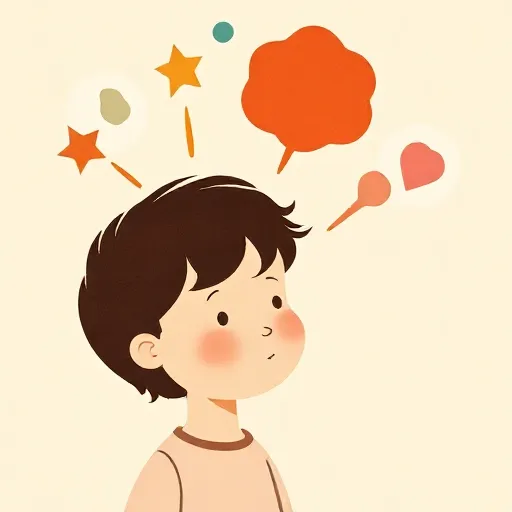
Schleiermacher, like the earlier thinker Johann Gottfried Herder (1744–1803), believed that thinking is impossible without language. He went even further and argued that thought is identical with inner language — the silent speech that runs in your head. What a word means is not some fixed thing attached to an object, but simply how it is used in a community. If you and a friend both say “that’s cool,” you might have subtly different rules for using the word “cool” because your whole network of related words differs. Schleiermacher called this web-like nature of meaning semantic holism: every word’s sense depends on the other words in your language, and even on the grammar. So a tiny difference in one part of the web can shift meanings across the whole thing. This idea makes a simple fact crystal clear: no two people, and certainly no two cultures, ever share exactly the same set of concepts.
The Art of Understanding: Hermeneutics
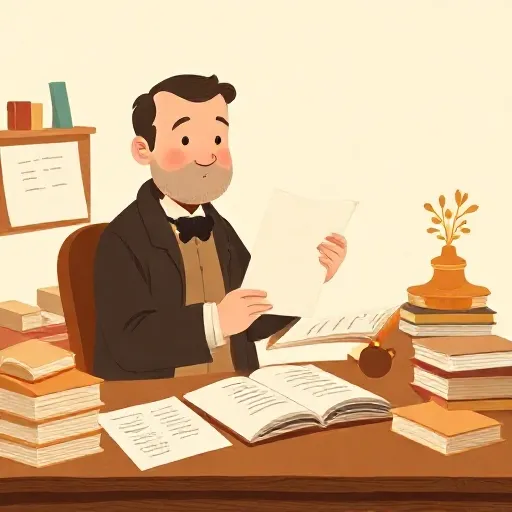
If everyone’s mind works a little differently, how can we ever understand each other? Schleiermacher’s answer was hermeneutics. He insisted that misunderstanding is the default — we have to actively work for understanding. He split the task into two sides. Linguistic interpretation digs into the shared rules of language: you collect many uses of a word to figure out its general meaning. Psychological interpretation focuses on what is distinctive about the particular speaker or author. You try to grasp their unique habits of thought and the purpose behind their words. Sometimes you need to guess what they intended — a method Schleiermacher called divination, from the French word deviner, meaning “to conjecture.” This is no mystical business; it is an educated hypothesis that you constantly test and refine.
He also described the hermeneutic circle. To understand a single sentence, you need to see how it fits into the whole book. But you cannot understand the whole book without understanding its sentences. That sounds like a trapped loop. Yet Schleiermacher argued understanding comes in degrees. You start with a rough guess about the overall point of a story, read each part and tweak your guess, then reread the parts with your improved picture, inching closer to the meaning in a spiral. It is how you might slowly figure out that a friend’s “I’m fine” actually hides sadness by re‑reading the whole conversation and noticing details you missed the first time.
Why Translation Is a Huge Puzzle

If understanding within one language is hard, translating between two is an enormous challenge. Schleiermacher highlighted the paradox of paraphrase. Imagine an ancient poet uses a single word, chlôros, to describe both fresh leaves (what we call “green”) and honey (what we call “yellow”). If a translator writes “green or yellow,” they capture the things the poet referred to but destroy the original concept, which was not a disjunction of two separate colors. The translation makes it sound as if the poet had our modern color categories, which they did not.
Schleiermacher’s solution was to bring the reader toward the author’s world rather than watering down the original. He wanted translators to bend the target language — to take a word like “green” and gradually teach readers to use it for things that are honey‑colored too. The text will feel strange at first, but that strangeness constantly reminds you that you are entering a foreign mind. This approach works best when a lot of material is translated, so the reader gets used to the unfamiliar usage. He admitted this can never fully succeed. Semantic holism means whole networks of meaning cannot be perfectly reproduced. Yet he believed the effort enriches the receiving language by importing new concepts.
Why It Still Matters Today

Schleiermacher would see your everyday life through his lens. When a friend says something that seems off, you instinctively become a hermeneuticist: you compare their words with what you know about them and circle back to earlier clues. When you watch a subtitled film and notice the translation sounds stiff, you are noticing the translator’s choice to bend the language rather than smooth it over. Even inside jokes between friends fail when someone new joins the group — that is semantic holism in action, because a joke relies on a whole shared history of word‑use.
His ideas also shape bigger questions. Should a translator make a foreign novel sound like it was originally written in your language, or should it keep a touch of alien flavor? You can argue both sides, just as Schleiermacher argued with those who preferred an easy‑to‑read domestication. The fact that we cannot perfectly mirror another person’s thoughts is not a reason to give up. It is an invitation to keep trying, to ask better questions, and to appreciate how rich and different other minds can be. That curiosity can turn a simple text message into a real conversation.
Think about it
- Can a joke ever be translated perfectly from one language to another while keeping its humor? Why or why not?
- If someone says “I’m fine” but you know they’re not, how do you decide whether to ask more questions or just trust their words?
- Should translators change a book to make it easier for readers, even if that means altering the original meaning somewhat?