Why Understanding Is a Circle, Not a Ladder
The Afternoon You “Got It”

It’s a rainy afternoon. You’re curled up with a book about the Peloponnesian War. You read about the Athenians and Spartans, about persuasive speeches and disastrous decisions. Then you stop — not because you’re bored, but because something clicks. You suddenly feel that you’ve really gotten your hands on an idea: maybe in politics, careful reasoning isn’t always powerful enough to stop a war. This feeling of “getting it” is what philosophers call understanding, and it’s the core of hermeneutics, the philosophy of interpretation.
When you understand something through interpretation, you haven’t mixed chemicals in a lab or run a repeatable experiment. You’ve still learned something that can change how you see yourself, the world, and other people. Hans-Georg Gadamer (1900–2002), the philosopher most closely tied to hermeneutics today, would say that this experience is educative — it doesn’t just add facts, it expands who you are. But if understanding isn’t the result of a scientific method, how does it work?
Understanding Isn’t Built Like a Tower
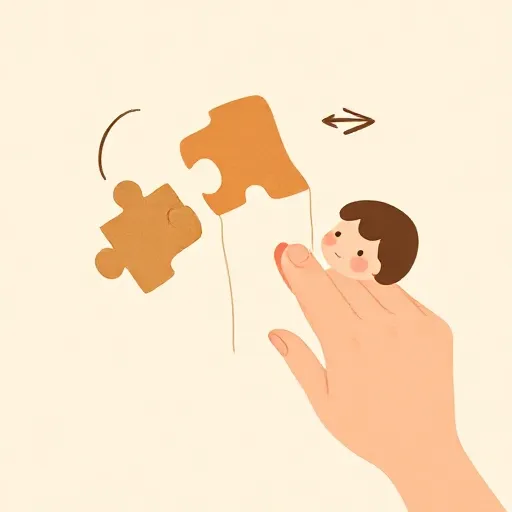
Many parts of modern knowledge rest on foundationalism: the picture that our beliefs stack up like a skyscraper. Some beliefs are the solid ground floor — they don’t need any support. Other beliefs are built on top, layer by layer. In this vertical world, new knowledge adds new floors, always resting on what’s already proven. Hermeneutics says that understanding doesn’t build like that. It moves in a circle.
This is the famous hermeneutical circle. Suppose you read a poem. To understand any single line, you need an idea of the poem as a whole. But you can’t get the whole except by working through its lines. So you start with a rough guess about the meaning — a presupposition — then you adjust that guess as you read more, and then you re-read lines with your new hunch, and so on. You don’t pile up certain facts; you go deeper and deeper, your understanding getting richer with every loop.
This circular back-and-forth isn’t a weakness. The philosopher connected with early German romanticism, Friedrich Schleiermacher (1768–1834), called hermeneutics the “art of interpretation.” He saw that when we read a tough text, we begin in misunderstanding and must move between the grammar of the language and the individual mind of the author. There’s no starting point that’s absolutely certain — only a willingness to let our first impressions be reshaped.
Heidegger: You Are Already Interpreting

What if interpretation isn’t just something you do with books, but something you are? Martin Heidegger (1889–1976) gave hermeneutics a radical turn. He argued that to be human is to interpret. Your very existence — every decision, every mood, every plan — is an ongoing, often unnoticed act of self-interpretation.
Heidegger said we are thrown into a world we didn’t choose: a specific family, time, and culture that already shape what matters to us. This facticity means we never start with a blank slate. Even before we think, we have pre-structures — gut-level senses of what’s relevant. And those structures are partly shaped by the inescapable fact that we exist with others. In ordinary life, we tend to interpret ourselves not as the unique person we could become, but in terms of what “one” does, what “one” thinks. He called this vague, everyone-and-no-one the “they” (das Man). Getting a genuine understanding of ourselves takes work — work that, for Heidegger, is the deepest job of interpretation.
Gadamer: Your Prejudices Are Your Superpower
If we’re always already shaped by our time and place, does that trap us inside our opinions? Gadamer thought the opposite. He argued that your prejudices — literally, the judgments you already carry before you encounter something new — are not obstacles to understanding. They are its engine. A prejudice is a pre-judgment, like the first sketch of a drawing: you can’t begin to interpret a book, a painting, or a friend’s words without some starting sense of what it might mean.
This is not a free-for-all of random opinions. Your prejudices come from tradition, the living flow of meanings handed down through history. Tradition is not a locked box; it’s more like a river that constantly carries, mixes, and reshapes what has been passed on. Gadamer calls this the principle of effective history: our attempts to understand are guided far more by tradition than we can ever make fully conscious. That’s humbling. It means you can never be completely certain you’ve captured the final truth. But it also means that every real interpretation is a conversation — a hermeneutical conversation — where something shows itself as it truly is, even if only for now.
Gadamer described the growth of understanding as a fusion of horizons. Your horizon is the range of what you can see from where you stand, shaped by all you’ve learned and lived. When you truly understand something — say, a historical text — your horizon doesn’t simply absorb another. Rather, the hard edges of your viewpoint melt a little, and you discover that your perspective was never as narrow as you thought. You’re lifted into something larger, where the old limits don’t hold. As Gadamer put it, “being that can be understood is language” — not because words are a cage, but because language is the medium in which the meaning of things can appear for us at all.
Can You Ever Be Sure You Got It Right?

If tradition always guides us, aren’t some traditions deeply misleading — even dangerous? The critical theorist Jürgen Habermas (born 1929) raised this worry. He argued that some beliefs passed down through history are ideologies, collections of ideas that distort reality and reinforce unjust power. When a tradition hands down prejudices that make domination look natural, simply trusting a hermeneutical conversation seems too gentle. We need, Habermas insisted, a way to stand back and critique the very traditions that shape us.
Gadamer responded that no one can step completely outside their own historical skin. But that doesn’t leave us helpless. Interpretation constantly questions which prejudices still hold and which have crumbled under the weight of new experience. A genuine conversation, he believed, is already critical.
A different challenge came from Jacques Derrida (1930–2004). He suggested that language itself prevents meaning from ever being perfectly solid. Words don’t point to fixed objects cleanly; they work through endless chains of differences and deferrals. Because of this, perhaps we never fully nail down a single, determinate understanding. Derrida’s worry is that when we think we’ve “got it,” we might be fooling ourselves — the meaningful wholeness is always just out of reach. Philosophers still argue about whether this undermines Gadamer’s vision, or whether it simply reminds us that interpretation is never truly finished.
Why It Still Matters: Conversations Without a Manual
Look away from the library and toward your everyday life. You interpret a friend’s silence after a tough day; you try to make sense of a movie that left you unsettled; you puzzle over a news story where both sides seem partly right. In every case, you’re doing hermeneutics. You bring your history, your hunches, and your half-formed sense of the situation — and you go around the circle in search of understanding.
Hermeneutics doesn’t give you a recipe. But it does teach you that the only way forward is to keep returning to what you assumed, to let your horizon expand, and to treat each encounter — with a text, a painting, or another person — as a conversation where real truth can emerge. Education, in the deepest sense, is not storing facts. It’s becoming the kind of person who can listen carefully, question your own starting points, and let understanding change you.
Think about it
- Can a tradition be both a source of wisdom and a source of harmful stereotypes? How would you decide which parts to keep and which to question?
- If every time you read a poem, your understanding shifts because of what you already believe, can you ever know what the poet “really meant”?
- Is it possible for two people to have completely different interpretations of the same event and both be “right” in some way? Why or why not?