What If Women Could Be Sea‑Captains? Margaret Fuller's Challenge
Let Them Be Sea‑Captains, If You Will
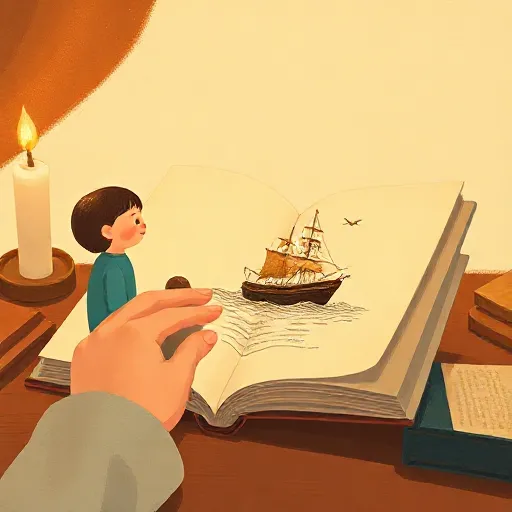
In 1845, a small book by an unknown American woman caused a stir. On its pages, the author declared that no job should be off‑limits to women, and gave the example of becoming sea‑captains. “I do not care what case you put; let them be sea‑captains, if you will,” she wrote. The writer was Margaret Fuller (1810–1850). She wasn’t just making a wild guess. She had spent her whole life thinking about a tough question: What does it take for a person—especially a woman—to become fully themselves? That question led her to ancient philosophy, to a Boston parlor full of women arguing about ideas, and finally to a revolution on the other side of the ocean.
A Girl Who Read Plato

Margaret Fuller was born in 1810 in Cambridgeport, Massachusetts. Her father, Timothy Fuller, was a lawyer and a congressman. He believed his eldest daughter should get the education normally given to boys. By age three and a half, he taught her to read. By nine, she was reading Paradise Lost and the Roman poet Virgil in the original Latin. She learned Greek, studied the New Testament and Plato, and memorised long passages. This training made her one of the best-read people in New England—of any gender. But Timothy was harsh and demanding. Margaret grew up brilliant but also anxious and fiercely self‑critical.
When Margaret was in her twenties, her father died suddenly of cholera, leaving no will. Under the laws of the time, the family farm went to her uncles, and Margaret became responsible for supporting her mother and younger siblings. She taught school to earn money. But she never stopped reading and thinking about the ideas her father had drilled into her: human beings have special powers, or faculties, that set them apart from other animals. This idea came from faculty psychology, an older way of understanding the mind as a set of abilities—reason, conscience, imagination, and emotion. The goal of life, many New England thinkers believed, was self‑culture: the lifelong project of deliberately developing all your inner powers, like tending a garden. The famous Unitarian preacher William Ellery Channing (1780–1842) taught that by cultivating your own character, you could grow more like God. Margaret absorbed this idea and would one day apply it to women in a radical new way.
The Two Voices Inside You: Reason and Romance

Through her father, Margaret fell in love with the ancient Greek philosopher Plato. Plato believed that behind the messy, physical world there exists a perfect, eternal world of ideas—the Forms. He also taught that reason could guide us toward truth. Margaret loved this clear, orderly vision. But as she grew older, she also discovered a new kind of literature sweeping Europe: Romanticism. Romantic writers celebrated intense feelings, wild nature, and the power of individual imagination. Where Plato (and the “classical” tradition) seemed to value logic and order—traits associated with men—Romanticism seemed to value emotion and connection, traits then labelled as feminine.
Margaret refused to choose one side and call the other wrong. Instead, she argued that every person—male or female—has both masculine and feminine qualities. The classical, rational side wants to impose order. The Romantic side wants to feel, imagine, and connect. A complete human being, she thought, develops both. She called these two halves “Man” and “Woman” in her writing, but she meant ideals that exist inside everyone. As she wrote in 1843, “There is no wholly masculine man; no purely feminine woman.”
This thinking was shaped by a group she joined in the 1830s: the transcendentalists. Led by Ralph Waldo Emerson (1803–1882), these New England intellectuals believed each person could go beyond ordinary experience and connect directly with the divine. They distinguished between Understanding (the everyday, logical thinking that handles practical life) and Reason (a deeper, almost spiritual insight that grasps eternal truths). The transcendentalists thought Reason was far more important. Margaret agreed, but she kept one foot in the older Unitarian tradition that still valued the material world. Unlike some of her friends, she remained a metaphysical dualist: she believed mind and body are two different, real things. This mix of Unitarianism, transcendentalism, and Romanticism gave her a unique philosophy: the quest to become fully human meant training both your “classical” and your “Romantic” voice.
A Parlor Full of Philosophers
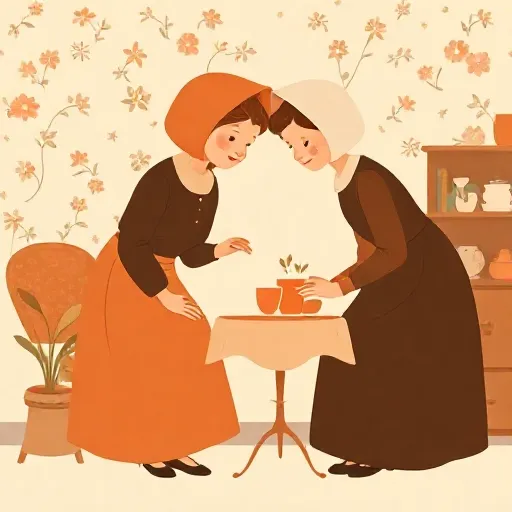
In 1839, Margaret started a series of gatherings for women that she called Conversations. They met weekly in a rented parlor in Boston, usually for thirteen weeks. The women paid ten dollars per series—about the price of a lecture ticket—but this was no ordinary lecture. Fuller would begin each session with a talk on a subject like Greek mythology or literature, but then she would throw the floor open to discussion. She wanted the women to think for themselves, to challenge each other, and to wrestle with the big questions: What are we capable of? What should a woman’s life be for? She used a method she had learned from Plato’s dialogues, where conversation is a tool for digging up truth.
At first, Fuller avoided connecting her Conversations to other reform movements like antislavery. But the women who attended, including future leaders like Elizabeth Cady Stanton and Julia Ward Howe, often had broader concerns. Over time, Fuller changed her mind. She began to see feminism—the cause of equal rights and opportunities for women—as part of a larger struggle for human freedom. She published an essay in 1843 called “The Great Lawsuit,” in which she argued that society was preventing half the human race from fully developing their powers. That essay would grow into her book, Woman in the Nineteenth Century.
A Woman’s Declaration of Independence

In 1845, Fuller published Woman in the Nineteenth Century, the book that made her famous. It was not a tidy logical argument. It rambled from Greek myth to Shakespeare to the treatment of Native Americans. But its core message was unmistakable: women should have the same chance as men to cultivate all their faculties. For that to happen, they needed a far wider range of jobs to be open to them. When she wrote, “let them be sea‑captains, if you will,” she meant it literally. No occupation should be off‑limits.
Fuller also reimagined marriage. Instead of a wife belonging to her husband like property, she pictured marriage as a “pilgrimage toward a common shrine”—two equal partners, each helping the other grow. She connected women’s rights to other freedom struggles, condemning slavery and warning against the annexation of Texas partly because it would expand slavery. She even argued that the Jewish people should be allowed to return to Palestine. To modern readers, it is striking that she never mentions woman suffrage—the right to vote—though that demand would come just three years later at the Seneca Falls convention. Still, her book was the feminist work of its era, pirated and read in Britain as eagerly as in the United States. It ended with a plea for a leader: “And will she not soon appear? The woman who shall vindicate their birthright for all women…” Soon, Fuller herself would try to become that woman.
The Revolutionary at the Edge of the Sea

In 1844, Fuller moved to New York City to work as the first full‑time book reviewer for the New York Tribune, a newspaper with 50,000 readers. She wrote about literature, music, politics, and prison conditions. Then in 1846, she sailed for Europe as a foreign correspondent. In England she met the poet Wordsworth and the fiery Italian revolutionary Giuseppe Mazzini. Mazzini was fighting to unite Italy into a democratic republic, and Fuller was captivated. She travelled to Italy, learned Italian, and fell in love with a younger Italian man, Giovanni Angelo Ossoli. They had a son, Angelino, and may have married. When a Roman Republic was declared in 1849, Fuller and Ossoli joined the cause. She worked as a nurse, he fought as a soldier. But the revolution failed. French troops restored the Pope’s power, and the family fled to Florence.
In 1850, they set sail for the United States. Margaret carried the manuscript of a book she had written about the Roman Republic. But the ship, the Elizabeth, ran aground in a storm off Fire Island, New York. The acting captain swam away, leaving the Ossolis—who could not swim—clinging to the wreck. A crowd gathered on shore but did nothing to help. After hours, a wave swept Margaret, Giovanni, and their little boy out to sea. The child’s body washed ashore; the adults’ never did. The book manuscript was lost forever.
Why Fuller’s Question Still Echoes Today

Margaret Fuller never saw women get the vote, let alone become sea‑captains. But the question she asked—“What would it mean for a woman to become all she can be?”—is still alive. Every time someone argues that a girl shouldn’t play a certain sport, or that a boy shouldn’t cry, or that a career is “for men” or “for women,” they are stepping into the debate Fuller started. She didn’t think biology or tradition should decide what you can do with your mind. She thought the only test was whether you had the powers to do it—and the freedom to develop them. That challenge didn’t sink with the Elizabeth. It is still out there, waiting for each new generation to decide what kind of people they want to become.
Think about it
- Fuller believed every person should develop both their “masculine” and “feminine” qualities. Can you name a quality you think of as masculine or feminine? Would everyone agree with you, and what would happen if we stopped labelling qualities by gender?
- Imagine a world where no job was limited by gender—women could be sea‑captains, and men could be stay‑at‑home dads. What might be hardest about that world? What might be easiest?
- Fuller wrote that society needed a new kind of woman to show the way. If someone asked you today, what does a “fully developed” person look like to you—and are you closer to that ideal in some ways than others?