Is Forgiveness More Than Just a Feeling?
“It Was Wrong, but I Choose to Let It Go”—What Forgiveness Is and Isn’t

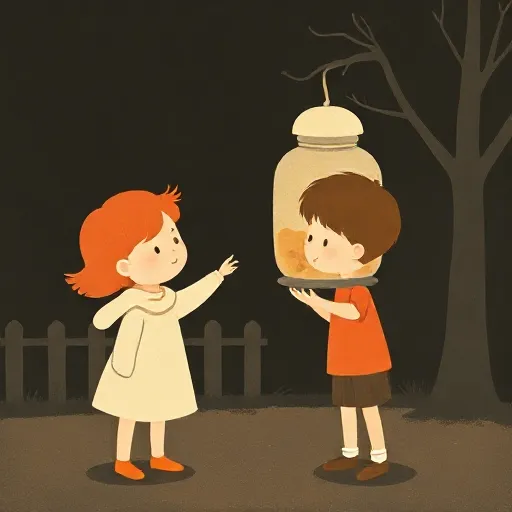
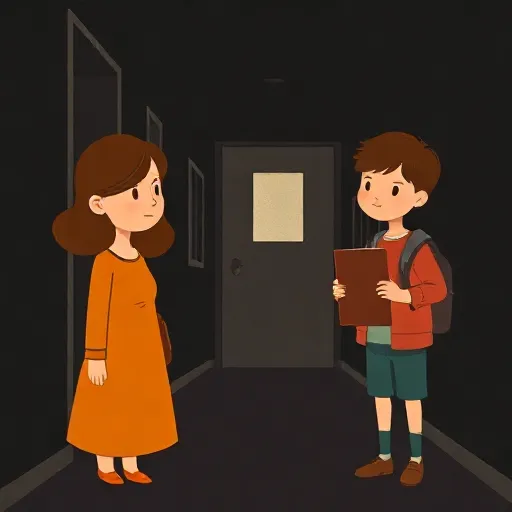
Imagine your best friend Alex promises to keep a secret for you, but by lunchtime the whole school knows. You feel burned—angry, hurt, maybe even humiliated. Alex comes up and says, “I’m sorry; please forgive me.” What would it actually mean to forgive him?
Many people confuse forgiveness with two other moves: excusing and condoning. Suppose Alex told your secret because someone threatened him. If we say that makes him fully excused, then we think he isn’t really blameworthy—he had a good reason, or at least one that removes his responsibility. But if he is fully excused, there is nothing to forgive, because forgiveness responds to wrongdoing for which someone is at least partly to blame. When you forgive, you don’t wipe away the wrong; you acknowledge it and still choose not to hold it against the person in a certain way.
Condoning is different again. When you condone, you might say the action wasn’t really that bad (even though it was), or you might disapprove but just tolerate it—look the other way. Forgiveness is neither of those. To forgive, you must treat the action as morally wrong, but you give up at least some part of the blame or the hard feelings that usually follow. So forgiving Alex isn’t pretending the secret-telling was fine or excusing it entirely. It’s something in the middle that leaves the wrong in place yet changes your stance toward the person who did it.
Who Gets to Decide to Forgive? The Puzzle of Standing

If Alex lies to you, you were the one directly wronged. Most philosophers think that only people who have standing can forgive. Standing is like a ticket that says “you are allowed to forgive this wrong.” Jeffrie Murphy (born 1940) puts it bluntly: “I do not have standing to resent or forgive you unless I have myself been the victim of your wrongdoing.” On this view, you and only you get to decide whether Alex is forgiven for what he did to you.
But things get trickier. Suppose Alex’s lie makes you late to pick up your little brother, who then feels hurt and abandoned. Alex didn’t lie to your brother, but the wrong reached him indirectly. Many philosophers would say your brother has indirect standing—it makes sense for him to blame Alex and also, perhaps, to forgive him. Some cases go even further: if a victim cannot speak for herself, a family member might forgive on her behalf (proxy standing). And a few thinkers have argued that someone who wasn’t wronged at all might still forgive an offender in her own name (third-party standing), though that idea remains highly disputed. For most everyday situations, however, the person who was wronged is the one who can forgive.
The Heart vs. The Mouth: Is Forgiveness a Feeling or a Promise?

Now we hit the big fight. When you tell Alex “I forgive you,” what have you actually done? Two camps give very different answers.
The first camp defends emotion accounts of forgiveness. For them, forgiveness is fundamentally a change inside yourself. Jeffrie Murphy says forgiveness “is primarily a matter of how I feel about you, not how I treat you.” When you are wronged, you often feel a special kind of moral anger called resentment—a sense that you were treated unjustly and that the wrongdoer owes you something. To forgive, on this view, you must overcome that resentment (and perhaps other negative feelings like hatred or spite) for the right kinds of reasons. You can’t just wake up and find the anger has vanished; you have to work through it, maybe because the wrongdoer has shown remorse or because holding onto the anger is poisoning you. Some emotion theorists say you only have to get rid of vindictive, hostile feelings. Others say you must also give up moral anger, and a few even claim you must abandon every negative feeling toward the person, including sadness and disappointment. All agree, though, that forgiveness happens when your emotional weather changes.
The second camp defends performative accounts. Joram Haber (born mid‑20th century) argued that to understand forgiveness, we should look at what we do when we say “I forgive you.” Speaking isn’t just making sounds; it can be an illocutionary act—something we do with words, like promising, warning, or ordering. When you say “I forgive you,” you might be performing a commissive speech act: you commit yourself to not holding the wrong against the person and to treating them with a certain goodwill. Glen Pettigrove adds that the utterance can also be a declarative: by sincerely saying it, you actually change the moral situation, much like a judge declaring a defendant guilty or a friend christening a ship. On this view, forgiveness is not merely a private feeling but a public, communicative move.
Some philosophers think both camps get part of the truth. Marilyn McCord Adams suggests forgiveness has an inner dimension (“forgiveness from the heart”) and an outer dimension (performative forgiveness), and that either can happen without the other. So you could feel forgiving but never say so, or you could utter the words while still secretly stewing inside.
Should You Forgive Even If They Never Say Sorry? The Battle Over Conditions

Now we move from what forgiveness is to when it is good to forgive. Suppose Alex never apologizes—or worse, smirks and says you’re overreacting. Would forgiving him be the right thing to do?
Conditionalists say no. Charles Griswold (born 1951) describes a “paradigmatic scene” where forgiveness is at its best, and the wrongdoer must meet several conditions: admit responsibility, repudiate the deed, feel and show regret, and commit to being a better person. If you forgive without those signs, conditionalists worry, you might be condoning the wrong or failing to take it seriously. Worse, you might show a lack of self-respect—as if you don’t value yourself enough to demand decent treatment. Jeffrie Murphy suggests that acceptable grounds for forgiveness must be compatible with self-respect and respect for the moral order.
On the other side, advocates of unconditional forgiveness argue that waiting for an apology can trap victims in their own anger. Eve Garrard and David McNaughton (20th–21st century) and Margaret Holmgren claim that forgiveness can be morally good even if the wrongdoer never repents. The key condition isn’t on the wrongdoer—it’s on the victim. Holmgren argues that once a victim goes through a careful inner process (recovering her self-esteem, fully understanding why what happened was wrong, and facing her own feelings honestly), forgiveness is always morally appropriate, no matter what the wrongdoer does or says. Garrard and McNaughton add that forgiveness can be “defectively facile” if the victim forgives for bad reasons or too easily, but those flaws don’t depend on the wrongdoer’s apologies. So you might forgive Alex without his remorse, as long as you’ve done the hard emotional work yourself—and that could be a sign of strength, not weakness.
Philosophers remain sharply divided. The disagreement matters because it touches how we balance mercy and justice, and whether we tie our own healing to someone else’s behavior.
Why Your Choice Matters in Real Friendships (and Your Own Head)

Back to you and Alex. You now know that forgiving him can’t be reduced to a single simple act. It might involve quieting the furious storm inside you, speaking words that change what you owe each other, or both. It might require him to show real change before you feel safe forgiving—or you might find that forgiving anyway, for your own sake, helps you move forward without giving up your self-respect. And while you alone likely have standing to forgive him, your brother’s feelings may also matter, reminding us that wrongs ripple outward.
What you decide shapes more than just this moment. Choosing to forgive—or choosing not to—can repair or end a friendship, signal what you will tolerate, and affect whether you can let go of pain or carry it around like a heavy backpack. Philosophers continue to debate because forgiveness sits at the crossroads of emotion, language, justice, and self-worth. There is no single “right” answer that fits every case, but thinking clearly about what forgiveness is and when it is good puts you in a better position to choose wisely when someone hurts you.
Think about it
- If a friend betrays your trust and never says sorry, could forgiving them make you a stronger person—or might it show you don’t respect yourself?
- Can you forgive someone privately in your heart without ever telling them, or is forgiveness incomplete until you say it out loud?
- Is there something you could never forgive, no matter what? If so, what makes that different from ordinary hurts?