Is 'Stealing Is Wrong' a Fact, or Just a Feeling?
A Cookie, a Rule, and a Heated Argument

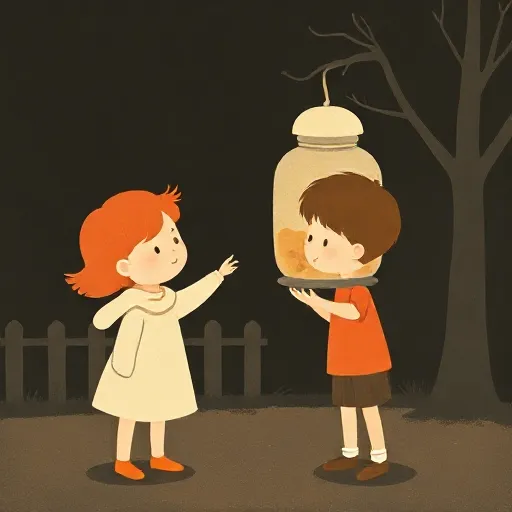
You and your friend see someone take a cookie from the jar without asking. “That’s wrong,” you say. Your friend shrugs. “It’s just your opinion,” she replies. “Wrong isn’t a real thing like ‘the cookie is round.’” Who is right? Can a moral claim—like “stealing is wrong”—be a fact, like “the Earth orbits the Sun”? Or is it more like a feeling, an expression of your emotions? Philosophers have wrestled with this question for over a century.
Why Morality Feels Different from Ordinary Facts
Think about how you learn ordinary facts. You can check whether it’s raining by looking outside. You can test if water freezes at 0°C. But how do you check if stealing is wrong? You can list all the physical details of a theft—the time, the items, the movements. But no matter how many facts you gather, you can still ask, “But is it wrong?” This is often called the Open Question Argument: for any natural description of an action, an open-minded person can still wonder whether that description makes the action moral. This suggests that “wrong” doesn’t refer to a natural property like “being heavy” or “being fast.”
Many philosophers also notice that moral judgments seem to push you to act. If you truly believe “helping others is right,” you will often feel some motivation to help. This intimate link between moral belief and motivation is called motivational internalism. If moral judgments were just ordinary facts, why would they automatically stir you into action? Facts like “the bus arrives at 3 p.m.” don’t by themselves make you move; you need a desire to catch the bus. So perhaps moral language has a special job: it doesn’t just describe the world—it guides your choices.
These puzzling features led some thinkers to deny that moral sentences state facts at all. This view is called non-cognitivism. The name means “not cognitive”—it’s the idea that moral sentences are not truth-apt, meaning they can’t be true or false in the way that “the sky is blue” can. Instead, they do something else.
Booing and Cheering: The Emotivists
In the 1920s and 1930s, some philosophers proposed that moral words are really tools for expressing emotions. The British philosopher A. J. Ayer and the American thinker Charles Stevenson developed emotivism. According to them, when you say “Stealing is wrong,” you are not describing a property of stealing. You are expressing your disapproval—much like hissing or booing. Saying “Helping is good” is like cheering. The words have an emotive function: they show your attitude and might also stir the same attitude in others.
Stevenson noticed that moral terms often carry both an emotional charge and some descriptive content. If I call an action “brave,” I express approval and also hint that it involves facing danger. Still, the primary job is emotional. This way, emotivists avoided having to find mysterious moral properties in the world. There was no need to explain what “wrongness” is made of—you just need to understand how the word works in social life.
But if moral talk only expresses emotions, an old problem pops up. We reason with moral sentences: “If lying is wrong, getting your little brother to lie is wrong. Lying is wrong. So getting your little brother to lie is wrong.” This argument seems logically valid. Yet how can an expression of emotion stay the same when it’s tucked inside an “if” statement? When I say “If lying is wrong…” I’m not actually expressing disapproval of lying—I’m considering a possibility. We’ll come back to this puzzle later.
Commands for Everyone: Prescriptivism
The Oxford philosopher R. M. Hare, writing in the mid-20th century, offered a different non-cognitivist story. He argued that moral sentences are a special kind of prescription—they are like commands, but with a twist. Saying “Killing is wrong” does not merely describe; it directs action, much like “Do not kill!” But unlike an ordinary order (which might apply only to you, here and now), a moral prescription is universal. It applies to everyone in similar circumstances, at any time, in any place.
For Hare, this universality explained why moral reasoning has logical force. If you claim that a particular act is wrong, you commit yourself to judging any relevantly similar act as wrong, no matter who does it or when. This consistency requirement puts rational pressure on you: if you think stealing is wrong when a stranger does it, you must also think it wrong when you do it. It also gives moral arguments their structure—you cannot just pick and choose.
Hare still denied that moral claims are factual. They are not true or false in the way descriptions are. A command like “Shut the door!” isn’t true or false; it’s obeyed or disobeyed. Moral judgments, in his view, are universal commands. This fit well with motivational internalism: sincere acceptance of a command addressed to yourself involves an intention to carry it out.
Acting As If It’s Real: Quasi-Realism and Expressivism
Later thinkers like Simon Blackburn and Allan Gibbard wanted to keep the non-cognitivist insight while explaining why moral talk behaves so much like factual talk. They developed expressivism, a more systematic view. On this picture, the meaning of a moral sentence is the mental state it expresses—a non-cognitive attitude such as planning, norm-acceptance, or a pro/con stance. Gibbard suggested that calling an action wrong expresses a plan to avoid it, or acceptance of a system of norms that forbids it.
Blackburn gave this approach a name: quasi-realism. He argued that we can “earn the right” to treat moral judgments as if they were true or false, even though they are not robustly factual. The idea is that moral discourse has a practical point—to coordinate feelings, choices, and attitudes—and that point justifies our saying things like “It’s true that stealing is wrong.” We aren’t committing to a strange property of wrongness; we’re just using the word “true” in a minimalist, lightweight way. By carefully constructing how attitudes combine, quasi-realists attempt to show that moral reasoning is just as valid as any other reasoning.
The Sticky Problem of Logic and “If”

This brings us to the toughest challenge for non-cognitivists: the embedding problem, sometimes called the Frege-Geach problem. Moral words appear in all sorts of sentences—not just simple declarations. We say “If lying is wrong, then getting your brother to lie is wrong,” or “I wonder whether lying is wrong.” In those embedded contexts, the words don’t seem to express the speaker’s attitude. If they changed meaning inside an “if,” logical arguments would fall apart because a word would mean one thing in a premise and another in the conclusion.
Standard factual beliefs handle this easily: the proposition “lying is wrong” stays the same whether it’s asserted, doubted, or placed in a conditional. But if there is no proposition—just an attitude—what stays the same? Non-cognitivists have crafted intricate answers. Some say complex sentences express higher-order attitudes (attitudes about attitudes). Others build formal systems of “world-norm pairs” or “fact-plan worlds” that represent how attitudes combine. Hybrid theories blend a descriptive component (a property we can talk about) with an expressive component. The debate is technical, but it shows that if non-cognitivism is to succeed, it must explain the very logic of moral thought.
Why This Matters When You Argue About Right and Wrong

You’ve probably had arguments where neither side would budge. Is it just that you feel differently, or is there a fact of the matter that one person is missing? Non-cognitivism suggests that moral disputes are not like figuring out the temperature outside; they are clashes of attitude. That might sound like it makes morality weaker—but many non-cognitivists think it doesn’t. They argue that moral attitudes are central to who we are, and we can still hold them fiercely and reason about them.
If non-cognitivism is right, it changes how we think about moral knowledge. You can’t “discover” that stealing is wrong in the way you discover a new planet. Instead, moral education is about shaping feelings and commitments. The debate also pumps life into wider questions: When you feel certain that something is wrong, are you detecting a moral reality, or are you expressing the deepest parts of yourself? The answer might shape how you approach every difficult choice, from sharing a cookie to standing up against an injustice.
Think about it
- If someone says “Stealing is wrong” and you say “Stealing is not wrong,” are you just expressing different feelings, or is one of you mistaken about a fact? How could you tell?
- Imagine a world where no one ever felt any motivation to do what they called “right.” Would moral language in that world still have meaning? Why or why not?
- Could a computer say “That’s unfair!” and mean it, if it only processed facts but had no emotions or plans? What would be missing?