
Is Stealing Wrong a Fact or Just a Feeling?
The Schoolyard Showdown: Fact or Feeling?

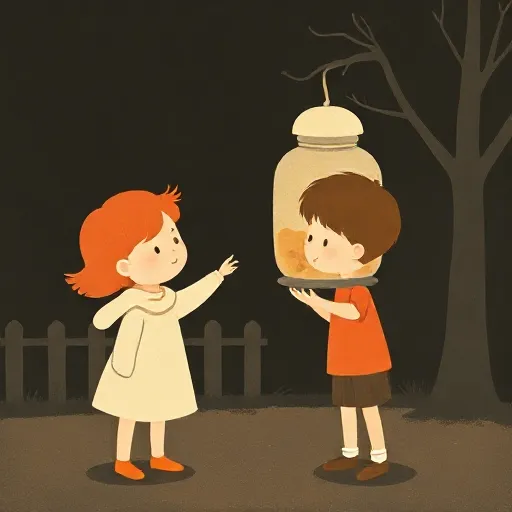
It’s a Tuesday lunch break, and you and your friend are locked in an argument. She says it’s always wrong to copy someone’s homework. You think it’s no big deal if you forgot yours and the teacher won’t notice. She insists that copying is dishonest — a fact, like “the sky is blue.” You say it’s just a matter of opinion. Who is right?
That question is at the heart of a 300-year-old philosophical fight. On one side are moral realists. They believe that some moral claims — like “stealing is wrong” or “helping others is good” — report real facts, and at least some of those claims are actually true. This goes with cognitivism, the idea that moral sentences express beliefs that can be evaluated as true or false, just like “the cat is on the mat.”
On the other side are anti-realists, who deny that there are moral facts in that sense. Some anti-realists are noncognitivists: they say moral language doesn’t even try to report facts — it’s just a way of expressing emotions, trying to influence others, or taking a stand. When you say “stealing is wrong,” you’re really doing something like booing stealing, not describing a fact. Other anti-realists are error theorists, like the philosopher J.L. Mackie (1917–1981). They agree that moral claims pretend to report facts, but they argue that every single positive moral claim is false, because the kind of facts they would need simply don’t exist.
So the big question is: are moral claims like science reports, or are they more like cheers and boos? Let’s step through the main arguments philosophers use to settle this.
Why Do We Disagree So Much?

Walk into any two classrooms around the world and you’ll find wildly different ideas about right and wrong. One culture might say eating certain animals is evil, while another sees it as perfectly fine. This kind of disagreement is so deep and common that many philosophers think it’s a clue against moral realism.
The anti-realist argument goes like this: If there were objective moral facts, we’d expect people to agree about them over time, the way they eventually agree that water freezes at 0°C. Instead, moral disputes seem endless and tied to people’s emotions, upbringing, and interests. Noncognitivists say this makes sense if moral talk is really just an expression of our feelings — feelings naturally differ. Error theorists say it makes sense if people keep arguing because they all falsely assume there are moral facts out there to be discovered, when in truth there are none.
Moral realists push back. First, they point out that disagreement happens in every area of life — even in hard sciences, experts fight over interpretations of data. Disagreement alone doesn’t prove there’s no fact of the matter. More importantly, realists argue that many apparent moral disagreements aren’t fundamental. People often agree on a basic principle like “don’t cause unnecessary suffering,” but disagree about whether a specific action — say, eating a certain animal — really causes suffering or whether that suffering is necessary. That’s a disagreement about non-moral facts, not about the moral principles themselves.
When disagreements do run deeper, realists offer other explanations. Sometimes strong emotions or self-interest distort our thinking. Other times people are really talking past each other, using words like “right” in slightly different ways. So the realist says: the messy landscape of moral argument doesn’t force us to give up on moral facts. It just reminds us how hard it is to figure them out.
The Open Question Trick: Is “Good” Like Water?

Suppose a friend tells you: “Good just means pleasant — they’re the very same thing.” Is that convincing? In 1903, the philosopher G.E. Moore (1873–1958) presented a clever test, now called the Open Question Argument. Take any natural property you can think of — pleasant, useful, approved by society, helps survival. Moore argued that for any such property, it always makes sense to ask: “This is pleasant, but is it actually good?” The question feels open in a way that “This is a triangle, but does it have three sides?” does not. If a person seriously asked the triangle question, we’d suspect they don’t understand the word “triangle.” But asking whether something pleasant is good doesn’t reveal confusion — it sounds like a perfectly sensible debate.
Moore concluded that moral terms like “good” cannot be defined by any natural property. Moral facts would have to be non-natural facts — not the sort of thing science measures. That puts moral realists in a tough spot. If moral facts are not part of the natural world, how do they fit with everything science tells us? And how could we ever know them?
Many realists today accept the challenge but argue that Moore only showed that the link between moral and natural properties isn’t easy to see just by thinking about words. After all, “water” and “H₂O” were once an open question too. For centuries, nobody knew that water is H₂O, and even after the discovery, a person could intelligently wonder, “Is this glass of water really H₂O?” without sounding confused about the word “water.” If water can be H₂O even though that connection isn’t obvious from the meanings of the words, maybe “good” could be identical to some complex natural property — like “satisfies the desires we’d want to have after careful reflection” — even if we can always ask the open question.
Other realists bite the bullet and embrace non-naturalism. They say moral facts are real but not the kind of thing science studies, just as mathematical truths (like 2 + 2 = 4) don’t show up under a microscope. Either way, the Open Question alone doesn’t destroy moral realism — but it does force realists to explain where moral facts live and how we could get in touch with them.
Feelings That Push You: The Motivation Mystery

Imagine a person who says, “Hurting innocent people is terrible,” but then hurts others cheerfully without a trace of resistance. Would you believe they actually meant what they said? Many philosophers think there’s a necessary link between sincerely making a moral claim and being motivated to act accordingly. This is called motivational internalism: if you truly judge that something is good, you must, at least a little bit, be in favour of it — you must have some motivation to promote or protect it. Ordinary factual beliefs don’t seem to work this way. Sincerely believing that a shirt is blue doesn’t push you to do anything in particular.
Noncognitivists pounce on this contrast. They argue that moral language is directly hooked to motivation because it doesn’t express ordinary beliefs at all. Instead, it expresses desires, feelings, or commitments — mental states that are inherently motivating. When you say “eating meat is wrong,” you’re not describing a fact; you’re voicing a desire-like state that pushes you to avoid meat. That neatly explains the link to action, while also explaining Moore’s insight that moral claims feel different from pure factual claims.
Moral realists have several replies. Some challenge the idea that beliefs are always motivationally inert. Think about a sincere belief that an experience will be terribly painful. If you truly believe that touching a hot stove will cause searing pain, it’s hard to imagine you’d have zero motivation to avoid it. Yet we still treat this as a factual belief that can be true or false. If some beliefs come with built-in motivational pull, maybe moral beliefs work the same way.
Other realists deny that motivation always accompanies sincere moral judgment. A person might be deeply depressed, or weak-willed, or so morally twisted that they recognise something as good but feel no urge to pursue it. That, they say, is imaginable. What is conceptually required, they argue, is a link between moral claims and reasons — not guaranteed motivation. If you believe “I ought to help,” you have a reason to help, even if you fail to act on it. That keeps morality factual while still explaining why it’s not just another dry fact about shoelace colours.
Can You Prove That You Should Help?

Long before Moore, the Scottish philosopher David Hume (1711–1776) noticed something strange. No matter how many “is” facts you pile up — how things are, what people desire, what evolution programmed into us — you can’t logically leap to an “ought” without smuggling in a moral premise somewhere. You can’t get from “helping feels good” to “you ought to help” unless you already accept something like “you ought to do what feels good.” So how could any amount of scientific investigation settle a moral question?
If moral realism is true, realists owe us an answer: how do we ever justify our moral beliefs? One popular strategy is to point out that the same “gap” appears in psychology, biology, and everyday life. No collection of purely chemical facts, without any biological principles, will prove that a creature is alive. But we don’t conclude that biology is made up. In every field, justification works by building a coherent system: we test particular observations against general principles, and we adjust both until they fit together snugly. This back-and-forth is sometimes called reflective equilibrium. When a doctor diagnoses an illness, she doesn’t deduce it from physics alone — she relies on principles of medicine that have survived testing. Realists argue moral thinking works the same way: we start with compelling particular judgments (“that cruel act is wrong”) and search for general principles (“don’t cause pointless suffering”), tweaking both sides until the whole package hangs together.
Some realists take a simpler route. Particularists claim that we can directly see that certain actions are wrong, much as we can see that a painting is beautiful, without needing a grand theory behind it. Justification doesn’t always need a rulebook.
Others model moral knowledge on mathematics. The truths of arithmetic aren’t confirmed by telescopes or microscopes; we grasp them by reasoning carefully with concepts. Maybe deep moral principles work similarly — hard to uncover, but real all the same. The upshot is this: the challenge of justifying morality is serious, but it’s not unique to morality. Quick dismissals of moral knowledge are almost certainly too quick.
Why This Fight Matters for You

So what does all this mean for you, arguing with your friend over copied homework? If moral realism is true, then your disagreement isn’t just a clash of emotions. There’s a fact of the matter — maybe copying is wrong, maybe it isn’t — and you can, in principle, reason your way closer to the truth. That makes moral progress possible, and it gives us grounds to say that some moral systems (like ones that permit slavery or cruelty) are really mistaken, not just not to our taste.
If anti-realism is true, the picture changes. If noncognitivism is right, then when you and your friend argue, you’re basically expressing different attitudes and trying to sway each other. There’s no fact to be found. If error theory is right, then you’re both making claims that sound factual but are actually false, because the moral facts you’re chasing don’t exist.
The strange thing is, even many anti-realists admit that talking as if there are moral facts is extremely useful. It helps us coordinate, stick to rules, and take stands. That’s why moral language sounds so much like fact-stating language. But the realist needs to do more than note that usefulness — they need to show that at least some of those claims are actually, genuinely true. The burden is ultimately on the anti-realist to prove that our ordinary way of treating moral talk as truth-aimed is one giant mistake.
The next time you’re in a heated moral argument, pay attention to what you’re doing. Are you swapping reports about an invisible moral world, or are you just broadcasting how you feel? That question has kept philosophers busy for centuries, and it’s not settled yet.
Think about it
- If two people from different cultures deeply disagree about whether it’s okay to eat a certain animal, does that prove there’s no fact about the rightness or wrongness? Why or why not?
- Imagine a friend who says “Cheating is wrong” but then cheats on a test without any hesitation or guilt. Would you still believe they sincerely thought cheating was wrong? What does that tell you about the connection between moral beliefs and motivation?
- If scientists someday discovered that moral judgments are just brain states caused by evolution, would that change whether you think stealing is really wrong? Why?