Is Biology Destiny? How Feminists Fought Bad Science About Women
A Doctor’s Warning: Studying Could Harm Girls
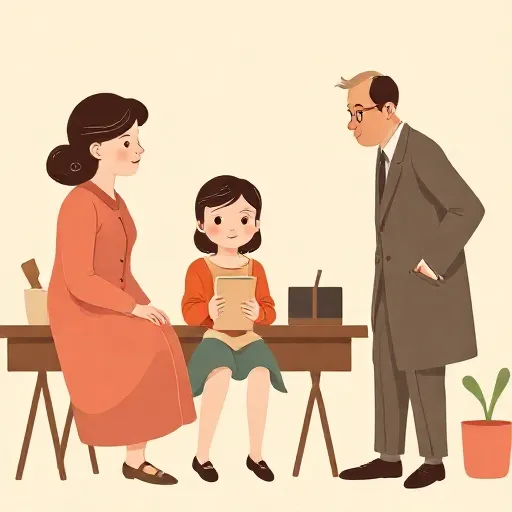
In 1874, a respected Boston doctor named Edward H. Clarke (1820–1877) published a strange warning. He argued that if teenage girls studied hard in school, their bodies would suffer. He said the energy a girl needed to grow her uterus would be stolen by her brain, leaving her with a “monstrous” mind and a weak body. To many people at the time, this sounded like serious science.
Today, Clarke’s idea seems ridiculous. But it wasn’t just one odd doctor. For centuries, scientists used biology to insist that women were naturally less intelligent, more emotional, and made to stay home. These claims were not just harmless mistakes. They kept women out of universities, laboratories, and voting booths.
A group of thinkers called feminist philosophers of biology started digging into these ideas. They wanted to know: how much of what we call “biological fact” about sex and gender is actually warped by hidden bias? And can science do better when it listens to feminist insights? Their answer reshaped how we study life itself.
Feminist Critique as a Scientific Control
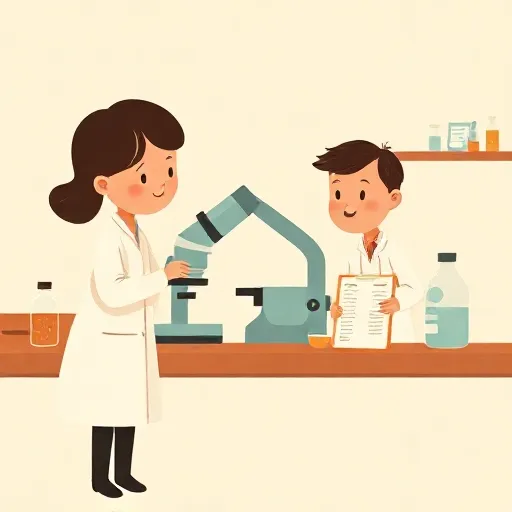
One of the first jobs for feminist philosophers was to spot and remove sexist and androcentric bias from biology. Sexism means devaluing people based on traditional gender stereotypes (usually women). Androcentrism means focusing only on males and treating female experiences as unimportant or exceptional.
In the 1980s, a team of biologists and philosophers—the Biology and Gender Study Group—compared feminist critique to a control in an experiment. Just as a scientist checks that the temperature or pH didn’t mess up the results, they argued, you should check for gender bias. Ignoring it is like ignoring a possible error.
They showed how this worked with an example from genetics. For years, scientists described female development as a passive path. They assumed an embryo would automatically become female unless an active “switch” kicked in to make it male. That assumption turned out to be false. Real development involves active steps for both sexes. Because researchers had only looked for active male mechanisms, they had practically no research on how ovaries form. The bias had made the science incomplete. Fixing it meant asking new questions—and getting better answers.
Are Your Genes a Life Sentence?
Much biased biology rested on a trio of assumptions: determinism, reductionism, and essentialism. Determinism is the idea that a single factor (like a gene or a hormone) makes a trait inevitable. Reductionism zooms in so tightly on one tiny cause that it ignores everything else going on. Essentialism claims there is a fixed, unchanging “nature” for a group—like saying all women are naturally nurturing or all men are naturally competitive.
Feminist philosophers such as Ruth Bleier (1923–1988) and Anne Fausto-Sterling (1944–) tore into these assumptions. They pointed out that even at the molecular level, genes don’t work like a simple recipe. The same stretch of DNA can produce different results depending on the environment inside the cell, the organism’s experiences, and countless other factors. A trait might appear only under certain conditions, or it might change over a lifetime. The brain is especially plastic, meaning it changes in response to learning and social experience. So, treating a behavior as “genetically determined” is like saying the only thing that matters when you bake a cake is the list of ingredients—ignoring the oven’s temperature, the pan, and the baker’s skill.
By showing that biology is flexible and interactive, these thinkers undermined claims that women are stuck in any one social role by their bodies. Biology, they insisted, is not destiny.
The Coy Female Myth: Rewriting the Mating Story
To see how feminist critique transformed a whole field, look at sexual selection. When Charles Darwin (1809–1882) wrote about how animals choose mates, he painted a picture of eager, competitive males and shy, choosy females. Males fought for access, females waited to pick the prettiest winner. This idea fit perfectly with Victorian stereotypes about men and women.
For nearly a century, that story went largely unchallenged. Biologists assumed male reproduction was cheap (just a bit of sperm) while females invested in big eggs and careful parenting, so females had to be picky and passive. They called it Bateman’s principle after the scientist who measured fruit flies and found greater variation in male mating success.
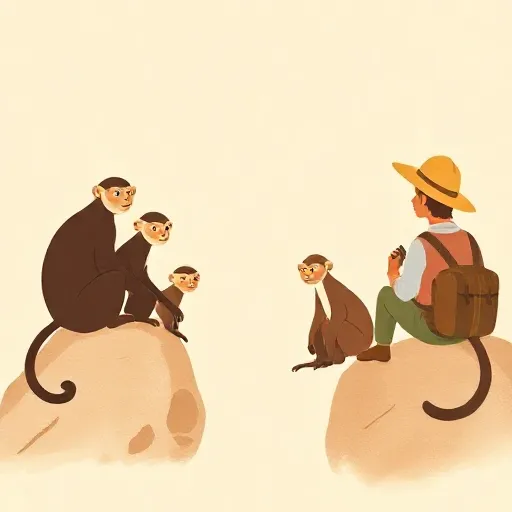
Then, in the 1970s, a primatologist named Sarah Hrdy (1946–) started watching female primates closely—not just their interactions with males and babies, but their own rivalries, friendships, and strategies. She saw females actively controlling when they mated, sometimes with multiple males, to improve their odds and protect their young. Female langur monkeys, for instance, competed fiercely for resources and social rank. Hrdy’s observations flipped the script: females were not passive objects of male competition. They had their own agendas. Other feminist scientists, like Jeanne Altmann, developed new methods to study female social behavior, showing that male-focused observation had missed half the story. The science got richer and more accurate when it stopped assuming one gender was the main show.
The View from Somewhere: Why Standpoint Matters

Feminist philosophers didn’t just point out bias; they also asked deeper questions about how knowledge is made. Philosopher of science Helen Longino (1944–) argued that scientific communities can be more objective when they include people with diverse backgrounds and values. Every scientist has background assumptions—some of them unexamined. In a homogeneous group, sexist assumptions might go unnoticed because everyone shares them. But when people with different perspectives collaborate and seriously consider dissent, those hidden assumptions get challenged and either justified or replaced.
Donna Haraway (1944–) called this situated knowledge: the insight that all knowledge comes from a particular standpoint. No scientist has a “view from nowhere.” A primatologist who is also a mother, for example, might notice parenting behaviors that a child-free male researcher overlooks. That isn’t a flaw—it can be a source of new discoveries, as long as the limitations of each perspective are acknowledged.
This view flips the old idea that science must be “value-free.” Instead, values like fairness and inclusivity can be tools for better, more rigorous research. And when those values are missing, science can get a lot of things wrong.
Why It Still Matters: Questioning “Nature” Today
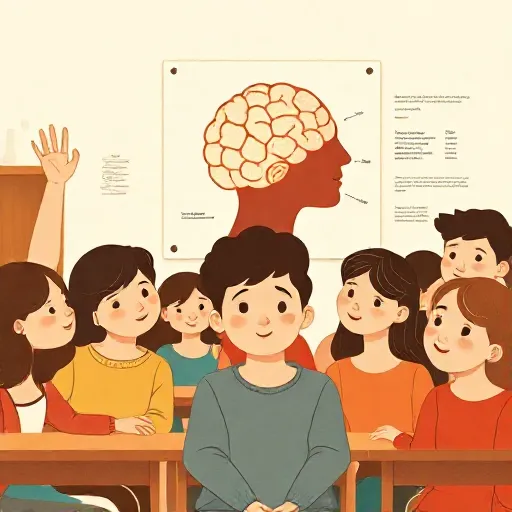
You might still hear claims that sound like old-school biology: “boys’ brains are wired for math, girls’ brains for empathy,” or “men are naturally more competitive.” When you encounter such claims, feminist philosophy of biology gives you a mental toolkit. You can ask: Who was studied? Were both sexes included? Was the sample large enough? What other explanations—like cultural expectations, education, or economic pressure—were ruled out? Could hidden stereotypes have shaped the research question in the first place?
This isn’t about rejecting science. It’s about doing science better. Early feminist critiques that were once dismissed as radical are now reflected in mainstream biology. Research on brain plasticity, the complexity of gene expression, and the diversity of animal behavior all echo feminist insights. The boundary between feminist and mainstream philosophy of biology has blurred because so many of these ideas have been vindicated.
The story that started with a doctor warning girls off books ends with a lesson for all of us: science is a human practice, full of human biases, and it improves when we widen the lens. By noticing who is asking the questions and who is being left out, we all become sharper thinkers—and fairer people.
Think about it
- If a study claims that one gender is naturally better at a skill, what questions would you ask before believing it?
- Can you think of a time when a belief you held turned out to be based on a stereotype rather than evidence? How might scientists fall into the same trap?
- Should researchers try to keep all personal values out of their work, or can some values actually make science more accurate?