Why Did Doctors Miss Heart Disease in Women for Decades?
A Dangerous Assumption: One Body for All

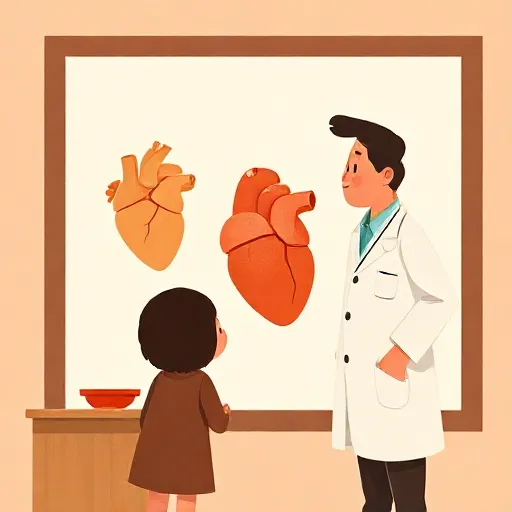
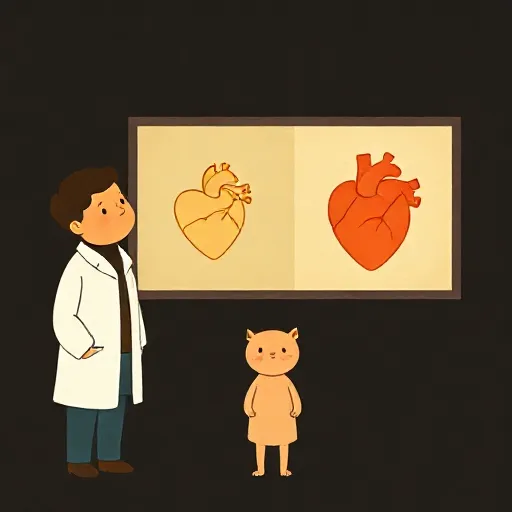
Picture a scientist in the 1980s studying heart disease. Her research subjects are all men. She assumes women’s hearts work the same way, so she never bothers to include them. But decades later, doctors discover something alarming: women often show different symptoms during a heart attack, and they die at higher rates partly because the warning signs weren’t recognized. The knowledge that could have saved them was missing—not because it was unknowable, but because no one thought to look.
That’s not a tiny oversight. It’s a window into a much bigger question about science itself. Who gets to study the world, and whose experiences count as part of the picture? Feminist philosophers of science argue that when certain groups are left out—as researchers or as subjects—the knowledge we produce is not just unfair. It’s weaker. The story of women in science isn’t only about fairness; it’s about how we can do better, more reliable science.
Who Gets to Be a Scientist?

For centuries, women were largely invisible in the history of science. The philosopher Sandra Harding (born 1935) called early efforts to highlight their forgotten contributions “women worthies” projects—work that restored names like Mary Anning or Rosalind Franklin to the record. But even today, women remain a minority in many STEM fields. In the United States, only about 35% of the science and engineering workforce is female.
One reason is stereotype threat, a term introduced by psychologist Claude Steele in 1997. When girls are reminded of the old belief that “girls aren’t good at math,” their test scores can drop—not because of any real difference in ability, but because the stereotype itself creates pressure that affects performance. The cycle can be broken: research shows that learning about successful women scientists weakens the effect. Still, getting women into the lab is only half the story. Once they’re there, what they study and how they study it can still be shaped by old, unexamined assumptions.
When Metaphors Shape Science: The Passive Egg

Science is supposed to describe the world as it is. But sometimes our language sneaks in ideas that don’t come from evidence. Consider the story we’ve all heard: a brave sperm races to reach a passive, waiting egg. Biologist and philosopher Evelyn Fox Keller (1936–2023) pointed out that this picture mirrors cultural stereotypes about men being active and women being passive. In reality, the egg plays an active role—its surface traps the sperm and pulls it in. The metaphor had blinded researchers to the actual biology.
Similar projection happens with chromosomes. Philosopher Sarah Richardson (born 1972) showed how scientists once imagined the Y chromosome as carrying “aggressive” male traits. That assumption led to the false “supermale” hypothesis—the idea that men with an extra Y chromosome (XYY) would be hyper-masculine and violent. The evidence didn’t support it, but for years the stereotype shaped what researchers looked for and what they ignored.
These examples reveal a pattern: when scientists share unexamined background assumptions, especially about gender, they can build entire theories on shaky ground. This is not just about individual bias. It’s about the hidden framework that decides what counts as a good question in the first place.
Values in the Lab: Help or Harm?

For much of the twentieth century, many philosophers believed that science should be completely value-free—free from moral, political, or cultural opinions. Any intrusion of such values was thought to threaten objectivity, the idea that science should represent reality as it is, not as we wish it to be. But feminist philosophers argued that the goal isn’t to remove all values; it’s to make them visible and examine them openly.
Philosopher Elizabeth Anderson (born 1959) studied research on divorce to show how this works. One famous study treated divorce as a trauma that inevitably causes damage. Another, led by feminist psychologist Abigail Stewart, treated divorce as a complex process of adjustment that could include both difficulty and growth. Anderson argued that Stewart’s team produced better science because they considered the full range of evidence—both positive and negative experiences—while the trauma framework screened out anything that didn’t fit. The difference wasn’t that one team had values and the other didn’t; it was that Stewart’s team was upfront about their values and let the evidence challenge them.
Another philosopher, Sharyn Clough (contemporary), showed that attending to gender could strengthen even seemingly unrelated theories. The hygiene hypothesis suggests that too much cleanliness early in life may increase allergies and autoimmune diseases. Clough noticed that in many cultures, girls are held to stricter standards of cleanliness than boys. If the hypothesis is correct, you’d expect to see more allergies in girls—and studies confirm that pattern. A minimal feminist commitment to noticing gender differences provided an extra line of evidence that supported the theory.
These thinkers don’t claim any values are fine. Sexist or racist values that ignore evidence should be discarded. But values that push researchers to look harder, include more experiences, and test their own assumptions can make science more empirically adequate—better at capturing what the world is really like. Objectivity, on this view, doesn’t come from avoiding all points of view; it comes from subjecting every point of view to serious criticism.
Philosopher Helen Longino (born 1944) argued that science is a social activity, and its objectivity depends on the community’s habits of critical debate. She proposed four norms: public forums for criticism, a willingness to change beliefs in response to criticism, shared standards for evaluating theories, and a rough equality of intellectual authority so that no single group’s assumptions go unquestioned. A lab where everyone thinks the same way is less objective than one where people with different life experiences can challenge each other’s blind spots.
Why might someone with a marginalized position see things others miss? The idea comes from feminist standpoint theory. Harding describes how a researcher who is both an insider in a discipline and an outsider because of her social position can develop a kind of double vision—what the sociologist Patricia Hill Collins called the outsider-within. That standpoint doesn’t come automatically; it has to be achieved through reflection and shared conversation. But it can give special insight into how power shapes what we think we know.
Why the Lab Still Looks Different—and Why It Matters to You

These ideas aren’t just about history. Even today, medical apps and artificial intelligence tools are often trained on data gathered mostly from one group—white men, for instance—and can perform poorly for everyone else. A heart-attack prediction algorithm might miss warning signs in women because the pattern it learned didn’t include enough female examples. The same hidden values that once kept women out of heart-disease studies can reappear in code.
Feminist philosophers of science don’t say we should throw out the scientific method. They say we should do it better—by asking who is in the room, whose experience counts as evidence, and which assumptions we’ve stopped noticing. That’s not just a demand for fairness. It’s a recipe for knowledge that works for more people, more of the time.
Think about it
- If a team of scientists studies a disease but only includes boys in their study, should we trust their results for girls? Why or why not?
- Some people argue that only those who have personally lived through a problem can truly understand it. Do you think a researcher studying poverty can do excellent work if they’ve never been poor? What might help them see what they’d otherwise miss?
- Imagine you’re designing a survey about teenagers’ social media use. What would you do to make sure you hear from all kinds of teens, not just the loudest or most similar to you?