Is Disability a Medical Problem or a Social One?
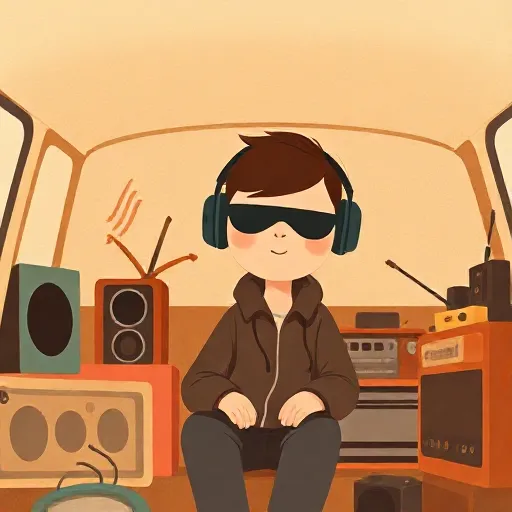
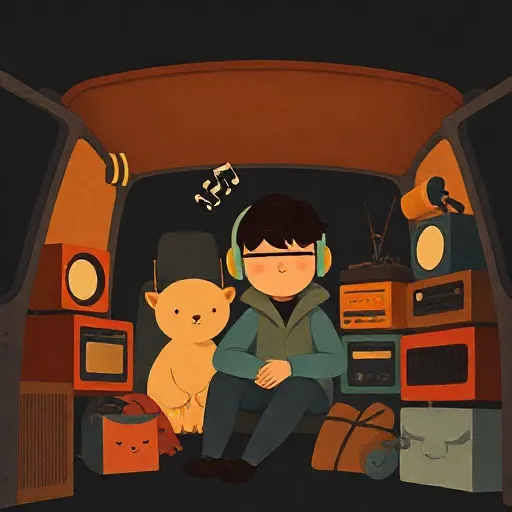
A Blind Detective Who Sees with Sound

In Belgium, some police detectives are blind. That might sound impossible, but they do a job most sighted people can’t. They listen to recordings of criminals’ conversations. By paying attention to the way sounds echo, they can tell whether the speaker is in a car or a room, what kind of phone they’re using, even the accent of the person talking. That skill is not a superpower. It comes from a brain that has adapted to process sound in an unusually rich way.
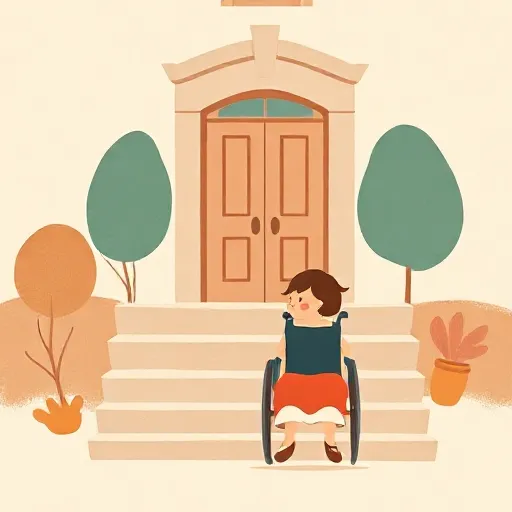
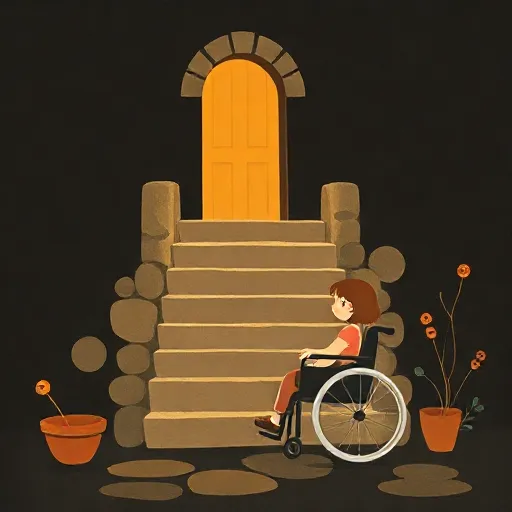
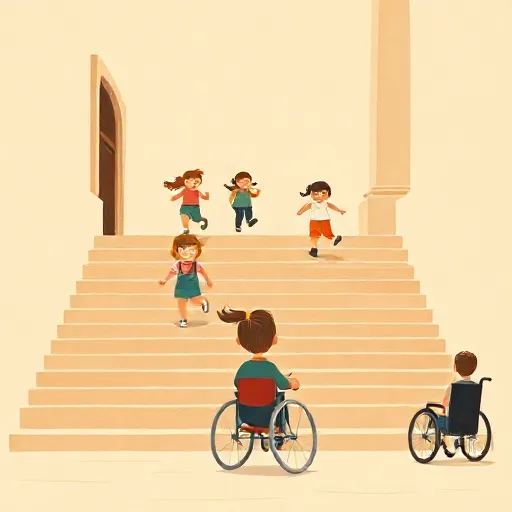
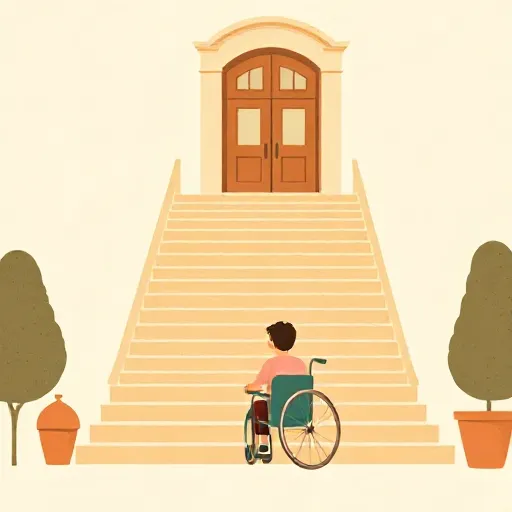
This raises a big question: are these detectives disabled, or are they differently abled? For a long time, many people thought disability was simply a broken part of the body or mind—a defect that medicine should fix. That view is called the medical model of disability. But in the last fifty years, disability activists and philosophers have pushed back with the social model. They say the real problem isn’t the body; it’s a society that refuses to make room for all kinds of bodies. A wheelchair user can’t enter a building not because their legs don’t work, but because the architect built stairs instead of a ramp. A deaf student struggles in class not because they can’t communicate, but because no one signs.
The battle between these two models lies at the heart of the philosophy of disability, and feminist philosophers helped bring it into focus.
Who Decided What a “Normal” Body Is?
Feminist thinkers noticed something similar. For centuries, men’s bodies were treated as the standard, and women’s bodies were seen as weak or defective by comparison. The philosopher Iris Marion Young (1949–2006) wrote about how girls are taught to “throw like a girl,” shrinking their movements because they’ve learned to see their own bodies as fragile. Susan Wendell (1947–2018) pointed out that even feminist theory sometimes equated health with happiness, accidentally leaving out women who were sick or disabled.
The early disability rights movement took that insight further. In the 1970s, a British group called UPIAS argued that society needed to separate impairment (a bodily difference, like not being able to walk or see) from disability (the exclusion that comes from stairs, no Braille, or low expectations). On this view, paralysed legs are an impairment; not being able to get into a library is a disability created by people, not by nature.
But Wendell warned that the social model wasn’t perfect either. Not all disabled people are healthy. Chronic pain and fatigue can be disabling by themselves, even in a world that’s perfectly accommodating. A philosophy that pretends all disabled people are strong and independent overlooks those who live with illness every day. Wendell insisted that an honest account must include suffering without making it the whole story.
Whose Way of Knowing Counts?
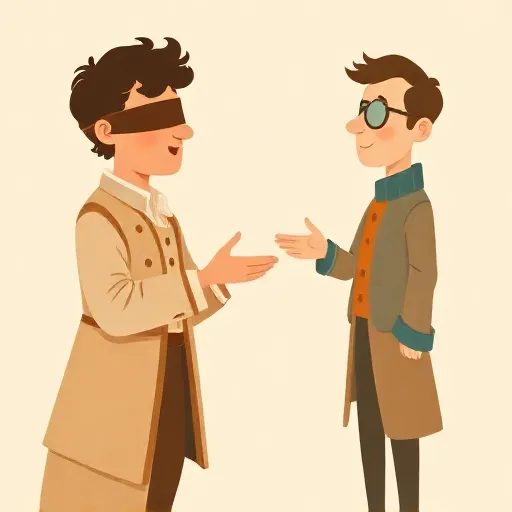
If the body shapes how we take in the world, then people with different bodies might know things in different ways. But philosophers have often dismissed those ways as inferior. The 18th‑century thinker Denis Diderot (1713–1784) was a rare exception. In his Letter on the Blind, he described how blind people understand their surroundings through touch and sound, and he used their experience to poke holes in the idea that reason depends on vision.
Much more recently, two philosophers corresponded about colour. Bryan Magee insisted that Martin Milligan, who had been blind almost from birth, couldn’t really understand “red.” Milligan argued that he understood it perfectly well through descriptions and analogies. Magee simply dismissed him—not because Milligan was wrong, but because his blindness made him seem like an unreliable knower.
The philosopher Miranda Fricker (born 1964) calls this testimonial injustice: refusing to believe someone’s word just because of who they are. It happens all the time to people with disabilities. Yet blind bards in many cultures have been legendary for their memory and oral transmission of long epic poems. People with Williams Syndrome often have unusual social warmth and musical talent, even if they struggle with maths. Some individuals with Down Syndrome have difficulty with abstract reasoning but notice and recall concrete details far better than most of us. Fricker says that discounting all these voices shrinks our picture of what knowledge can be.
Bodies, Machines, and Fair Play
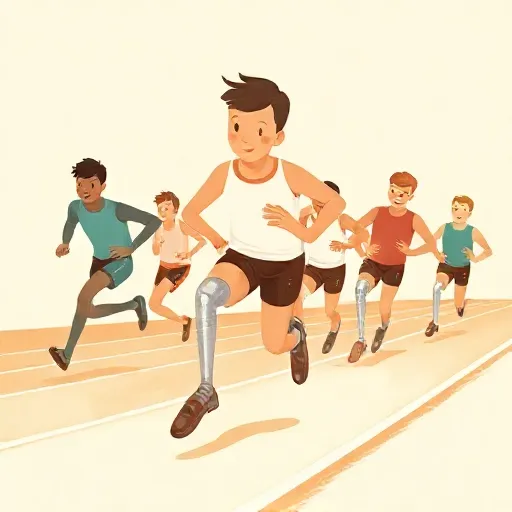
When someone’s body works in an unusual way, the rules of everyday life—and even sport—are built for the norm. The South African runner Oscar Pistorius was born with feet that couldn’t support walking, and his legs were amputated in childhood. He later sprinted on curved carbon‑fibre blades. Some officials tried to ban him from competing against runners with fleshly feet, arguing his artificial ankles returned energy more efficiently and gave him an advantage. At the same time, other amputee runners had been kept out because crude prosthetics made them too slow. It looked as if the real rule was: you can’t run with us unless your body matches the standard model.
A similar case reached the United States Supreme Court. A golfer with a physical condition that prevented him from walking a full 18 holes asked to use a golf cart. The Professional Golf Association said no, because walking was part of the “purity” of the game. The court disagreed: letting him ride was a reasonable accommodation, not a corruption of sport.
These conflicts illustrate the tension at the centre of justice. Many traditional theories of justice, like the one proposed by John Rawls (1921–2002), assumed that citizens are rough equals who can bargain with each other for fair rules. Rawls admitted that disability was a problem he would get to later. Feminist philosophers like Martha Nussbaum (born 1947) argue that’s not good enough. Nussbaum says justice must start by asking what every human being needs to live with dignity—wheelchair ramps, support with communication, or extra resources—and then work hard to provide it.
Care, Trust, and Who Deserves a Good Life
The philosopher Eva Kittay (born 1946) had a daughter with profound intellectual disabilities. That experience led her to ask whether moral theories that prize intelligence and independence actually value the right things. Kittay argues that a just society must support both the people who need care and the people—mostly women—who do vast amounts of care work without recognition or pay. She thinks we should treat caring for each other as a central purpose of government, not an afterthought.
Anita Silvers (1939–2019) and Leslie Francis offered a different route. They noticed that people with all kinds of disabilities can give and withdraw trust, even if they can’t enter into complicated contracts. They proposed that the foundation of fairness isn’t bargaining between independent equals, but the trust that makes us willing to be vulnerable to one another. In that picture, no one has to prove they’re “normal” before they belong.
This debate gets especially difficult in bioethics. Some thinkers have said that a woman should be free to end a pregnancy if tests show the child might have a disability. Adrienne Asch (1946–2013) agreed that women must control their own bodies, but she also warned that choosing to end a pregnancy because of a disability is often based on a mistaken fear: that a disabled life isn’t worth living. She pointed out that people with disabilities typically rate their own happiness just as highly as anyone else does—it’s the rest of us who misjudge their experience. For Asch, reproductive freedom shouldn’t be twisted into a statement that some kinds of lives are less valuable.
Rethinking Normal in Your World

The fight over what “normal” means isn’t just for philosophers. It shows up in the ramp at your school, the captions on a video, or the friend who uses a voice app to speak. Every time you ask whether the problem is in a person or in the setup around them, you’re doing philosophy. The feminists and disability scholars whose work fills this story didn’t all agree, but they agreed on one big thing: a good society doesn’t wait for everyone to fit the same mold. It builds a world where many kinds of bodies and minds can flourish.
Think about it
- If a student uses a wheelchair, is the problem their legs, or the fact that the school has no ramp?
- Should athletes with prosthetic legs be allowed to compete against runners with biological legs? What would make the competition fair?
- If a friend who can’t speak tells you through a device that they are happy, how do you know their life is valuable? Can you know that without living it yourself?